
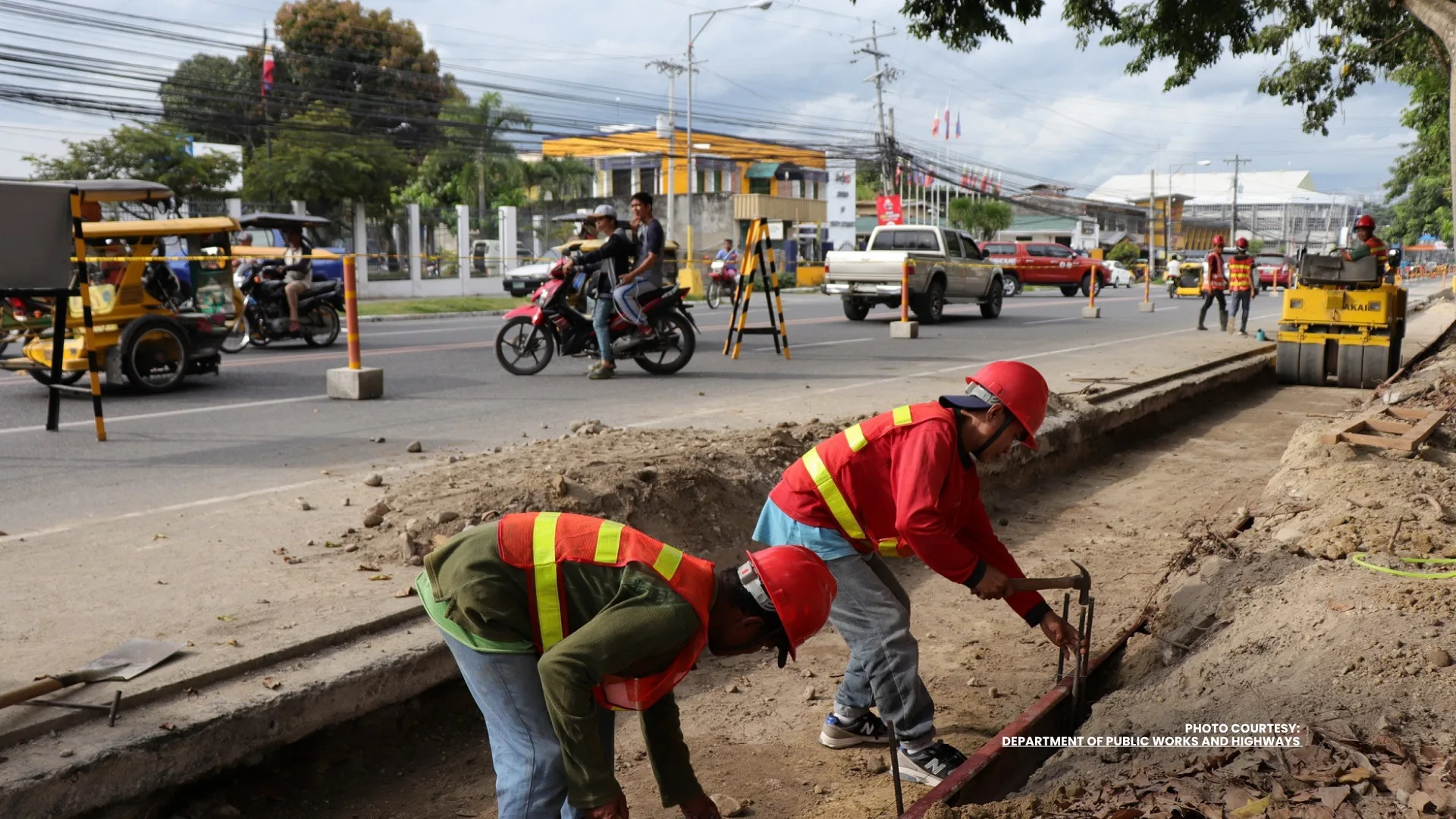
Government infrastructure spending fell sharply in March as weaker disbursements from the Department of Public Works and Highways (DPWH) dragged down capital outlays despite higher overall state spending in the first quarter.
Data from the Department of Budget and Management (DBM) showed that infrastructure and other capital outlays dropped by 48 percent to P59.1 billion in March 2026 from P113.5 billion in the same month last year.
The DBM said the decline slowed the pace of total government spending growth during the January-to-March period.
Despite the drop in infrastructure expenditures, total disbursements still rose 3.2 percent to P1.49 trillion in the first quarter from P1.44 trillion a year earlier.
The increase was mainly supported by higher transfers to local government units, larger interest payments, personnel services expenditures, subsidies, and maintenance and other operating expenses.
According to the DBM, the slower infrastructure spending was largely due to weaker DPWH disbursements as the agency continued to complete carry-over projects from 2025 while implementing this year’s budget.
The budget agency also cited the stricter validation process for billing claims, which was adopted to ensure project quality and value for money, as another factor affecting public works spending.
The decline in infrastructure spending was partly offset by capital outlay projects under the Revised Armed Forces of the Philippines Modernization Program.
The DBM expects capital outlay implementation to improve in the second quarter following allotment releases made earlier this year, particularly in March.
These releases are expected to allow line agencies to proceed with bidding activities and obligate funds for their projects.
The agency also said infrastructure departments are likely to take advantage of the summer season to accelerate construction works, which could help rebuild spending momentum and support a recovery in infrastructure disbursements toward the second half of the year.