
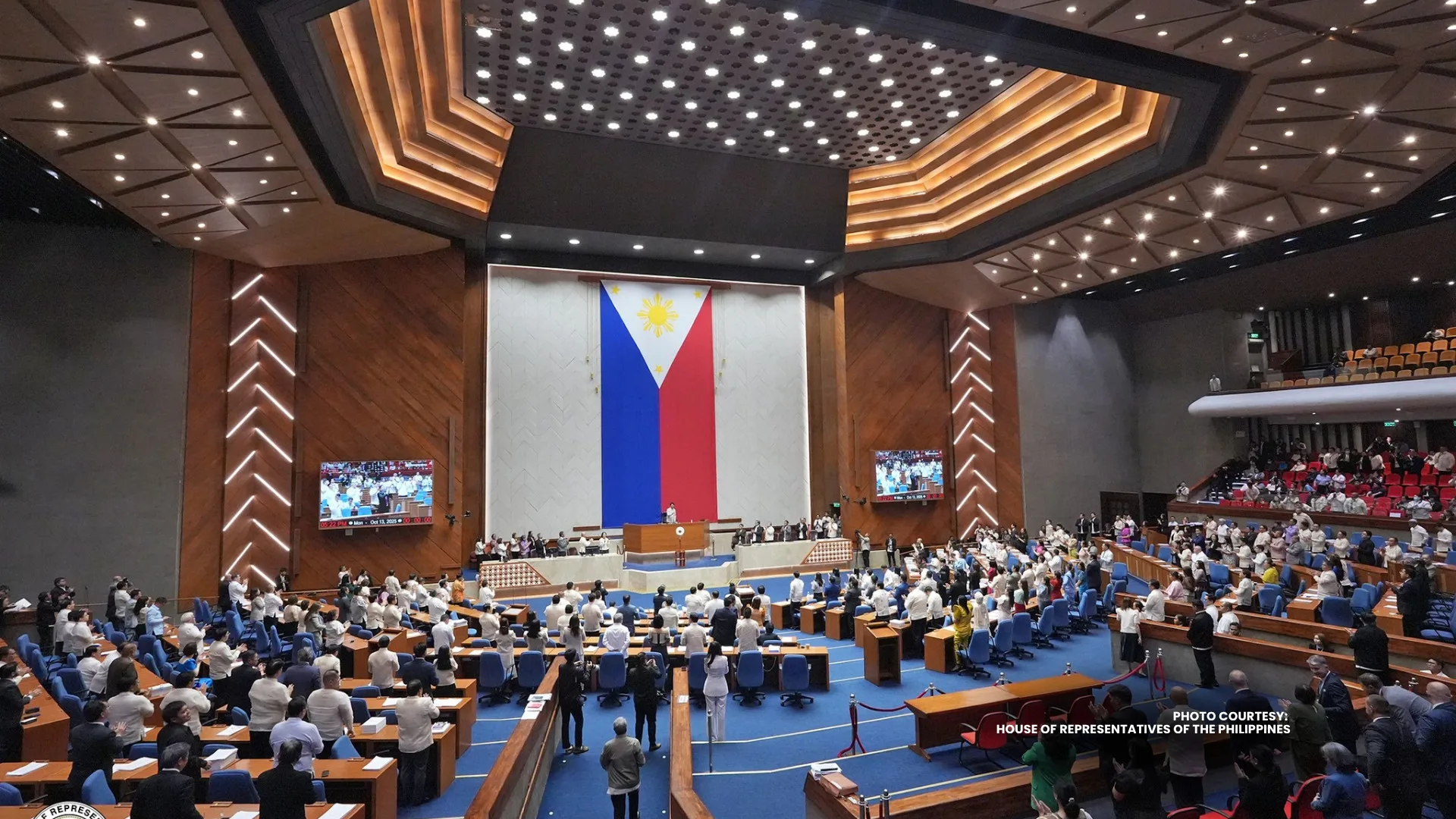
The House of Representatives has approved on second reading a bill seeking to strengthen the country’s laws against online child sexual abuse and exploitation, including offenses involving artificial intelligence-generated and deepfake child abuse materials.
Approved through viva voce voting, House Bill No. 9461, or the proposed Child Online Safety and Protection Act of 2026, seeks to update the government’s response to child exploitation amid the growing use of digital platforms, encrypted communication, online payment systems, virtual assets, and artificial intelligence in abuse operations.
The measure seeks to repeal and strengthen Republic Act No. 11930, or the Anti-Online Sexual Abuse or Exploitation of Children and Anti-Child Sexual Abuse or Exploitation Materials Act of 2022, after lawmakers cited enforcement gaps caused by rapidly evolving technologies.
The bill expands the definition of child sexual abuse materials to include synthetic, AI-generated, and digitally manipulated content, including deepfakes involving children. It also criminalizes sexual extortion, image-based sexual abuse, livestreamed exploitation, grooming, and luring.
During sponsorship of the measure, Manila Rep. Rolando Valeriano, chairperson of the House Committee on Public Order and Safety, said the Philippines remains one of the countries most affected by online sexual abuse and exploitation of children.
Citing the International Justice Mission’s “Scale of Harm” study, Valeriano said nearly half a million Filipino children were trafficked in 2022 to produce child sexual exploitation materials, equivalent to one in every 100 Filipino children.
He also cited a study by ECPAT, UNICEF, and INTERPOL showing that 20 percent of Filipino internet users aged 12 to 17 experienced serious forms of online sexual abuse or exploitation, including blackmail, non-consensual sharing of intimate images, and coercion through money or gifts.
Data from the National Center for Missing and Exploited Children also showed that the Philippines ranked second worldwide in cybertipline reports in 2024, with more than 1.7 million reports.
Under the proposed law, persons convicted of producing, distributing, livestreaming, or facilitating child sexual abuse materials may face life imprisonment and fines of at least P2 million.
Those found guilty of creating or distributing AI systems or digital platforms primarily designed to generate or spread child sexual abuse materials may also face life imprisonment and fines ranging from P2 million to P10 million.
Possession of child sexual abuse materials may be punished with up to 20 years in prison and fines of up to P500,000, while accessing such materials may carry a penalty of up to 12 years in prison and fines of up to P300,000.
The bill also imposes heavier penalties when offenses are committed by syndicates, persons in authority, relatives, or through the use of encryption, anonymization tools, and artificial intelligence technologies.
Aside from tougher penalties, the proposal sets stricter duties for internet intermediaries, technology platforms, payment service providers, virtual asset service providers, and learning institutions to prevent, detect, report, and disrupt online child exploitation.
It also authorizes lawful blocking, takedown, and disruption orders against online platforms, accounts, and digital infrastructure used in child exploitation operations.
The measure strengthens financial monitoring by allowing covered financial entities to restrict, suspend, or defer suspicious transactions linked to child exploitation offenses.
To improve coordination, the bill creates the National Council for Child Online Safety and Protection under the Department of Justice and establishes the National Child-Safety Command and Operations Service as its operational arm.
It also institutionalizes the Philippine Internet Crimes Against Children Center as a permanent inter-agency law enforcement body for cases involving foreign syndicates and transnational operations.
Local government units would be required to adopt barangay-based programs and ordinances against online child exploitation.
The bill also expands support for victim-survivors, including emergency shelter, trauma-informed counseling, educational assistance, reintegration support, and long-term aftercare services.
It further establishes a Philippine Child Sex Offenders Registry and a national financial intelligence fusion platform to strengthen monitoring and enforcement against online child exploitation.