
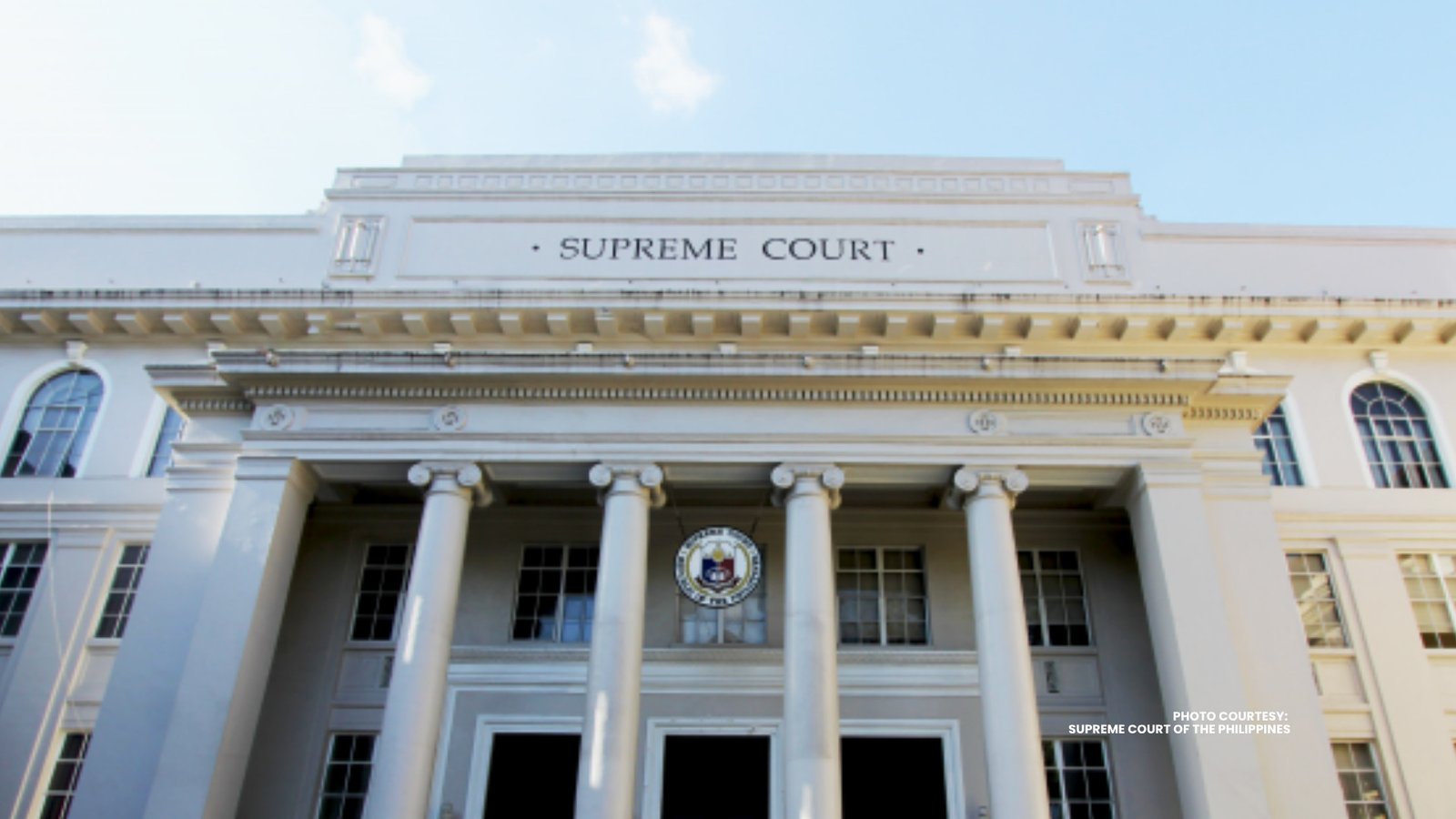
The Supreme Court (SC) ruled that similarities in trademark or logo designs, even if new words are added to it, may confuse purchasers and prevent the registration of later marks.
In a decision written by Associate Justice Ramon Paul Hernando, the SC First Division granted the consolidated petitions of Starwood Hotels & Resorts Worldwide, LLC’s (Starwood) and reversed the Court of Appeals’ (CA) rulings allowing the registration of Oceanic Empire Limited’s (Oceanic) marks.
Starwood Hotels & Resorts Worldwide, LLC, which owns several registered “W” trademarks for hotels and entertainment services, filed legal oppositions against Oceanic Empire Limited to stop it from registering the marks “W GLOBALCENTER” and “W FIFTH AVENUE.”
Starwood also sought the total cancellation of Oceanic’s previously secured registration for the trademark “W TOWER.”
Starwood argued that Oceanic’s marks were confusingly similar to its own established trademarks and claimed that Oceanic would unfairly benefit from the popularity and reputation of the “W” brand. Starwood also stated that the visual similarities would mislead the general public into believing that Oceanic’s business was connected with Starwood.
Initially, the Intellectual Property Office (IPO) dismissed Starwood’s claims and ruled that no one can claim exclusive rights to a letter of the alphabet. It added that the differences in the designs and the separate business operations were enough to avoid confusion.
The Court of Appeals (CA) later affirmed this ruling, finding that Oceanic’s real estate business differed from Starwood’s hotel operations.
However, the SC disagreed with the rulings and reversed the CA’s decisions
The SC explained that under the Intellectual Property Code, a mark cannot be registered if it nearly resembles an existing mark and causes a likelihood of confusion. Applying the Dominancy Test, the SC ruled that the stylized letter “W” was the dominant feature of both Starwood’s and Oceanic’s marks. Purchasers would immediately notice the similarity and that the added terms “GLOBALCENTER,” “FIFTH AVENUE,” and “TOWER” did not lessen the dominance of the letter “W.”
They noted that those added words were simply generic or descriptive terms for a physical location.
Seeing both businesses involve high-end property development and rely heavily on brand image, the SC ruled that the overlapping designs created a real likelihood of confusion for buyers.