
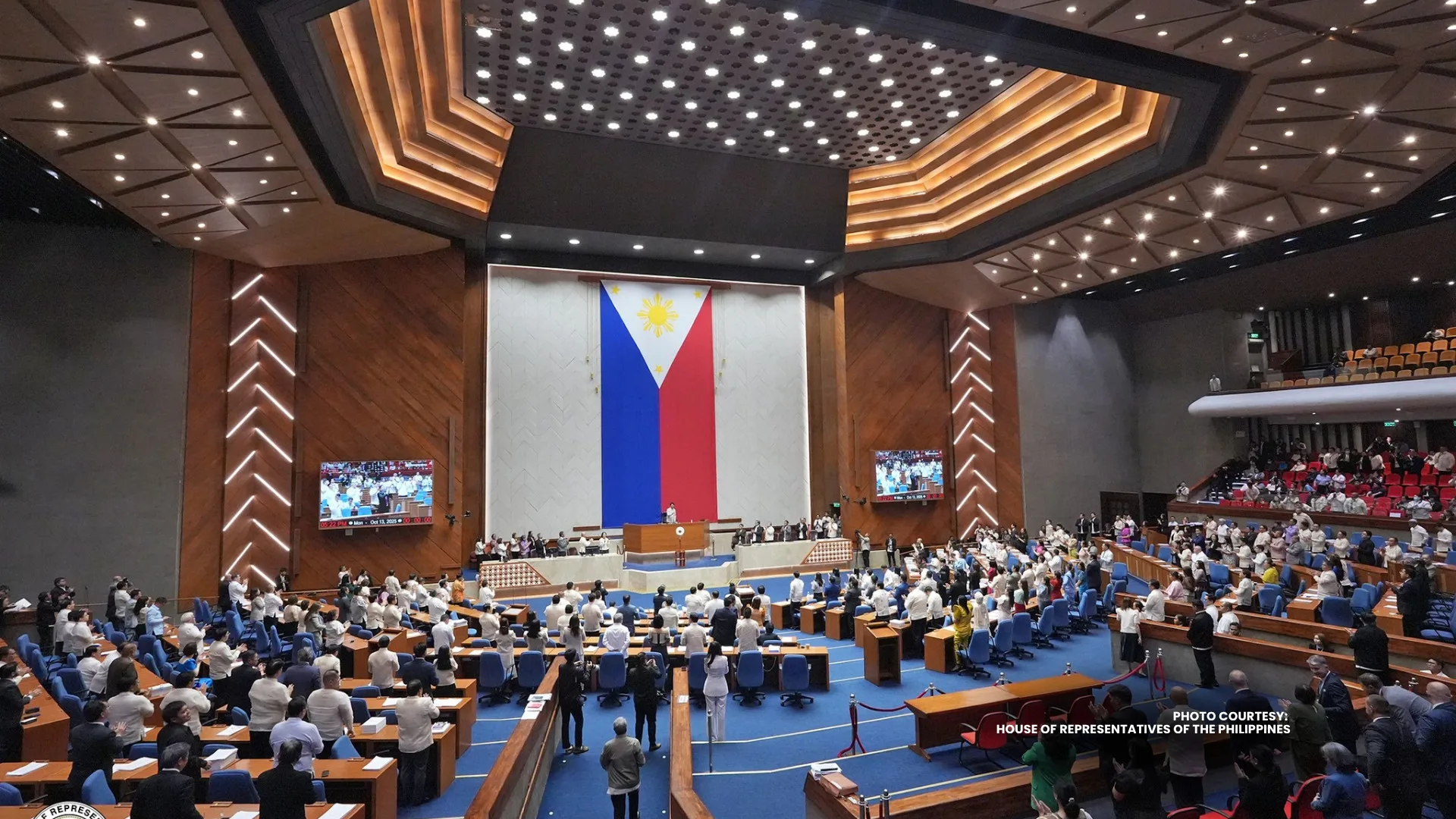
The House of Representatives has approved on third and final reading a bill seeking to strengthen the country’s protection of children against online sexual abuse, exploitation, and other emerging digital threats.
House Bill No. 9461, or the proposed Child Online Safety and Protection Act of 2026, was unanimously approved with 284 affirmative votes.
The measure, a priority bill of the Legislative-Executive Development Advisory Council, seeks to expand safeguards for minors in digital spaces while giving authorities stronger tools to detect, investigate, and prosecute online child exploitation.
The bill will repeal Republic Act No. 11930, or the Anti-Online Sexual Abuse or Exploitation of Children and Anti-Child Sexual Abuse or Exploitation Materials Act, and replace it with a broader legal framework that addresses the changing nature of online abuse.
Among its major provisions is the expanded definition of child sexual abuse or exploitation materials to include artificial intelligence-generated, synthetic, and digitally manipulated content, including deepfakes involving children.
The proposal also criminalizes more forms of online abuse, including grooming, sexual extortion, luring, image-based sexual abuse, and livestreamed exploitation.
Those convicted of producing, distributing, livestreaming, or facilitating child sexual abuse materials may face life imprisonment and fines of at least P2 million.
Possession of such materials may be punished with imprisonment of up to 20 years, while knowingly accessing them may carry a penalty of up to 12 years in prison.
The measure also authorizes lawful blocking, takedown, and disruption orders against websites, online accounts, platforms, and digital infrastructure used to commit or facilitate child exploitation offenses.
It imposes greater responsibilities on internet service providers, digital platforms, financial intermediaries, schools, and regulators to help prevent, detect, and report online child exploitation activities.
The bill likewise strengthens financial surveillance by allowing covered entities to temporarily restrict suspicious transactions linked to child exploitation offenses. The provision is intended to help authorities trace illicit proceeds and disrupt criminal networks.
To coordinate enforcement, the measure creates the National Council for Child Online Safety and Protection under the Department of Justice.
It also establishes the National Child-Safety Command and Operations Service, which will serve as the council’s operational arm for investigations, intelligence gathering, monitoring, and interagency coordination.
Supporters of the bill said the measure reflects the need to update child protection laws as predators increasingly use digital platforms, financial networks, and new technologies to target minors.
The proposed law also reinforces the principle that children must be protected not only in physical spaces, but also in the online platforms where they study, communicate, and spend much of their daily lives.