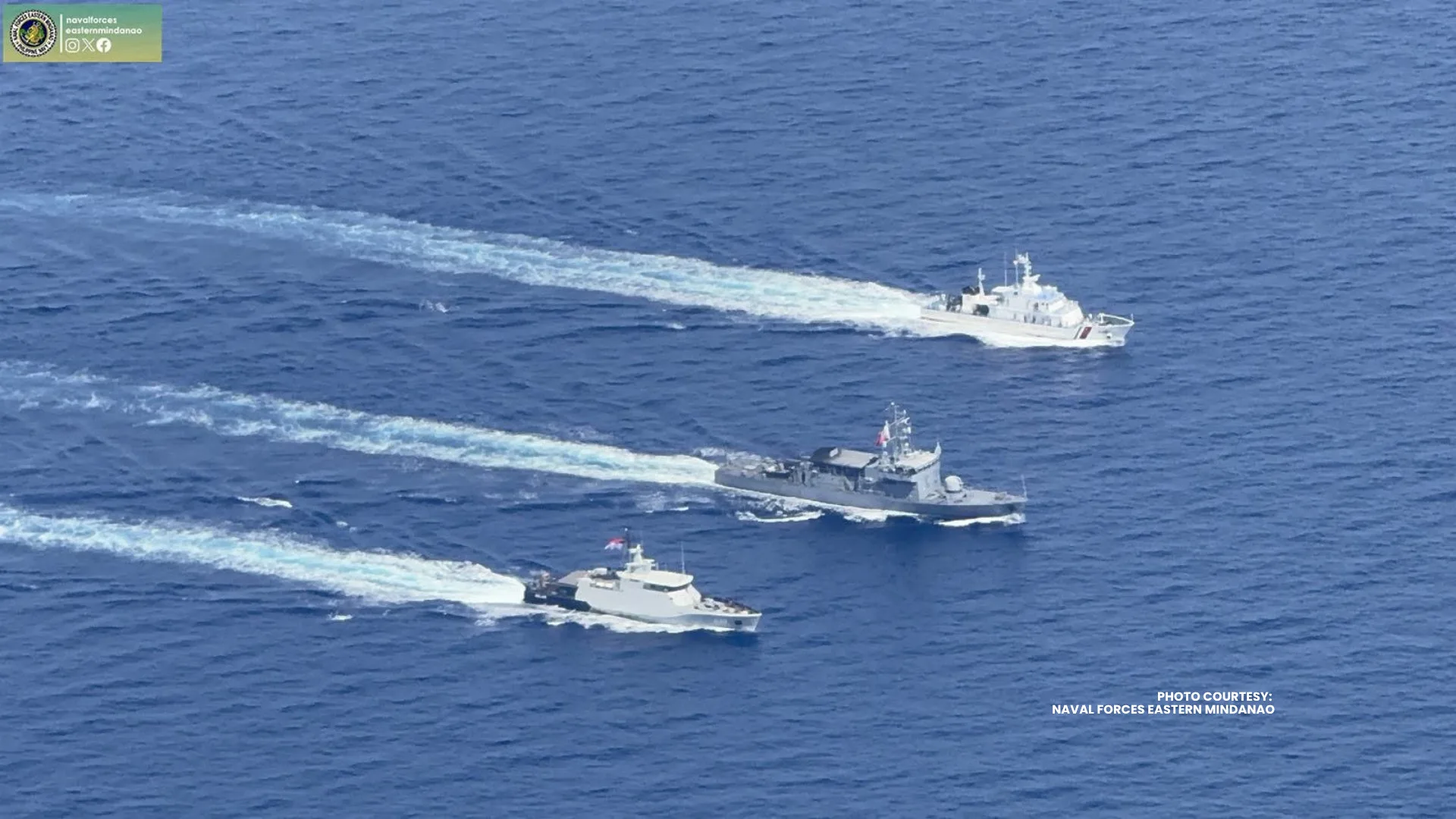
The Philippines, Malaysia, and Indonesia conducted the inaugural Trilateral Cooperative Arrangement (TCA) rendezvous at sea and combined air patrol from June 16 to 17, marking a milestone in regional maritime security cooperation.
Hosted by the Philippines, the two-day exercise brought together naval and air assets from the three countries in a coordinated demonstration of interoperability and joint commitment to maritime peace and stability in the tri-border area.
The engagement featured coordinated naval and aerial operations aimed at strengthening operational coordination, improving communication, and enhancing joint responses to shared maritime concerns.
At sea, naval forces conducted formation sailing, passing exercises, communications drills, personnel exchanges, visual signaling, maritime interdiction and boarding procedures, as well as replenishment-at-sea maneuvers.
The activities were designed to improve interoperability and allow participating forces to share best practices in maritime operations.
Simultaneously, air assets conducted coordinated patrols and maritime surveillance missions to improve maritime domain awareness and strengthen information-sharing among the three armed forces.
The air component also supported efforts to enhance search and rescue capability and improve coordination in humanitarian assistance and disaster response operations.
Officials said the exercise underscores the strategic importance of the tri-border maritime corridor and the need for sustained cooperation against transnational threats.
Brig. Gen. Aldrin Annani, Deputy Commander for External Defense Operations of the Western Mindanao Command, said the activity highlights the shared responsibility of the three nations in securing critical sea lanes in Southeast Asia.
“The successful conduct of this trilateral engagement demonstrates the strong partnership among the Philippines, Malaysia, and Indonesia,” Annani said.
He said enhanced cooperation and information-sharing among the three militaries will help address common maritime challenges and support lawful maritime activity in the region.
The exercise also aimed to deter transnational crimes such as illegal fishing, smuggling, piracy, and other maritime criminal activities affecting coastal communities.
Lt. Gen. Donald M. Gumiran, commander of the Western Mindanao Command, said the exercise reflects the enduring partnership of the three countries in safeguarding maritime security.
“The successful completion of this inaugural trilateral activity reflects our shared commitment to preserving peace, security, and stability in our maritime domain,” Gumiran said.
He added that strengthened cooperation contributes not only to regional security but also to the protection of livelihoods dependent on safe and secure seas.
The Philippines, as host nation, said the successful conduct of the exercise lays the groundwork for expanded trilateral engagements in the future under the TCA framework.