
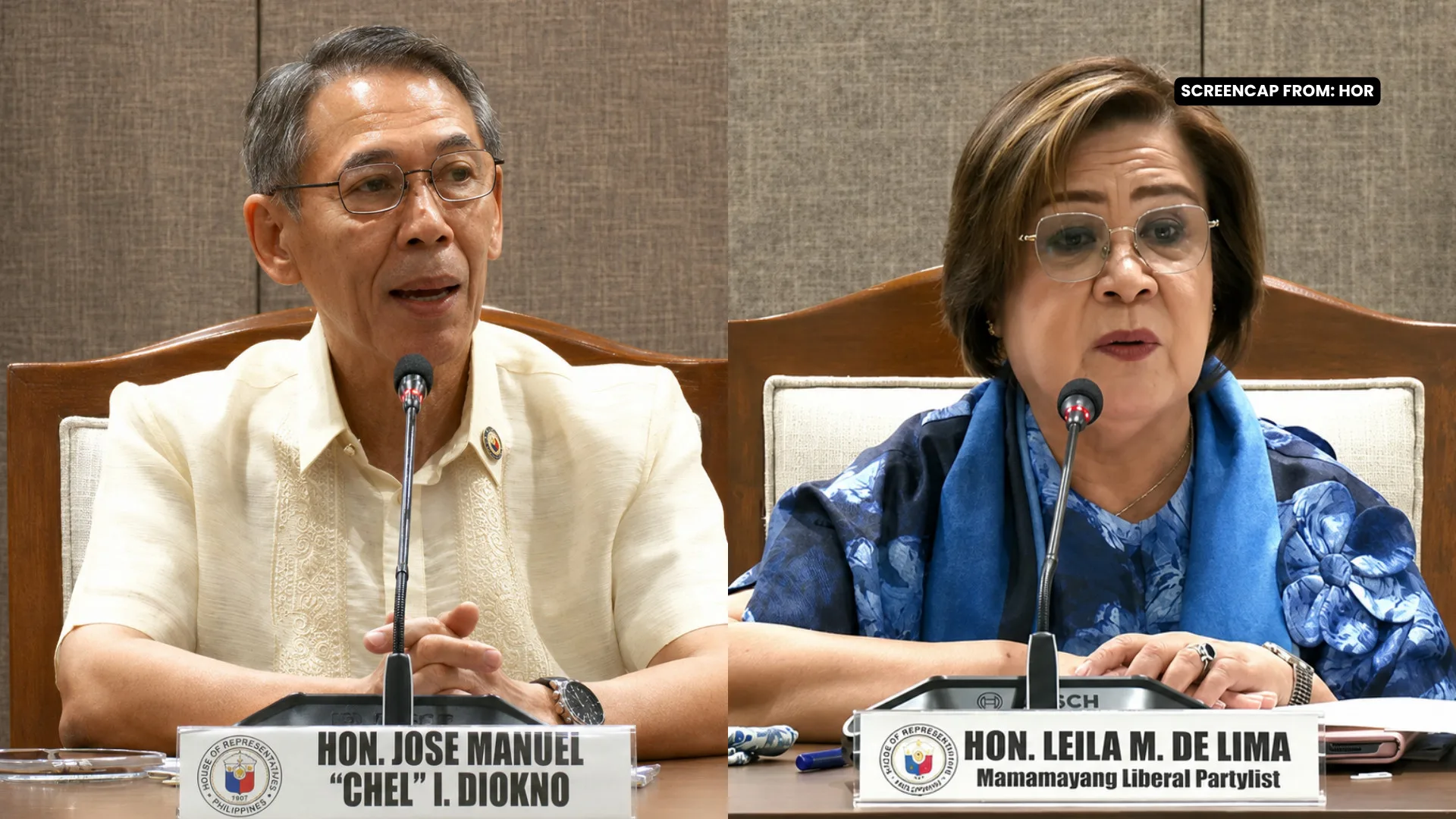
House impeachment prosecutors said the Senate impeachment court cannot dismiss the case against Vice President Sara Z. Duterte without first conducting a trial and hearing the evidence.
House prosecutors Leila de Lima and Jose Manuel “Chel” Diokno made the position clear when asked whether it would be unconstitutional for the Senate impeachment court to entertain a motion to dismiss before the prosecution is allowed to present its evidence.
“Our position has always been, and this dates back to last year, that the function and duty of the Senate is to conduct a trial, to hear the evidence, and then come up with a decision,” Diokno said.
He said that is the only proper course available to the Senate once it convenes as an impeachment court.
“’Yun lang dapat ang maaaring gawin ng ating Senado bilang impeachment court, ‘yun ang posisyon po namin,” said Diokno, a representative of Akbayan party-list.
De Lima said dismissing the case at this stage would run counter to both the text and purpose of the Constitution because the prosecution has not yet been given the opportunity to present and prove its case.
“It would go against the letter and the spirit of the Constitution if madi-dismiss at this point, even before the trial itself, even before the presentation of evidence and evaluation of evidence,” the Mamamayang Liberal party-list representative said.
The House prosecution panel has maintained that once the Articles of Impeachment are transmitted by the House to the Senate, the constitutional process requires a trial where evidence is presented, tested, and evaluated by senator-judges.
For the prosecutors, a defense claim of lack of evidence cannot be resolved before the prosecution is allowed to present its witnesses and documentary exhibits.
De Lima said the Senate’s own impeachment rules point to the same conclusion, stressing that the chamber’s mandate is to try and decide impeachment cases, not dispose of them before trial.
“The mandate of the Senate is to try and decide impeachment cases,” De Lima stressed.
The prosecutors also addressed the possible participation of private prosecutors in witness examination, another issue raised before the impeachment court.
De Lima said the prosecution is confident that both public and private prosecutors may be allowed to take part in presenting witnesses, subject to control and supervision.
“We are confident that both public prosecutors and private prosecutors will be allowed to participate in the witness presentation,” De Lima said.
She said past impeachment cases recognized the participation of private prosecutors, and that the Senate rules do not prohibit it.
“Wala po sa Senate Rules of Procedure on Impeachment na pinagbabawal ‘yan,” De Lima said.
She added that allowing private prosecutors to participate would help the impeachment court manage the evidence and understand the full factual record.
“It will facilitate in the efficient presentation of evidence and assist, actually, the Senate, the impeachment court in its full evaluation or full layout of the facts,” De Lima said.
De Lima said the defense has opposed the request, leaving the issue for the impeachment court to resolve.
For the House prosecution panel, the constitutional path is clear: the Senate must hear the evidence, evaluate the case, and decide by judgment, instead of short-circuiting the trial through outright dismissal.