
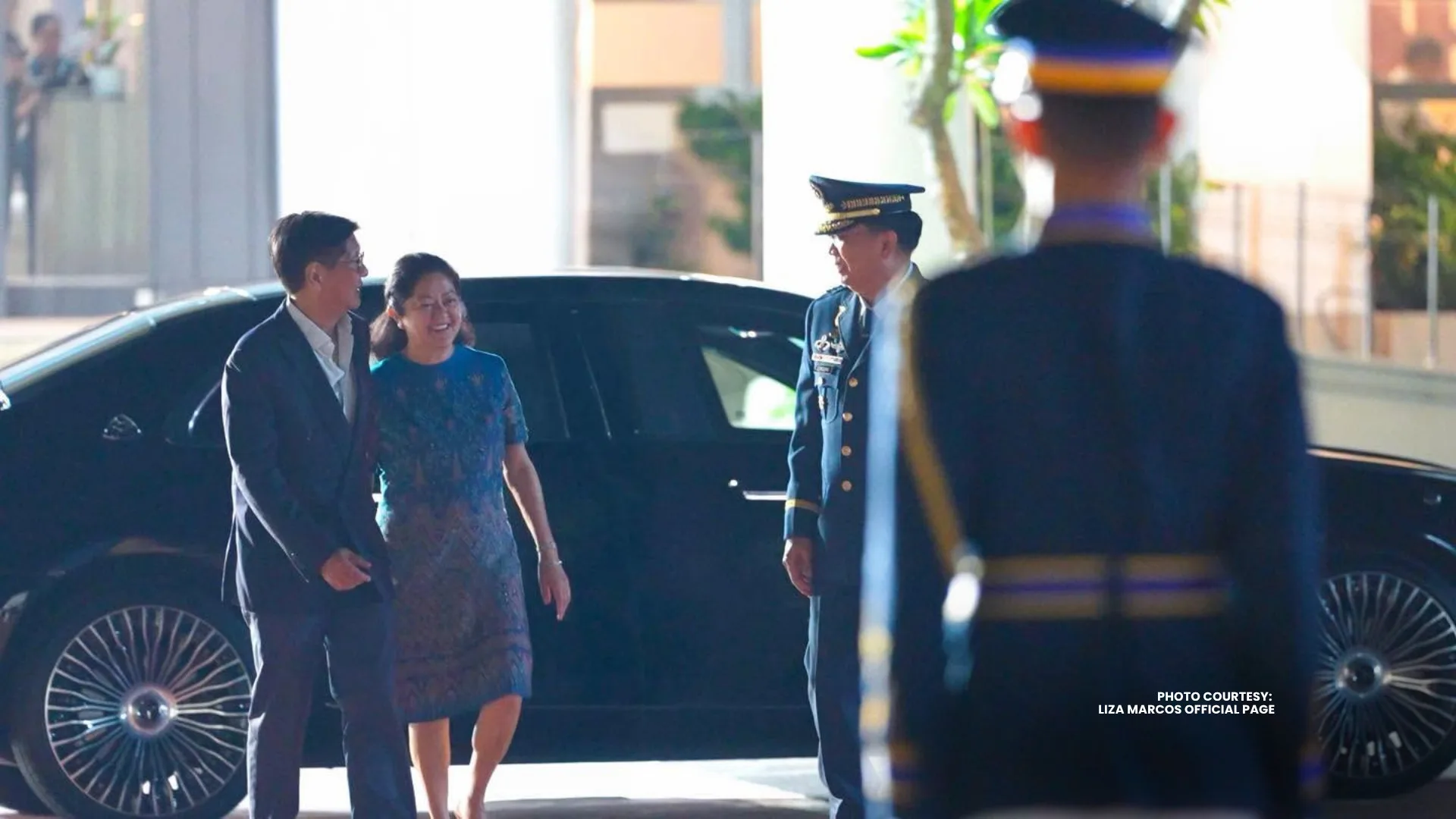
President Ferdinand Marcos Jr. left Manila late Tuesday for Kazan, Russia, where he will co-chair the 35th ASEAN–Russia Commemorative Summit alongside Russian President Vladimir Putin.
He departed with his delegation at around 11:55 p.m. and is also scheduled to hold a bilateral meeting with Putin on the sidelines of the summit from June 17 to 18.
In a pre-recorded departure statement, President Marcos said the visit carries both regional and personal significance, noting it as his first trip to Russia as president and its historical link to his father’s 1976 visit to the then-Soviet Union.
“It will be my first time on Russian soil—a journey I undertake nearly fifty (50) years after my father, President Ferdinand E. Marcos Sr., made his own historic visit to the then-Soviet Union in 1976, which culminated in the establishment of diplomatic relations between our two countries,” he said.
President Marcos said the Philippines–Russia relationship has steadily expanded over the decades across multiple sectors, including trade, education, agriculture, energy, science, and cultural exchanges.
“For over five decades, our bilateral ties have steadily deepened across trade, education, culture, agriculture, energy, science, and, above all, through the sustained bonds between our peoples. We look forward to building on these foundations and opening new avenues of cooperation for the future,” he added.
He said the summit will allow ASEAN and Russia to take stock of 35 years of cooperation and set a forward-looking agenda on key regional priorities.
“Together with my fellow ASEAN Leaders and President Vladimir Putin, we will take stock of 35 years of ASEAN–Russia cooperation and help chart a course for the decades ahead,” President Marcos said.
He also underscored the Philippines’ priorities in the discussions, including regional stability and development cooperation.
“We travel to Kazan with purpose, and we return with renewed commitment to our partnership,” he added.
President Marcos reaffirmed Manila’s commitment to ASEAN unity and a rules-based regional order, saying the Philippines will continue promoting inclusive cooperation under its theme, “Navigating Our Future, Together.”