
Local chief executives and individual school heads now hold direct power to halt or resume in-person classes and school work under a newly mandated framework designed to eliminate operational delays during severe weather and natural hazards.
President Ferdinand Marcos Jr. signed Executive Order 130 on October 28, establishing a three-tier system governing the suspension and resumption of face-to-face classes, activities, and onsite work in educational institutions and learning centers. The order was published Tuesday through the Official Gazette.
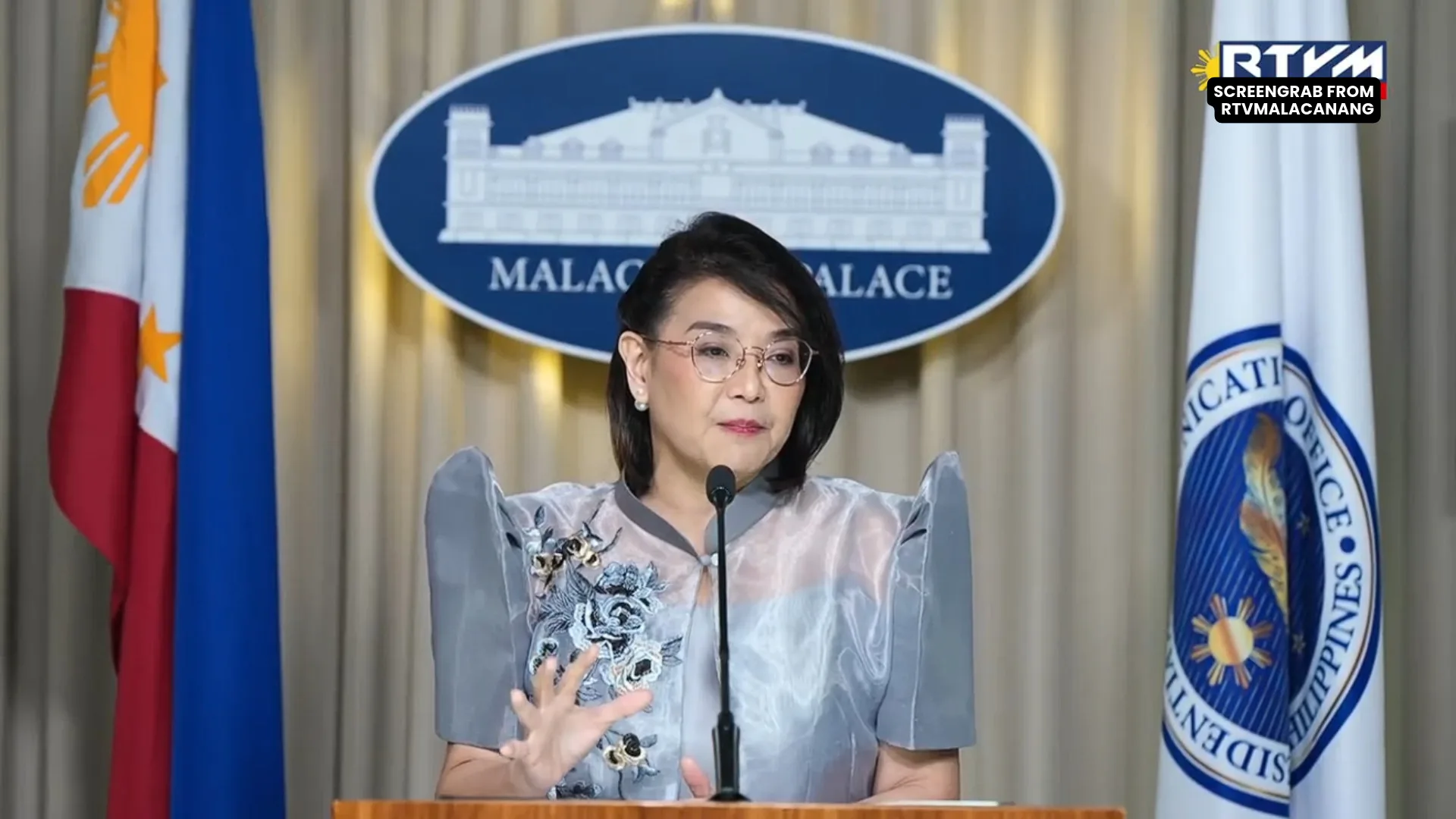
Palace Press Officer Claire Castro said in a Malacañang briefing on Tuesday that the executive order seeks to guarantee student safety while maintaining uninterrupted academic instruction by delegating decision-making power to local government units and educational institutions based on real-time ground conditions.
“Mas direkta ang aksyon, mas angkop ang tugon ng mga LGU. Magkakaroon din ng kakayahan ang mga paaralan na pagsuspinde ng klase kung talagang kinakailangan para sa mga estudyante dahil kaligtasan ng mga bata ang palaging una (With more direct action, local government units (LGUs) can respond more appropriately. Schools will also have the authority to suspend classes when absolutely necessary for the sake of the students, as the safety of the children is always the top priority),” Castro said.
“Maliban dito, makakatulong din ang EO upang siguruhin na patuloy lang ang pagkatuto ng mga bata sa tulong ng alternative learning arrangements. Suspended man ang klase, tinitiyak ng EO na tuluy-tuloy pa rin ang pagkatuto (Furthermore, the Executive Order (EO) helps ensure that children’s learning continues through alternative learning arrangements. Even when classes are suspended, the EO guarantees that the learning process remains uninterrupted),” Castro also said.
Under EO 130, class and work suspensions are organized into three primary operational mechanisms: automatic suspensions driven by technical thresholds, localized suspensions declared by Local Chief Executives (LCEs) following risk assessments, and granular suspensions issued by specific educational institutions based on site conditions.
Automatic suspensions take effect immediately without needing a separate declaration whenever technical agencies, such as the Philippine Atmospheric, Geophysical and Astronomical Services Administration (PAGASA) or the Philippine Institute of Volcanology and Seismology (PHIVOLCS), issue warnings or alert levels reaching pre-set hazard thresholds.
When automatic national declarations are absent, local executives are authorized to issue localized suspensions covering an entire municipality, specific barangays, or designated learning centers based on local risk assessments.
Granular suspensions may be declared by individual educational institutions only when no national or local chief executive suspension is in place, provided that documented site-specific conditions show an actual or imminent threat to student and staff welfare.
The order specifies that suspending in-person classes does not automatically halt education, as schools must implement alternative learning modes and work arrangements whenever practicable.
Suspensions lift automatically once prescribed alert levels expire or after mandatory safety inspections are completed. Additionally, schools under localized suspensions may request a granular resumption of in-person classes if site-specific safety clearance is secured with the concurrence of the concerned local chief executive.
EO 130 amends key provisions of Executive Order 66 issued in 2012 regarding class and work cancellations in educational institutions.
The Department of Education (DepEd) has been designated as the lead agency to monitor and oversee the nationwide implementation, with funding initially sourced from DepEd’s budget.
The Department of the Interior and Local Government (DILG) will ensure local government units expedite school safety clearances, while the Department of Public Works and Highways (DPWH) will conduct structural assessments of affected educational infrastructure following hazards.
PAGASA, PHIVOLCS, and the Environmental Management Bureau of the Department of Environment and Natural Resources (DENR-EMB) are tasked with issuing timely technical advisories and regularly reviewing hazard thresholds.
Implementing rules and regulations for EO 130 will be promulgated within 30 days by DepEd in coordination with the Commission on Higher Education (CHED), Technical Education and Skills Development Authority (TESDA), Department of Science and Technology (DOST), PAGASA, PHIVOLCS, DENR-EMB, DILG, DPWH, and other relevant government bodies.