
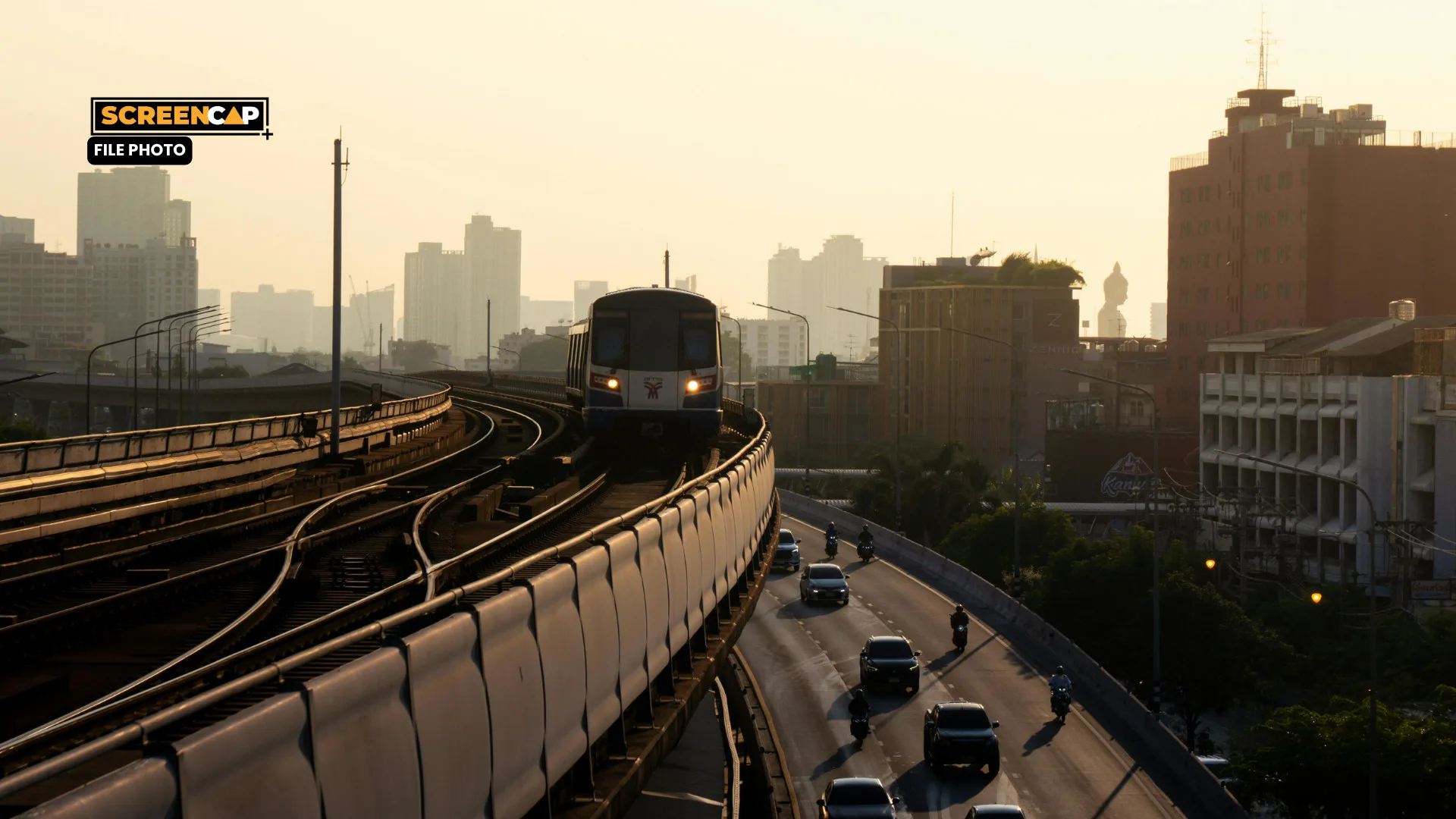
The Marcos administration is proposing a record P197.30-billion budget for railway infrastructure under the Fiscal Year (FY) 2027 National Expenditure Program (NEP), aiming to accelerate major transit projects and reshape public mobility across Metro Manila and neighboring provinces.
The proposed allocation for the Rail Transport Program represents a P141.96-billion surge or a 256.54 percent increase from the P55.34 billion provided in the FY 2026 General Appropriations Act (GAA). It is also P73.18 billion higher than the P124.12 billion initially proposed in the FY 2026 NEP.
Department of Budget and Management (DBM) Acting Secretary Kim Robert C. De Leon emphasized that the steep expansion in rail funding aligns with the national strategy to improve economic productivity through modern transport backbones.
De Leon said these investments demonstrate that reducing travel time and logistics costs, connecting regional economies, improving the movement of people and goods and bringing more Filipinos within reach of jobs and economic opportunities are important priorities of the administration.
Nearly 97 percent of the entire proposed rail budget, amounting to P191.28 billion, will be directed toward two megaprojects in the capital and surrounding provinces.
The biggest share will go to the North-South Commuter Railway (NSCR) System, which is set to receive P123.84 billion. This is more than four times its P28.79-billion allocation under the FY 2026 GAA. The NSCR is envisioned as a regional transport backbone connecting Metro Manila with fast-growing economic centers in Central Luzon and CALABARZON.
Meanwhile, Phase I of the Metro Manila Subway Project (MMSP) is proposed to receive P67.44 billion, more than triple its P20.39-billion funding under the FY 2026 GAA. The country’s first underground urban railway will span 33 kilometers with 17 stations, traversing Valenzuela to Bicutan with a spur line connecting to the Ninoy Aquino International Airport.
Beyond the flagship underground and commuter lines, the FY 2027 budget proposal allocates funding for existing elevated lines and key interconnectivity hubs.
The LRT Line 1 Cavite Extension Project is earmarked for P1.17 billion, up from P799.64 million under the FY 2026 GAA. The project covers an 11.7-kilometer extension from the existing terminus at Baclaran to Niog Station in Bacoor, Cavite.
Another P1.94 billion is proposed for the MRT Line 3 Rehabilitation Project, nearly four times its P500-million allocation in FY 2026. The funding will cover the rehabilitation and upgrading of the 16.9-kilometer rail line, including light rail vehicles, tracks, signaling systems, power supply, overhead catenary, communications, depot and station equipment.
The government is also proposing around P603.89 million for the LRT-1 South Extension Project Common Station Interim Operations. The facility will connect LRT Line 1, MRT Line 3, and MRT-7 at EDSA and North Avenue, while eventually offering a direct transfer point to the Metro Manila Subway.
If approved by Congress, the proposed allocation will mark the highest annual financial commitment to rail infrastructure in Philippine history.