
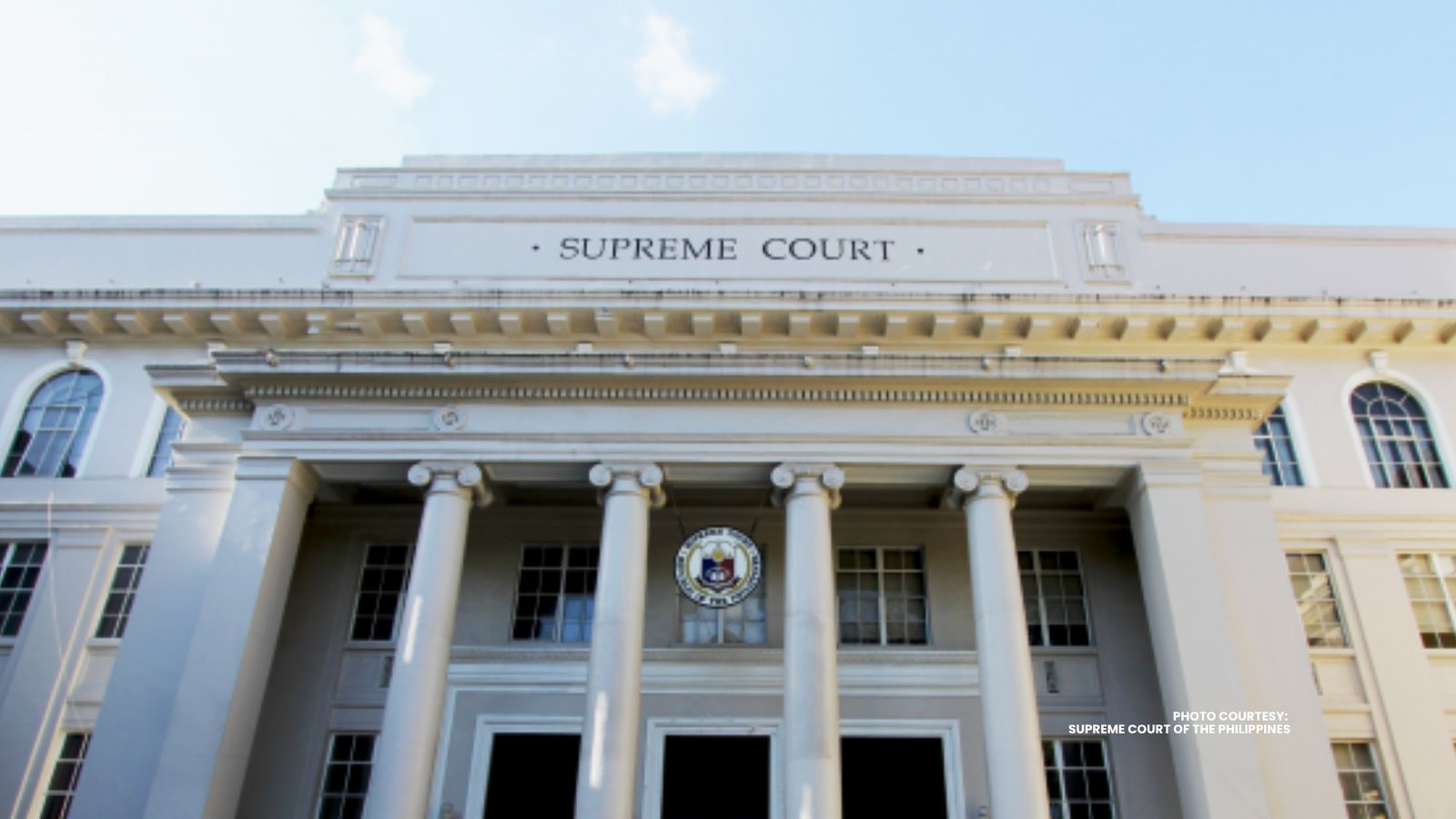
A planned Supreme Court challenge to the Senate impeachment court’s revised voting threshold for convicting Vice President Sara Duterte could face a procedural obstacle, according to the lead prosecutor in the trial.
House lead impeachment prosecutor and Batangas Rep. Gerville “Jinky Bitrics” Luistro pointed out that no verdict has been issued by the impeachment court yet and the defense has not even established that there has been an actual injury arising from the ruling.
Luistro questioned the timing of the Duterte camp’s planned petition, stressing that cases brought before the Supreme Court must satisfy the legal requirement of ripeness for judicial review.
“But if I will be sharing my position on that. I think may issue sila about the ripeness because until and unless nagkaroon na ng verdict there is no injury to speak of,” Luistro explained.
Speaking during Kapihan sa QC, Luistro reacted to statements by Duterte defense lawyer Michael Poa that the defense was considering challenging the impeachment court’s interpretation of the two-thirds voting requirement for conviction.
The Senate impeachment court previously voted 13-1 to reconsider its earlier interpretation that conviction necessarily requires 16 votes based on the chamber’s full 24-member composition.
Under the revised interpretation, the two-thirds requirement remains, but the number of senators legally and factually capable of participating in the proceedings may determine the number of votes needed for conviction.
“Prerogative po nila ‘yan. As a matter of fact any party so long as may locus standi at ripe na yung issue can go to the Supreme Court anytime,” Luistro acknowledged.
The prosecution chief explained that a party seeking judicial intervention must establish sufficient legal standing and demonstrate that the controversy has reached the stage where the court can properly resolve it.
“The test of ripeness of the case is whether or not an injury will be sustained or has been sustained by the proper party,” Luistro stressed.
The defense has maintained that the constitutional requirement should be interpreted as 16 votes regardless of vacancies or the inability of certain senators to participate, while the impeachment court’s revised interpretation allows a different computation under specified circumstances.
Luistro pointed out that the controversy remains hypothetical at this stage because the senator-judges have not voted on Duterte’s guilt or innocence under Article II involving alleged unexplained wealth.
The Supreme Court has authority to review constitutional questions and determine whether a government body committed grave abuse of discretion, although the availability of such review depends on the circumstances and established requirements for judicial intervention.
“But of course prerogative nila ‘yan if they want to go to the Supreme Court this early at nire-recognise naman po natin ang kapangyarihan ng judiciary to resolve matters concerning the interpretation and implementation of laws,” Luistro clarified.
The impeachment trial is scheduled to resume on Nov. 9 for the presentation of defense evidence, with the prosecution maintaining that the Senate should first complete its proceedings before the consequences of the revised voting threshold can be definitively assessed.