
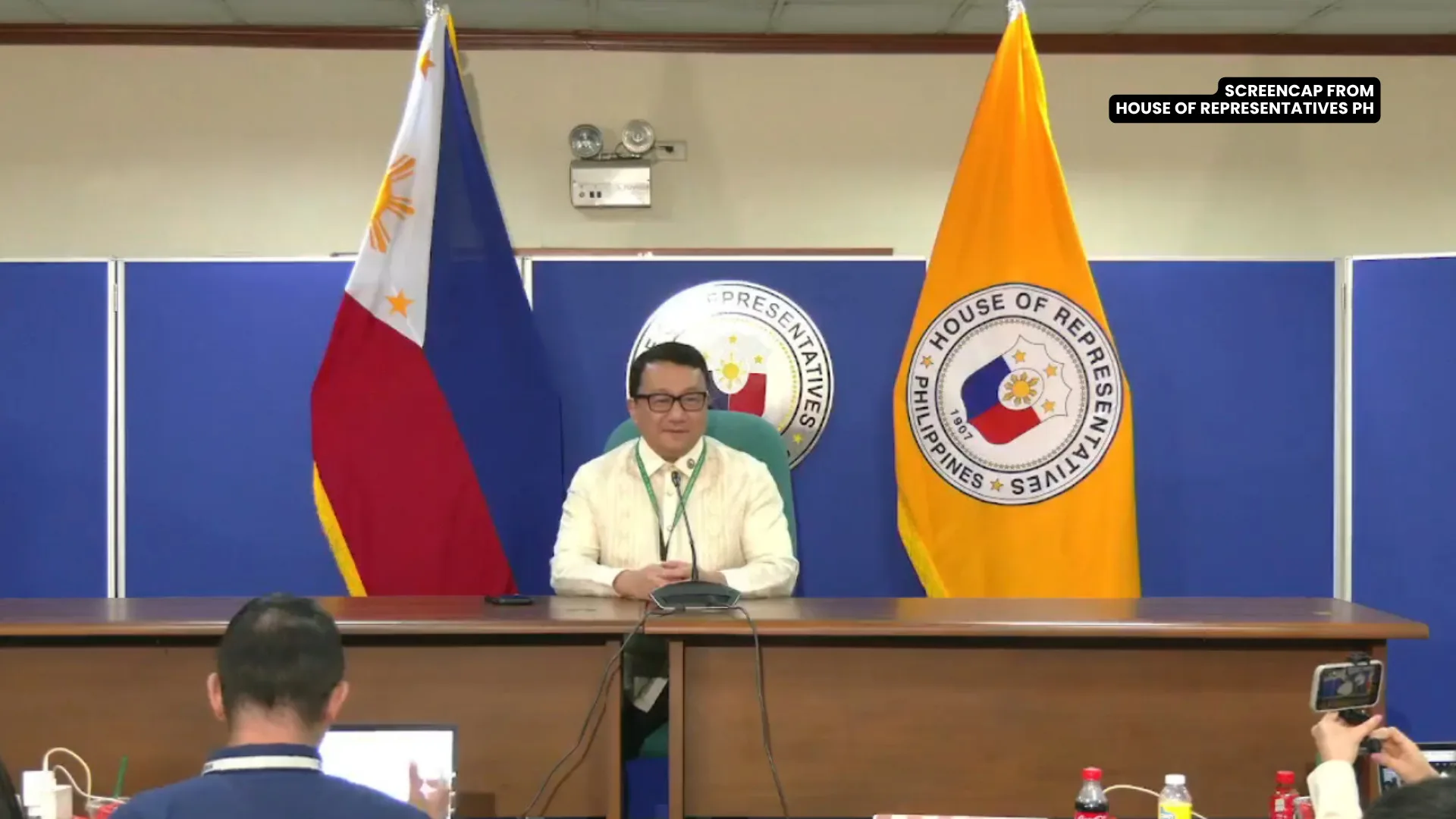
House prosecutor and Manila Rep. Joel Chua said Monday that Vice President Sara Z. Duterte’s remarks in 2024 made him fear for his safety and prompted him to obtain personal security.
Chua said he took the statements seriously because they came from the country’s second-highest official.
“Hindi ordinaryong tao itong nagbitaw ng ganyang pananalita, bagkus pangalawa sa pinakamataas na opisyal ng ating bansa,” he said at a press briefing.
Chua was responding to a question about video excerpts played during Duterte’s impeachment trial in which she mentioned him and criticized members of the House Committee on Good Government and Public Accountability.
He said he had heard the remarks when they were originally made but remained affected when the recordings were replayed before the Senate impeachment court.
“Pero makikita natin dito sa mga salaysay at video na pinakita ang kanyang pagiging violent nature na very unbecoming para sa pangalawang Pangulo ng ating bansa,” Chua said.
Asked whether he felt threatened at the time, he replied: “Siyempre, bakit sino naman po ba ang hindi matatakot sa mga pananalita ng ating Bise Presidente?”
Chua said he did not have a security detail before the incident.
“Because of that, naglagay ako ng security dahil hindi naman talaga ordinaryo itong nagbitaw ng salita laban sa atin,” he said.
“Hindi ito isang salita na binabalewala,” he added.
During Monday’s hearing, the prosecution presented Atty. Jeremy C. Lotoc, a National Bureau of Investigation regional director and former chief of its Cybercrime Division, who testified on the bureau’s investigation into Duterte’s public statements on Nov. 23, 2024.
The impeachment court played portions of the recording identified by Lotoc. The presiding officer clarified that not all the profanities in the excerpts were directed at President Ferdinand R. Marcos Jr., First Lady Liza Araneta-Marcos, or former Speaker Ferdinand Martin G. Romualdez.
Lotoc said some remarks referred to one or more of the three officials, while others mentioned lawmakers.
Chua also rejected the argument that a conditional threat should be disregarded. He compared it to a threat against a debtor, saying a conditional statement could still be the subject of a grave threat complaint.
“A threat is a threat,” Chua said.