
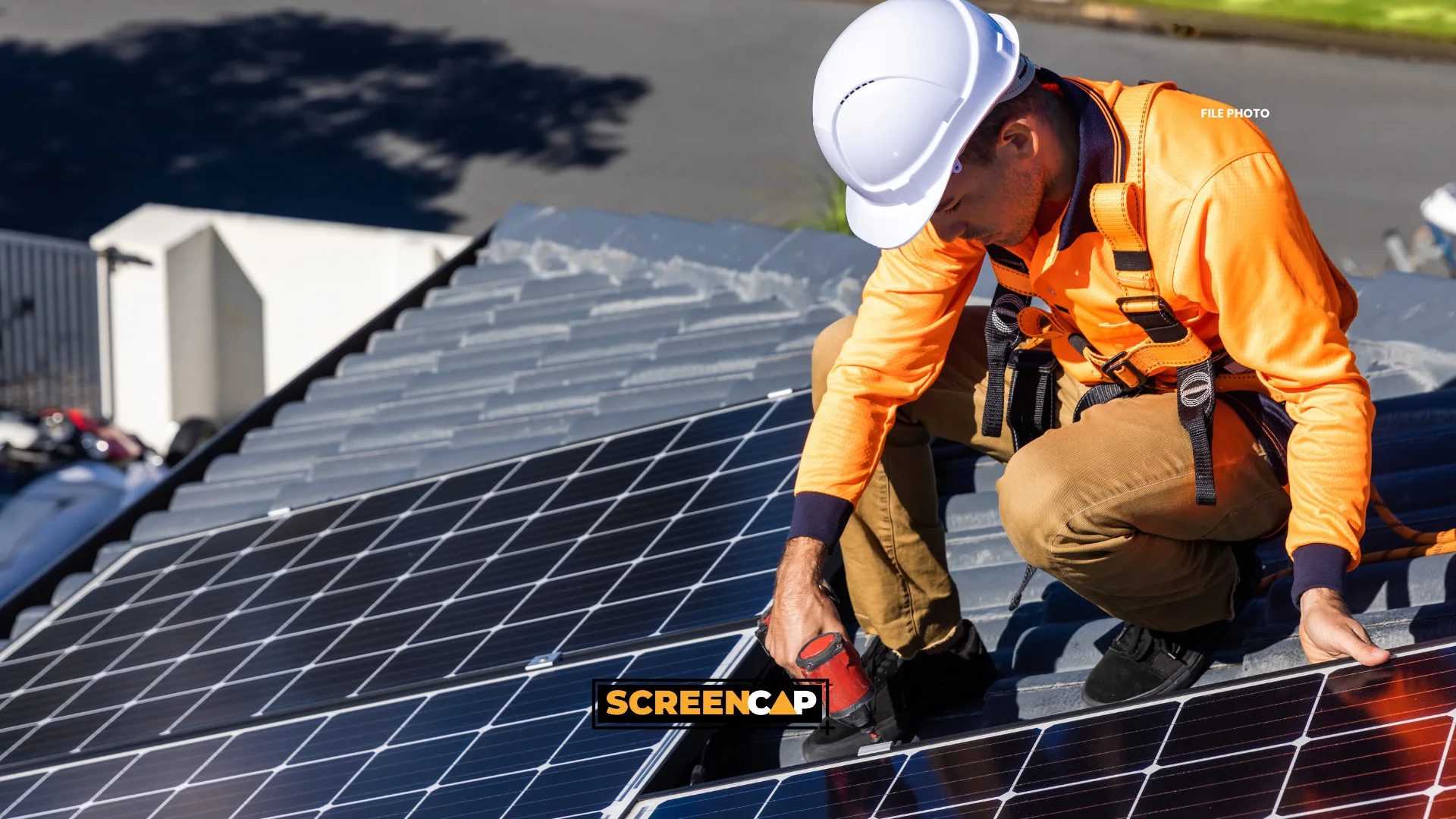
A lawmaker is seeking a review of the country’s renewable energy and net metering rules to make rooftop solar systems more accessible to Filipino households struggling with high electricity costs.
The lawmaker said the government should remove unnecessary barriers that prevent ordinary families from using solar energy to reduce their monthly power bills.
“Families should not be punished for trying to lower their electric bills through clean energy,” 1Tahanan Rep. Nathaniel Oducado said.
“Red tape undermines the benefits of green energy,” he added.
Oducado made the call after the Manila Electric Company (Meralco) raised concerns before regulators over so-called “guerrilla solar” installations, referring to unregistered rooftop solar systems connected to the grid without completing the full net metering process.
While acknowledging the need for safety regulations, Oducado said stricter enforcement should not translate into more complicated requirements that discourage homeowners from shifting to renewable energy.
“We understand the need for safety standards, but the answer should not be more red tape and bureaucracy that discourages ordinary homeowners from going solar,” he said.
Under the Renewable Energy Act, households may install renewable energy systems and send excess power back to the grid through net metering. In return, consumers can offset part of their electricity consumption and receive credits for surplus energy.
However, the lawmaker said many consumers still find the application process slow, costly and difficult to navigate.
He said the growing interest in rooftop solar reflects the frustration of households facing expensive electricity and the country’s continued dependence on imported fossil fuels.
“People are turning to solar because electricity in the Philippines is already too expensive and too dependent on imported fossil fuels,” Oducado said.
He also cited the situation in island provinces, where rotating brownouts have become a regular burden due to reliance on diesel-powered generation, whose costs are vulnerable to global fuel price shocks.
“Especially in island provinces, households have been experiencing rotating brownouts as a fact of life because of reliance on diesel, whose prices shot up with the ongoing tensions in the Middle East,” he said.
Oducado noted that rooftop solar remains largely untapped in the country, with studies and monitoring by the Institute for Climate and Sustainable Cities identifying more than 1,800 megawatts of potential rooftop solar capacity nationwide.
Meralco has also disclosed that more than 20,000 net metering installations are already operating within its franchise area, while additional rooftop solar capacity exists outside the formal program.
For Oducado, this shows strong consumer demand for cheaper and cleaner energy options.
“Instead of making people afraid of rooftop solar, the government should make the process simpler, cheaper, and faster while still protecting public safety,” he said.
“We should treat rooftop solar as part of the solution to high electricity prices and not as a threat,” he added.
Oducado said regulatory oversight should focus on safe installations and fair rules, not on creating barriers that protect the existing energy system at the expense of consumers.
“Oversight should focus on ensuring safe installations and fair rules, not creating barriers that only protect the old energy system,” he said.