
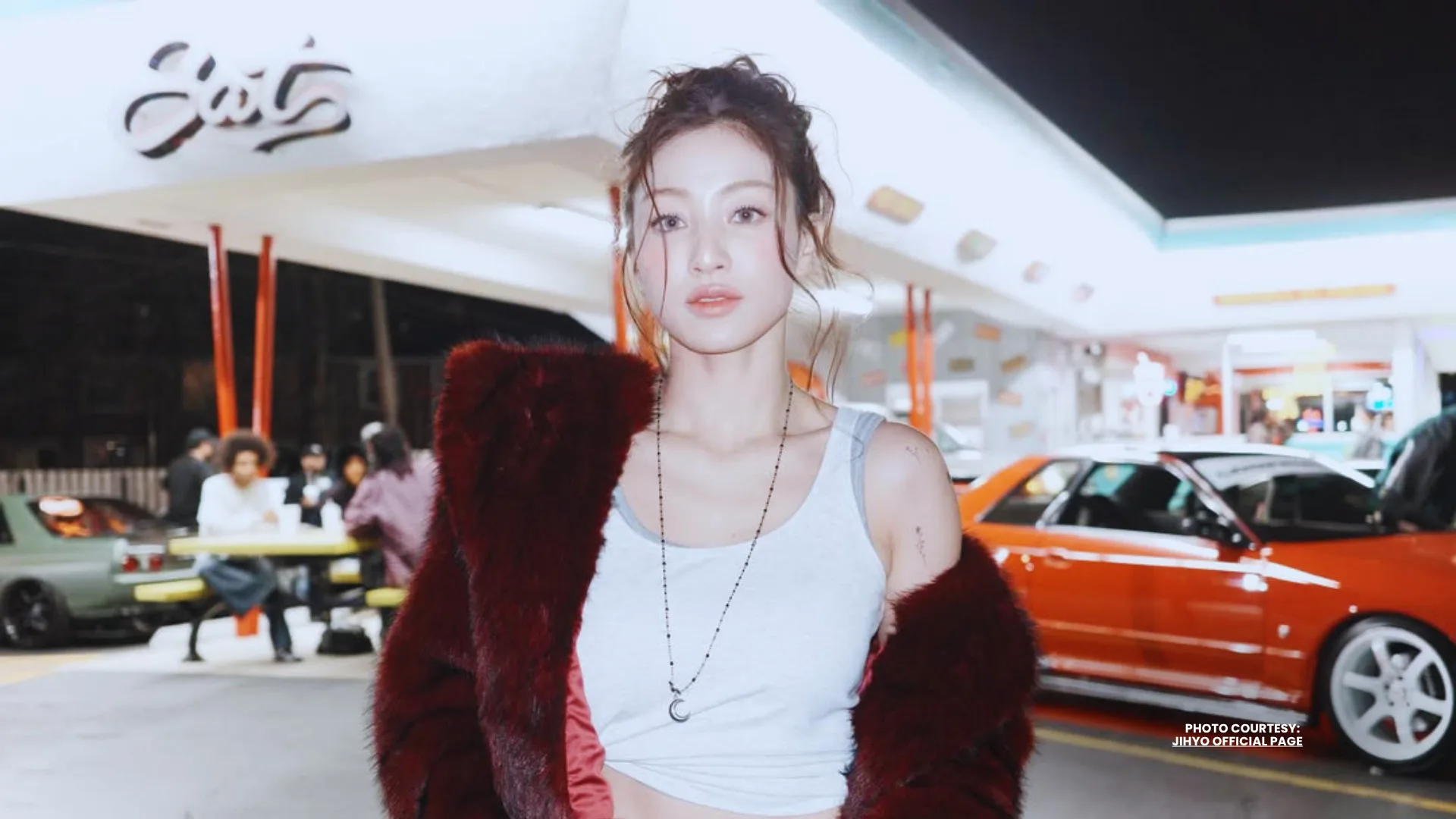
TWICE leader Jihyo has found herself at the center of an unexpected online debate after a fashion detail in one of her recent Instagram updates drew scrutiny from fans and netizens.
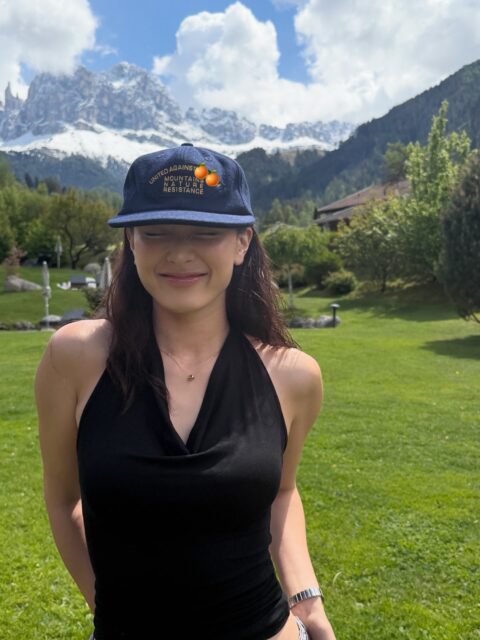
The discussion began after Jihyo shared photos from a trip to San Cipriano in Bolzano, Italy, where she was seen with fellow TWICE members Jeongyeon and Mina. In one image, the singer wore a navy cap with part of its lettering covered by emojis, prompting fans to trace the original design online.
The cap was later identified as the “Nature Resistance Cap” from Radical Media Archive, sold through Words Sounds Colors & Shapes. Its full embroidered message reads: “United against fascism. Mountains. Nature. Resistance.” The item has since been marked sold out on the retailer’s website.
What might have passed as a simple travel photo quickly turned into a broader conversation about politics, celebrity image, and the limits placed on K-pop idols. Some fans praised Jihyo for wearing an accessory with an anti-fascist message, interpreting it as a rare and meaningful stance in an industry where idols are often expected to avoid politically sensitive subjects.
Others were more critical, pointing to the fact that part of the wording was hidden in the original post. For them, the covered text raised questions about whether the message was intentionally softened, whether it was a personal choice, or whether it reflected the caution often surrounding public figures in South Korea’s entertainment industry.
The debate grew further after the photo was reportedly removed, fueling speculation that the decision may have been made to avoid controversy. However, there is no confirmed explanation for the deletion, and neither Jihyo nor JYP Entertainment has publicly addressed the matter.
That absence of comment has left the issue open to interpretation. Supporters argue that even wearing the cap was enough to send a message, especially given the scrutiny faced by idols over clothing, colors, symbols, and social media posts. Critics, meanwhile, say the incident shows how carefully managed idol expression remains, particularly when a statement can be read as political.
For now, the controversy is less about a single accessory than about the pressure placed on global pop stars whose images are dissected down to the smallest detail. In Jihyo’s case, a cap worn during a scenic trip has become the latest flashpoint in the continuing debate over whether K-pop idols should remain politically neutral, or whether silence itself has become increasingly difficult to maintain.