
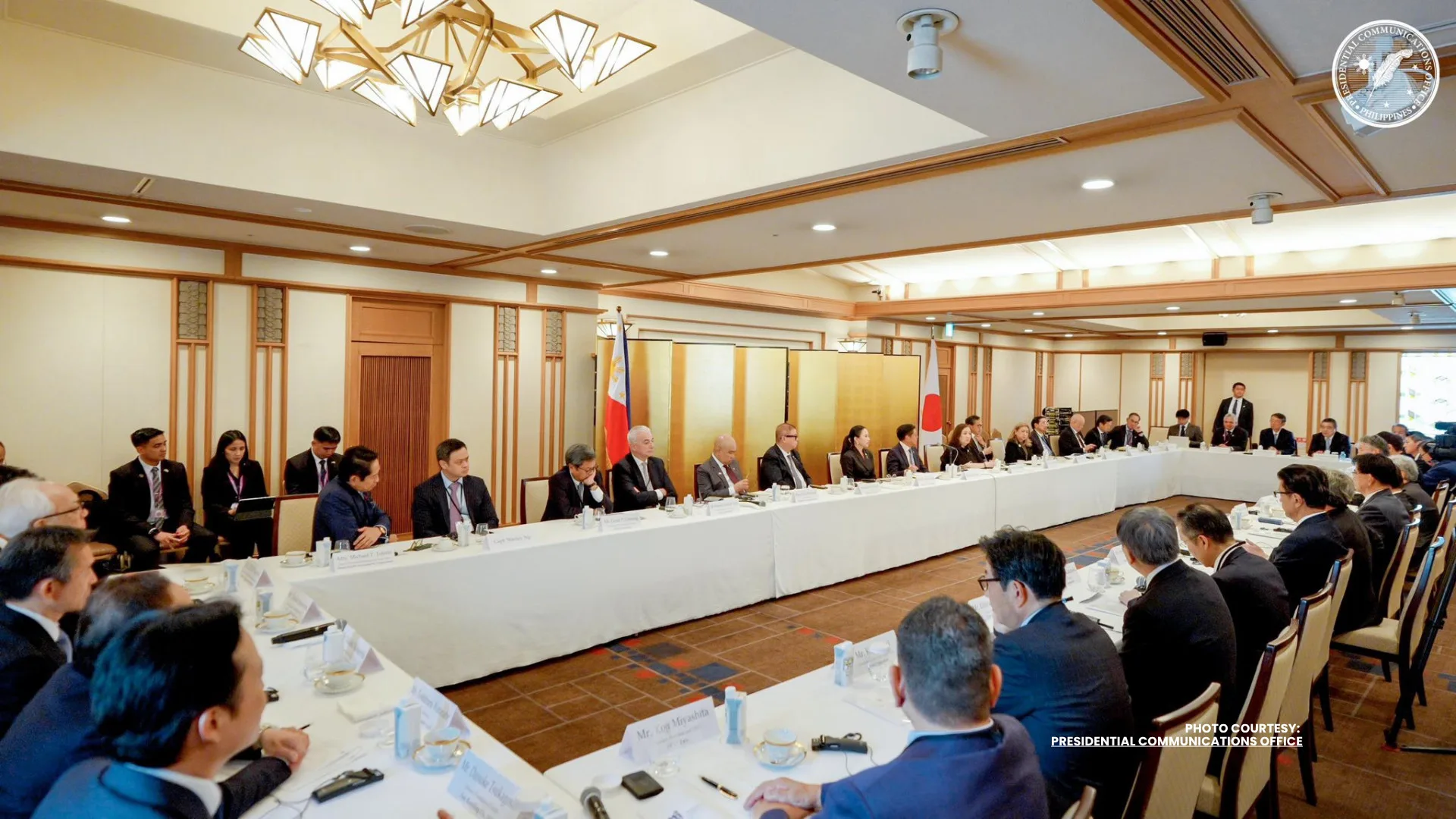
President Ferdinand Marcos Jr. secured $3.4 billion, or about P210 billion, in investment commitments from Japanese companies during a high-level business roundtable in Tokyo, as Manila and Tokyo move to deepen economic ties alongside their growing strategic partnership.
The commitments were made Wednesday at the Imperial Hotel, where Marcos met with top executives from major Japanese conglomerates and financial institutions as part of his four-day state visit to Japan.
Marcos said the Philippines and Japan are entering a new phase of cooperation, anchored not only on their 70 years of normalized diplomatic relations but also on shared efforts to build stronger trade, industry, tourism, and supply chain links.
“As we mark 70 years of the normalization of our diplomatic relations, we are no longer simply commemorating history,” Marcos said. “We are entering a new chapter defined not only by friendship, but by deeper integration, shared growth, and a common belief in the future.”
The Presidential Communications Office said the investment pledges are expected to expand domestic industrial capacity, generate thousands of specialized jobs for Filipinos, strengthen local supply chains, improve tourism infrastructure, and support technology transfers in key growth sectors.
Marcos said a stronger Philippine-Japan economic corridor has become more urgent amid global economic uncertainty, including energy volatility and supply chain disruptions linked to the conflict in the Middle East.
He told Japanese business leaders that the Philippines is pursuing a coordinated economic strategy where infrastructure, industry, finance, human capital, trade, and tourism work together as drivers of growth.
“Trade and tourism are not supporting sectors. They are core drivers of economic expansion in the Philippines moving forward,” Marcos said.
The President also acknowledged the long-standing presence of Japanese firms in the Philippines, including All Nippon Airways, Toyota, Mitsubishi Corporation, Marubeni, Panasonic, and Fast Retailing, saying they have helped create opportunities for Filipino workers and industries.
“You are no longer just investors in our economy. You are builders of it,” he said.
Trade Secretary Maria Cristina Roque said the Philippines is positioning itself as a strategic ASEAN hub for smart manufacturing, green metals, and renewable energy, as the government seeks to attract more high-tech and sustainable investments from Japan.
Tourism Secretary Dita Angara-Mathay, meanwhile, said closer trade and tourism cooperation could open more opportunities in hospitality, eco-tourism, aviation connectivity, and tourism-related infrastructure.
Marcos assured Japanese investors that his administration is working to modernize institutions and improve the country’s business environment to support long-term investment stability and job creation.
The Tokyo business roundtable formed part of Marcos’ state visit aimed at strengthening political ties, defense cooperation, economic partnerships, and people-to-people exchanges between the Philippines and Japan.