
The chairman of the House Committee on Suffrage and Electoral Reforms has defended the House-approved Anti-Political Dynasty Bill, rejecting claims that the measure is diluted and insisting it directly addresses political monopolies while safeguarding democratic freedoms.
Lanao del Sur Rep. Zia Alonto Adiong said the proposal should not be viewed as an attempt to restrict democratic participation, but rather as a framework to regulate the concentration of political power within families in the same locality.
“On the contrary, it actually addresses the very core problem of the monopoly of power exercised by one family within one locality,” he said in a television interview.
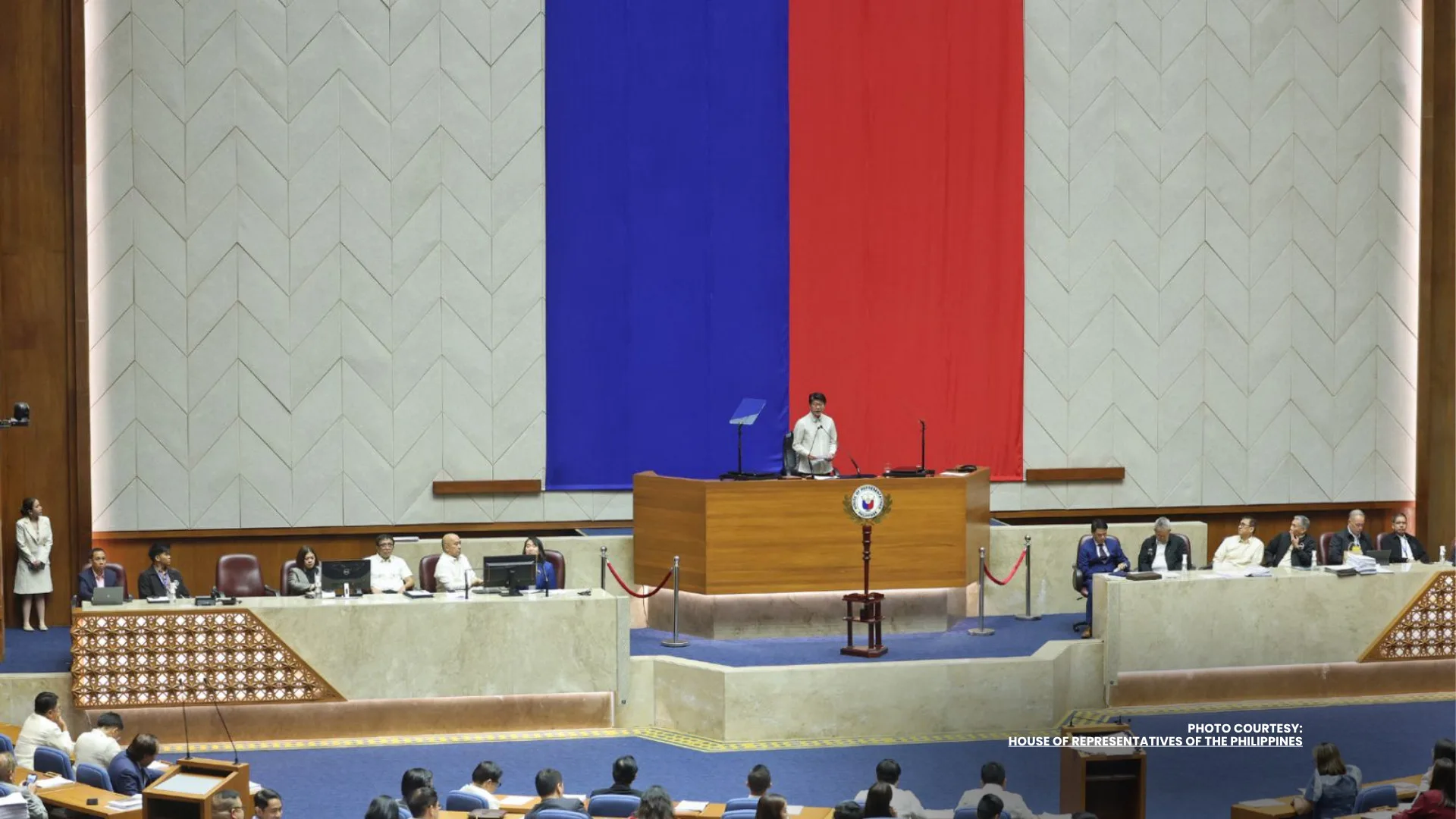
The House of Representatives approved House Bill No. 8389, or the proposed Anti-Political Dynasty Act, on third and final reading on June 3 with a vote of 267-20, with seven abstentions. The measure is among priority legislative items endorsed by President Ferdinand Marcos Jr. through the Legislative-Executive Development Advisory Council (LEDAC).
Authored by Speaker Faustino “Bojie” Dy III and House Majority Leader Sandro Marcos, the bill defines a political dynasty as the concentration of elective positions by spouses or relatives within the second civil degree of consanguinity or affinity. It prohibits such relatives from simultaneously running for or holding elective posts within the same jurisdiction or legislative district.
The Lanao del Sur solon said the measure seeks to dismantle long-standing political dominance by certain clans in local governments, where elective positions are often held simultaneously by members of the same family.
He noted that the proposal could affect a significant number of existing positions currently occupied by related officials serving at the same time.
“In fact, the proposed anti-political dynasty will already affect more than a thousand current positions occupied by families or relatives within the second degree of consanguinity,” he said, adding that more than 1,700 municipal executive posts could be impacted.
While acknowledging criticism from various sectors, he said debate over the measure was expected given the complexity of translating a constitutional principle into enforceable legislation.
He described the bill as a milestone in fulfilling a long-standing constitutional directive under Article II, Section 26 of the 1987 Constitution, which calls on the State to prohibit political dynasties.
“This is a turning point for the past four decades insofar as the public’s desire to make Section 26, Article II fully functional,” he said.
The solon stressed that the House proposal attempts to provide a working definition of political dynasty, filling what he described as a policy gap that has persisted since the Constitution was ratified.
He also emphasized that lawmakers had to carefully balance reform efforts with the constitutional guarantee of democratic participation, including the right of citizens to run for public office.
“The right to elect and to be elected upon is the very core foundation and essence of a republican democratic country,” he said.
The Mindanao lawmaker added that the Constitution must be interpreted as a whole, warning against isolating provisions without considering broader democratic principles.
“You have to appreciate and read the Constitution as a whole. You cannot just selectively point out one particular provision and then make it as the general rule,” Adiong said.
He also cited discussions with members of the 1987 Constitutional Commission, noting that framers themselves had differing views on how far restrictions on political dynasties should go and ultimately left Congress to define the scope through enabling legislation.
He said the bill reflects an attempt to strike a balance between limiting concentrated political power and preserving the electorate’s freedom of choice, a tension that continues to shape the debate on one of the country’s most enduring political issues.