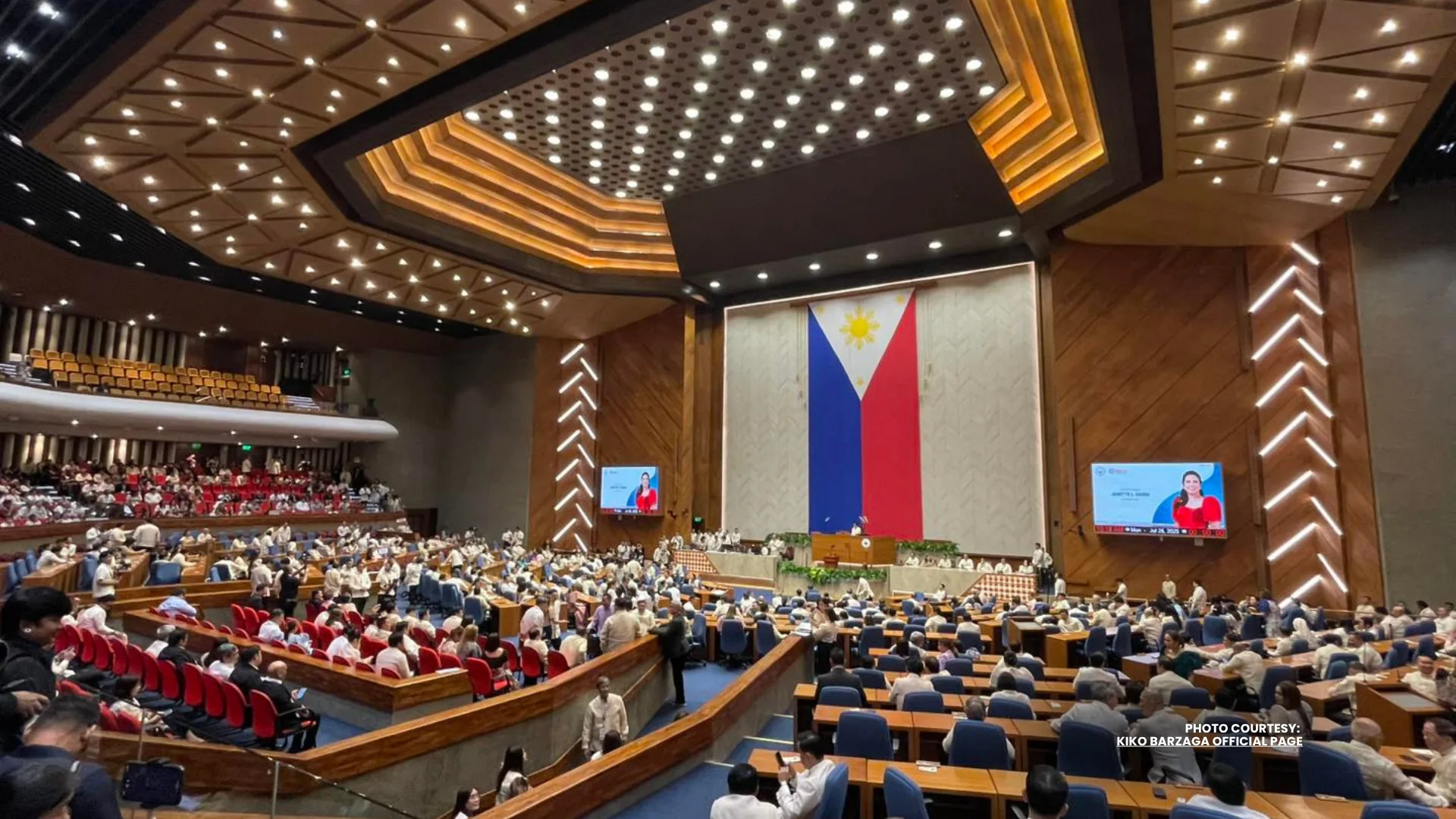
Following reports that at least four transnational drug-trafficking networks are allegedly linked to illegal drug activities in the Philippines, Las Piñas Rep. Mark Anthony Santos, chairman of the House Committee on Dangerous Drugs, has filed a bill seeking to strengthen the government’s legal arsenal against major international drug syndicates.
House Bill No. 11751, or the proposed Anti-Narco-Terrorism Act of 2026, seeks to establish a legal framework for designating qualified transnational drug-trafficking organizations as terrorist organizations, subject to clearly defined criteria and applicable legal safeguards.
The proposed measure seeks to amend the Anti-Terrorism Act of 2020 and the Comprehensive Dangerous Drugs Act of 2002 to address potential jurisdictional gaps that transnational drug syndicates could exploit to evade prosecution, particularly when illegal drug shipments are intercepted before reaching Philippine territory.
The bill seeks to penalize large-scale drug trafficking committed by members, leaders, or financiers of transnational syndicates as narco-terrorism, and impose penalties on those who finance or provide material support to these groups.
Likewise, it allows Philippine courts to exercise jurisdiction over certain drug-related offenses committed abroad when the illegal drugs are intended for or transported through the Philippines.
“Transnational drug syndicates pose a serious threat to our country because their operations can cross borders, involve multiple networks, and rely on financiers and facilitators who may remain beyond the reach of conventional law enforcement efforts,” Santos said.
“Through House Bill No. 11751, or the proposed Anti-Narco-Terrorism Act of 2026, we seek to strengthen our legal framework against major drug-trafficking organizations by holding accountable not only those who transport illegal drugs, but also the leaders, financiers, and individuals who knowingly provide material support to their operations,” Santos also said.
Earlier, Santos disclosed that aside from international drug syndicate Sam Gor, four other groups—the Chinese and Chinese-Filipino drug organizations, a West African drug syndicate, and the Sinaloa/Mexican drug cartel—are among the groups reportedly active in supplying illegal drugs in the country.
Santos’ measure also proposes asset freezing and forfeiture, enhanced international cooperation in investigations and extradition, and expanded investigative tools, subject to judicial oversight and constitutional safeguards.
The lawmaker also stressed the importance of pursuing not only individual drug shipments but also the financial and logistical networks that sustain transnational illegal drug operations.
“Authorities must look beyond intercepted shipments, follow the money, and work with foreign law enforcement to identify and dismantle the syndicates behind the drug trade,” Santos said.
Santos said the bill responds to Interior and Local Government Secretary Jonvic Remulla’s call for Congress to enact legislation allowing authorities to designate qualified drug-trafficking groups as terrorist organizations.
He added that the proposed measure aims to strengthen the government’s response to large-scale drug trafficking by targeting not only those who transport illegal drugs but also the financiers, organizers, and facilitators behind transnational operations.
“Drug syndicates do not operate solely through street-level distribution. They exploit private aircraft, maritime routes, financial intermediaries, and gaps in coordination among jurisdictions. Even when a shipment is intercepted, the people financing and organizing the operation may remain beyond the reach of investigators,” Santos also said.
During a press briefing at Malacañang last week, Remulla urged Congress to pass a law that would allow authorities to pursue drug traffickers under a framework addressing their alleged links to terrorist organizations.
He cited legal challenges in prosecuting those allegedly involved in an attempted shipment of 521 kilograms of methamphetamine hydrochloride, or shabu, from Laos to Manila.
Remulla said authorities could file only conspiracy charges against those allegedly involved in the transaction because the shipment did not reach the Philippines.
“Illegal drug syndicates that operate across borders are no longer mere criminal enterprises. They finance violence, corrupt public institutions, and undermine national security,” Santos said.
A senior police officer who spoke with Santos after the congressional briefing identified Chinese and Chinese-Filipino drug-trafficking groups, West African drug-trafficking networks, and Mexican criminal organizations, including the Sinaloa Cartel, as among the foreign groups reportedly linked to the illegal drug trade in the country.
Philippine authorities have historically identified several Chinese-linked and East Asian criminal organizations in connection with transnational drug trafficking, rather than one unified “Chinese drug organization.”
Among these is the United Bamboo Gang, also known as the Bamboo Union, a Taiwan-origin criminal organization that authorities have linked to international drug trafficking. It was among the foreign drug organizations identified by the Philippine Drug Enforcement Agency (PDEA) in 2017.
The 14K Triad, a Hong Kong-origin organized-crime group, has likewise been linked to international drug trafficking and was also identified by PDEA in 2017, according to information shared by the senior police officer with Santos.
Another group previously investigated by Philippine authorities was the Dragon Wu International Drug Syndicate. In 2018, PDEA linked the network to clandestine drug laboratories in Batangas and Malabon. Authorities alleged that Chinese nationals and Filipino accomplices were involved in its operations.
The term West African Drug Syndicate (WADS) generally refers to transnational criminal networks involved in drug trafficking rather than a single organization with a unified leadership.