
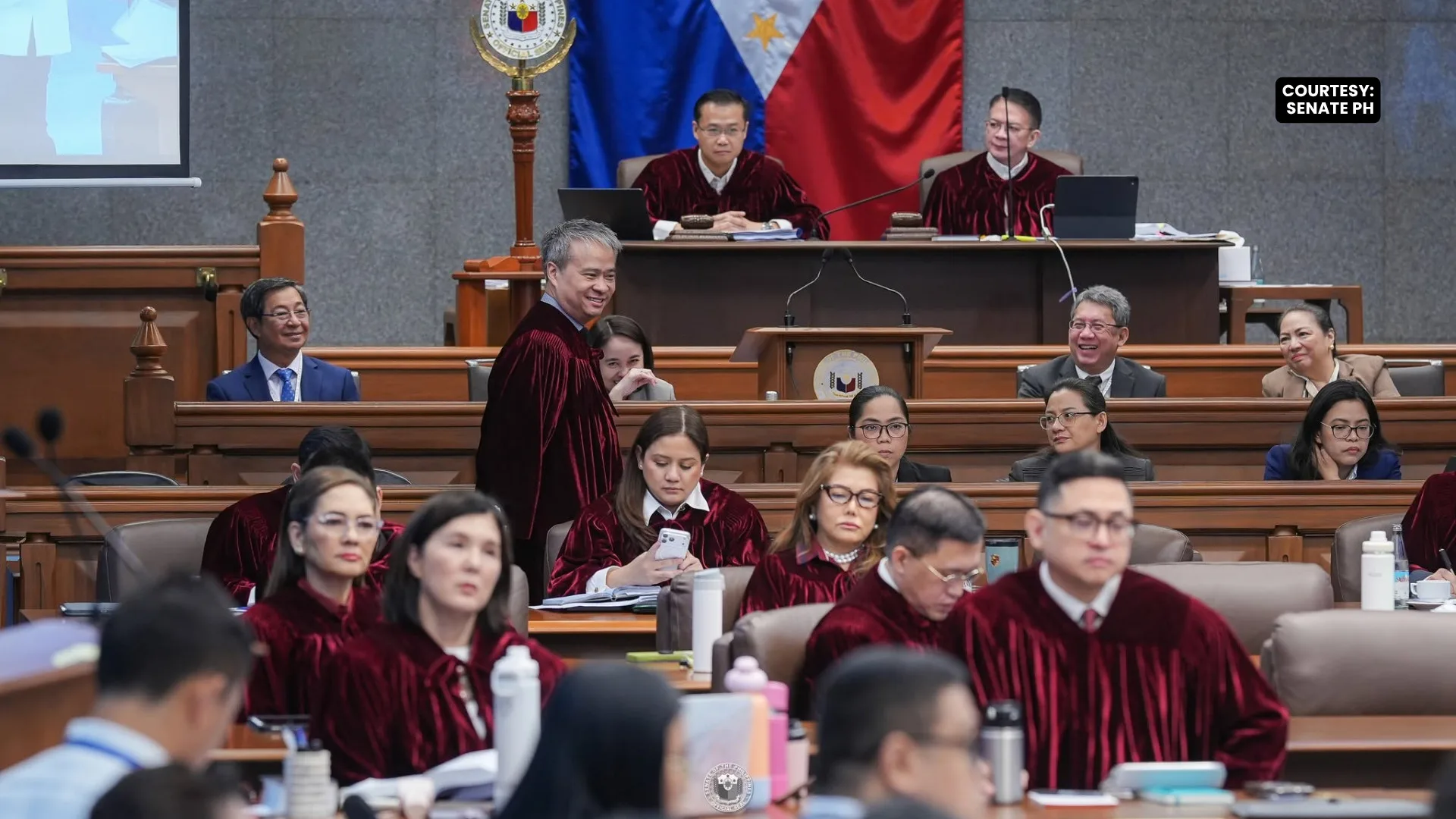
House impeachment trial spokesperson and adviser Robert Ace Barbers said the proceedings against Vice President Sara Z. Duterte are not a criminal case seeking imprisonment but a constitutional process meant to determine whether her conduct is compatible with continued service in high public office.
Barbers said the distinction should guide the public’s understanding of Article IV of the impeachment complaint.
“Hindi ito parang criminal case kung saan yung elements of the crime ay mapapatunayan sa korte at kapag ito napatunayan, ika’y makukulong,” he said.
Under Article XI of the 1987 Constitution, an impeachment judgment is limited to removal from office and possible disqualification from holding public office.
The Constitution also provides that an official convicted in an impeachment trial may still face prosecution and punishment under the law. The impeachment and criminal processes, therefore, address separate questions and carry different consequences.
“Itong impeachment process, walang kulong, kundi yung pagtatanggal lang sa opisina,” Barbers said during a press conference.
He said the Senate impeachment court must determine whether the evidence presented bears on Duterte’s fitness to remain in office and the public trust placed in her by voters.
The Constitution declares that public office is a public trust and requires public officials to remain accountable to the people. Betrayal of the public trust is among the grounds for impeaching the President, the Vice President, members of the Supreme Court, members of constitutional commissions, and the Ombudsman.
Barbers said the standards of accountability should rise with the authority and responsibility attached to a government position.
“Hindi ba dapat kapag mataas ang puwesto mo sa gobyerno, mas mataas ang panuntunan, mas mataas ang standards of you being in that office?” he asked.
He said the prosecution’s task is to demonstrate why Duterte’s recorded statements and the related evidence are relevant to the trust placed in an elected official.
The defense, meanwhile, may challenge the facts, context, legal significance, and sufficiency of the evidence before the senator-judges.
House trial spokesperson and Lanao del Sur Rep. Zia Alonto Adiong said anger does not end the constitutional inquiry into Duterte’s conduct.
Adiong said the defense had offered an explanation for the statements rather than disproving the recording, leaving the Senate to decide whether the conduct was acceptable for a high-ranking elected official.
Barbers said the central issue before the impeachment court is whether Duterte remains qualified to hold office.
“Ito ay proseso kung saan tini-test ang fitness ng ating opisyal sa gobyerno kung karapat-dapat silang manatili sa kanilang puwesto,” he said.
The prosecution said it would not equate the findings of a National Bureau of Investigation inquiry with a conviction in an impeachment trial.
Investigative findings may support the prosecution’s presentation, but the Senate must independently hear, examine and weigh the evidence. Any criminal complaint would also undergo a separate process before prosecutors and the courts.
The panel said the distinction explains why an impeachment trial may proceed without an accompanying demand for immediate imprisonment.
The case focuses on whether Duterte should continue exercising the powers of a constitutional office, while any possible criminal liability must be resolved under the standards and procedures of the justice system.
The prosecution said it would continue linking every witness and exhibit to the broader question of public accountability.
“So, dahil sa pagbabanta ba, nawala yung tiwalang iyon? Iyan ang gusto nating patunayan kaya tayo nandito sa impeachment trial,” Barbers said.
The panel added that its approach would prevent criminal terminology from overshadowing the Senate’s constitutional duty.
It stressed that an investigative finding, a criminal complaint, and an impeachment article have distinct procedural meanings. Prosecutors said they would identify the basis of every allegation and avoid presenting unproven claims as final, adjudicated facts.
The Senate’s eventual decision, the panel said, must be based on evidence admitted and tested during the impeachment proceedings.