
The Department of Social Welfare and Development (DSWD) emphasized on Thursday, September 17, that the extension of benefits under the Pantawid Pamilyang Pilipino Program (4Ps) past the standard seven-year ceiling applies exclusively to vulnerable households classified under Level 1 (Survival) and Level 2 (Subsistence) status.
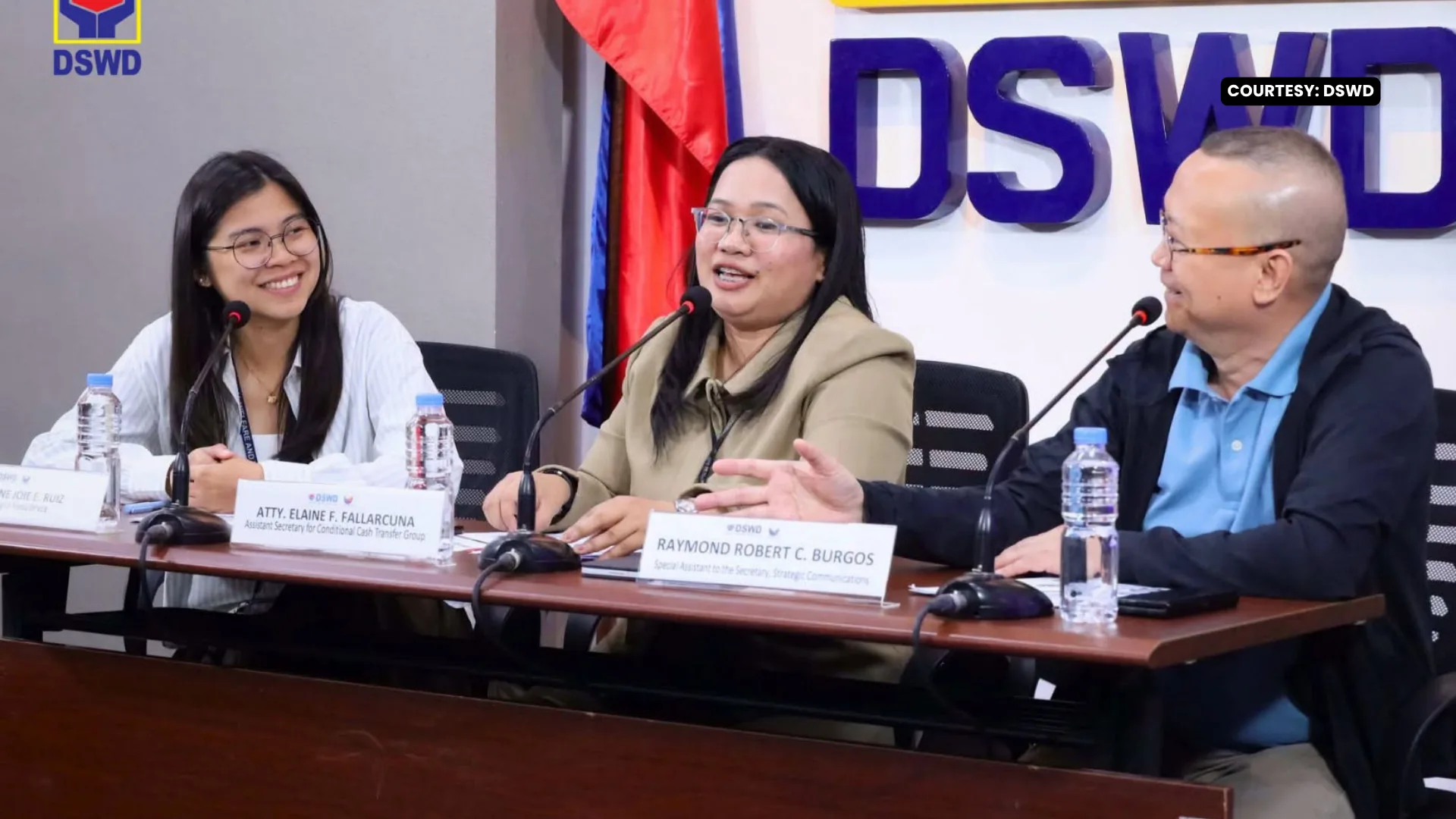
Clarifying the coverage during a media forum, Assistant Secretary Elaine Fallarcuna of the DSWD’s Conditional Cash Transfer Group (CCTG) reiterated that the standard program criteria and monitoring processes remain strictly intact.
“The extension will apply only to Level 1 – Survival and Level 2 – Subsistence. Mayroon pa rin pong mga measures and mechanisms, like there should be eligible monitored children, and they should comply with the conditionalities under the law,” said Asst. Secretary Fallarcuna.
Under the framework, qualifying Level 1 and Level 2 families may continue receiving cash grants beyond seven years, provided they adhere to mandatory healthcare, education, and development requirements.
“Wala pong mababago sa system. The beneficiaries should still comply with the conditionalities under the law, on health, education, and attendance to the Family Development Sessions (FDS). Same pa rin po yung conditionalities na kailangan nilang i-comply, and even the eligibility requirements,” Fallarcuna explained.
Recent data from the Social Welfare and Development Indicator (SWDI) shows that 1,381,625 families meet the basic criteria for extension. This total includes 1,744 households in the Level 1 survival tier and 1,379,881 households in the Level 2 subsistence category.
However, the DSWD stressed that extended participation is not guaranteed or indefinite. All covered households must undergo compulsory annual reassessments using the enhanced SWDI evaluation framework.
“We would like to emphasize that the extension is not automatic at mayroon pong reassessment ito, every year. We use the Social Welfare and Development Indicator tool as one of our core and DSWD’s case management tools to measure the families’ economic sufficiency and social adequacy. It is conducted annually. Isa rin yun sa core of Executive Order No. 120. Those families who will be extended by virtue of the EO will be reassessed annually,” Fallarcuna pointed out.
She noted that households showing progress will be transitioned out of the extension pool: “For example, if a family will be in Level 3 [Self-Sufficient] already next year, the path of that family will be a ‘transition path’ and not on the extension path.”
Addressing questions regarding potential lifetime tenure, Fallarcuna clarified that household graduation is triggered whenever a family achieves Level 3 self-sufficiency status or no longer has eligible, monitored children.
“It is not based on the number [of years]. It is based on the reassessment to be conducted every year. Ibig sabihin, hindi sya indefinite. Ibig sabihin, kung Level 2 ako ngayon, nag-Level 3 ako next year, I will exit from the program already,” Fallarcuna added.
First launched in 2008 and later codified under Republic Act 11310 in 2019, the 4Ps serves as the national flagship human capital and poverty eradication strategy. It grants conditional cash subsidies to low-income families over a primary seven-year window to boost child health, nutrition, and schooling outcomes.