
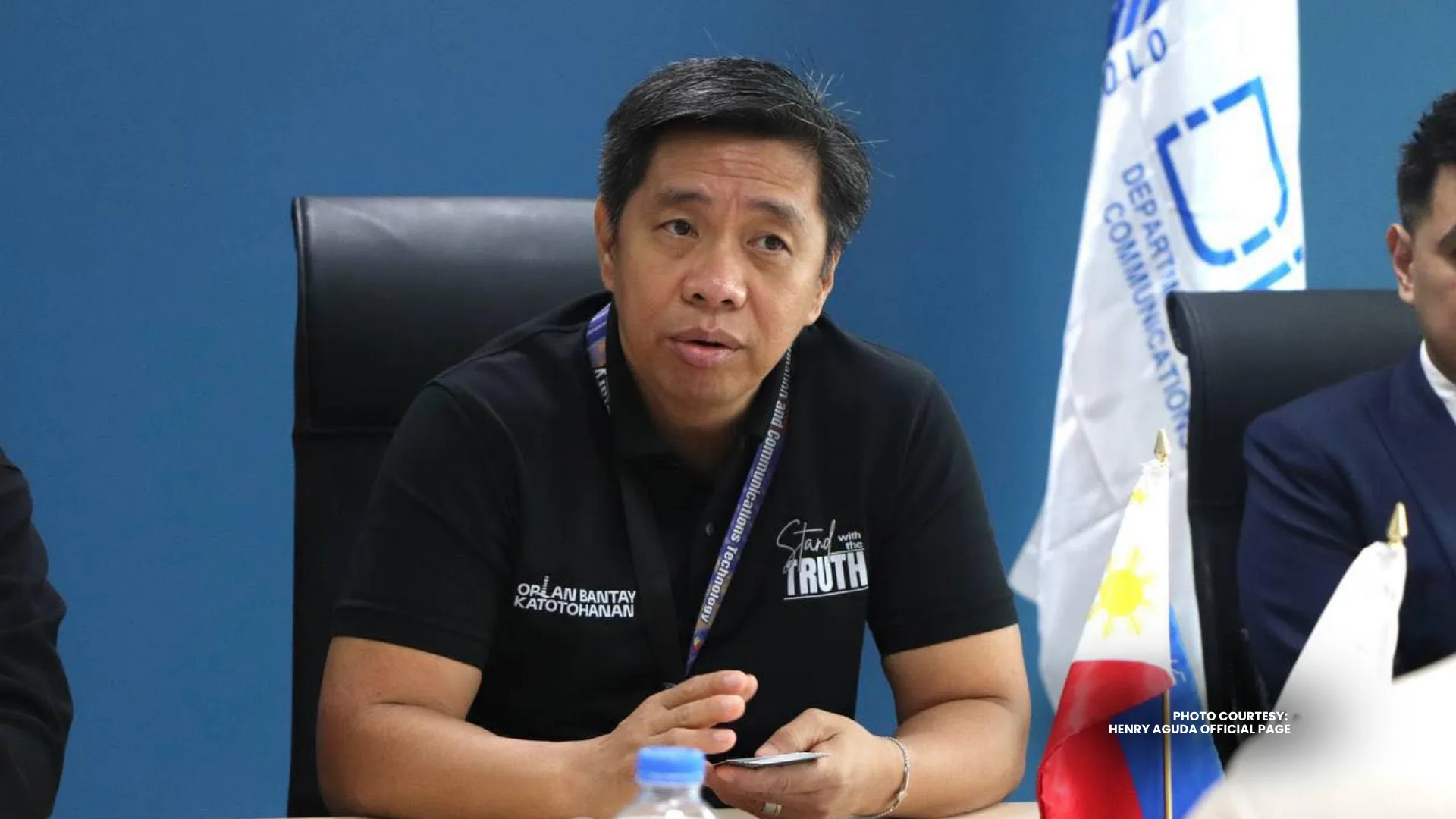
The Department of Information and Communications Technology is exploring a major structural shift for the country’s flagship digital government platform, eGovPH, by proposing the creation of a government-owned and controlled corporation (GOCC) that would operate and manage the rapidly expanding app.
The move, according to DICT Secretary Henry Aguda, is aimed at making the platform financially sustainable, more agile, and capable of retaining highly specialized technology professionals who are increasingly being recruited by the private sector.
At the center of the proposal is the eGovPH app, the government’s ambitious “super app” designed to consolidate public services into a single digital platform. The application now connects around 1,000 government systems and has already reached roughly 50 million downloads, making it one of the country’s largest digital public service platforms.
But behind the rapid growth of the platform are mounting operational pressures.
Last month, the app experienced a temporary disruption after being hit by a surge of simultaneous transactions, highlighting the challenge of scaling government technology infrastructure under the limitations of traditional bureaucracy.
Aguda said the DICT, originally structured as a regulatory and policy-making agency, was never designed to operate a massive technology platform with commercial-scale demands.
For that reason, he believes a GOCC model could give eGovPH the flexibility and operational speed needed to function more like a modern digital enterprise while remaining publicly accountable under the Commission on Audit.
“An operating utility needs agility,” Aguda said, explaining that a corporate structure would allow the platform to have its own board of directors, governance system, and chief executive officer.
The DICT chief compared the proposal to existing GOCCs such as the Social Security System and Government Service Insurance System, which operate independently while remaining government-owned.
He also pointed to earlier state-run corporate models like Energy Development Corporation and National Transmission Corporation as examples of how government-created corporations can efficiently manage large-scale infrastructure and utility operations.
One of the biggest drivers behind the proposal is talent retention.
Aguda admitted that the government struggles to keep experienced engineers, developers, cybersecurity experts, and systems architects because salary standardization rules prevent agencies from matching private-sector compensation.
Many of these workers, he said, are eventually recruited by foreign telecommunications and technology companies offering significantly higher pay.
“Transitioning to a GOCC would allow the organization to offer market-rate compensation,” Aguda said, stressing that retaining specialized personnel is critical for the stability and security of the platform.
The proposed structure could also open the door for commercial partnerships and revenue generation.
Aguda noted that eGovPH already hosts features that banks, insurance firms, and other private-sector institutions can potentially integrate into their own systems. Under a GOCC setup, the platform could enter commercial transactions that would help fund operations and reduce dependence on government appropriations.
The DICT chief said he hopes the transition can be pursued before the end of the current administration, allowing the government to fully maximize the platform’s growth and long-term potential.
As governments worldwide race to digitize public services, the Philippines’ eGovPH initiative is increasingly being viewed not just as a government app, but as the backbone of a future digital public infrastructure system.