
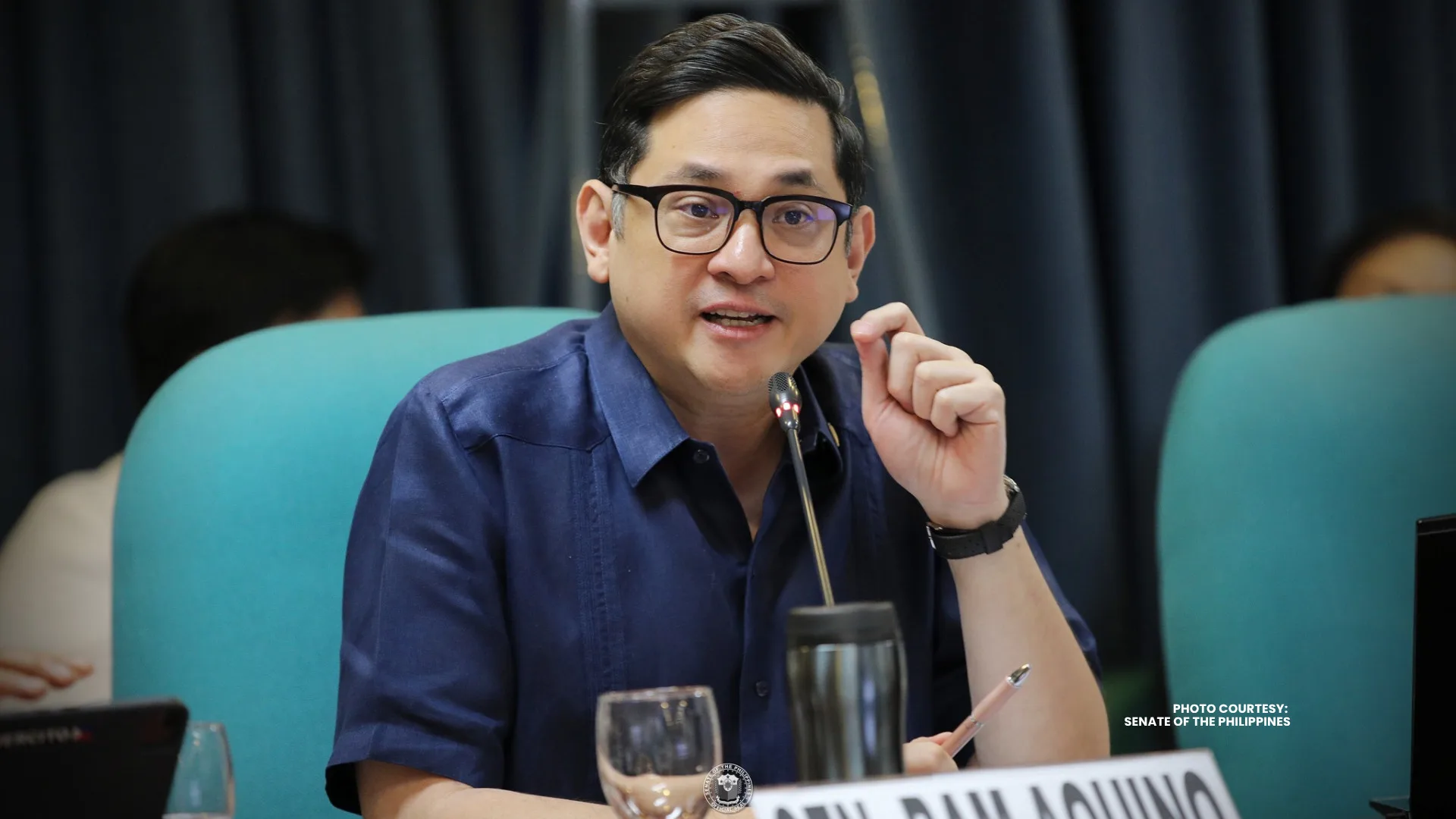
A senator has released a progress report on his 10-month tenure as chairperson of the Senate Committee on Basic Education, framing his brief stint as a push to confront the country’s education crisis even after losing the post in the recent Senate leadership shake-up.
Sen. Bam Aquino, who was moved to the minority following the change in Senate leadership, said he used his time as committee chair to advance reforms focused on students, teachers and long-standing gaps in the education system.
“Sa loob ng 10 buwan, ginawa po natin ang ating mandato, tinupad ang mga pangako, at nagtrabaho para sa inyo,” the solon said in a Facebook video, adding that he sought to maximize his chairmanship to move reforms addressing the education crisis.
At the start of his leadership of the committee, he laid out a seven-point agenda covering nutrition, classroom shortages, textbooks, connectivity, teacher support, learning gaps and employability. His office said the agenda helped guide the development of the 10-year National Education and Workforce Development Plan, or NatPlan 2026–2035, which aims to respond to structural problems in the Philippine education system.
Among the issues flagged under the plan were the country’s learning gaps, including findings from the Comprehensive Rapid Literacy Assessment showing that 48.76 percent of learners were not reading at grade level by Grade 3 in school year 2024–2025. The report also cited proficiency rates dropping from 30.5 percent in Grade 3 to just 0.40 percent by Grade 12.
The young lawmaker also pointed to the impact of child stunting, which affects 23.6 percent of children and may cause irreversible neurological damage before they enter school, as well as the country’s 166,000-classroom backlog.
During his stint, he said the education sector secured a historic P1.34-trillion allocation under the 2026 national budget, described as the largest education budget in the country’s history. The amount includes P67.9 billion for the construction of 25,000 classrooms, P37 billion for the implementation of the Free College Law and additional funding for the Tertiary Education Subsidy, and P25.7 billion for the expanded School-Based Feeding Program.
“Ipinakita po natin na kapag sineryoso, may sense of urgency, at kapag sinasantabi ang mga away pulitika, masosolusyonan ang krisis sa education,” he said.
Despite his removal as committee chair, Aquino said several reforms remain unfinished, including K to 12 changes, a school-to-employment program and the proposed School Safety Act.
He also said the proposed Geographically Isolated and Disadvantaged Areas (GIDA) and Last Mile Schools Act and the Curriculum Flexibility Act, both of which Aquino sponsored, are now awaiting the President’s signature. Other measures he helped move forward include the Class-Building Acceleration Program Act and the Basic Education Voucher Program Act, which passed on third and final reading.
Aquino said he filed 12 education-related bills, authored and co-authored 22 measures, and sponsored or co-sponsored nine proposals during his chairmanship, aside from participating in hearings, meetings and activities as EDCOM II co-chairperson.
“Ang laban para sa edukasyon hindi natatapos sa isang posisyon lang,” the lawmaker said, vowing to continue working on education reforms even from the minority.