
For decades, the standard response for children separated from their birth families due to poverty, neglect, or systemic crisis was simple: build a shelter and provide institutional care. While orphanages and government facilities offer critical immediate sanctuary, child development experts have long warned that no institutional setting can replace the warmth, security and emotional bonds of a family home.
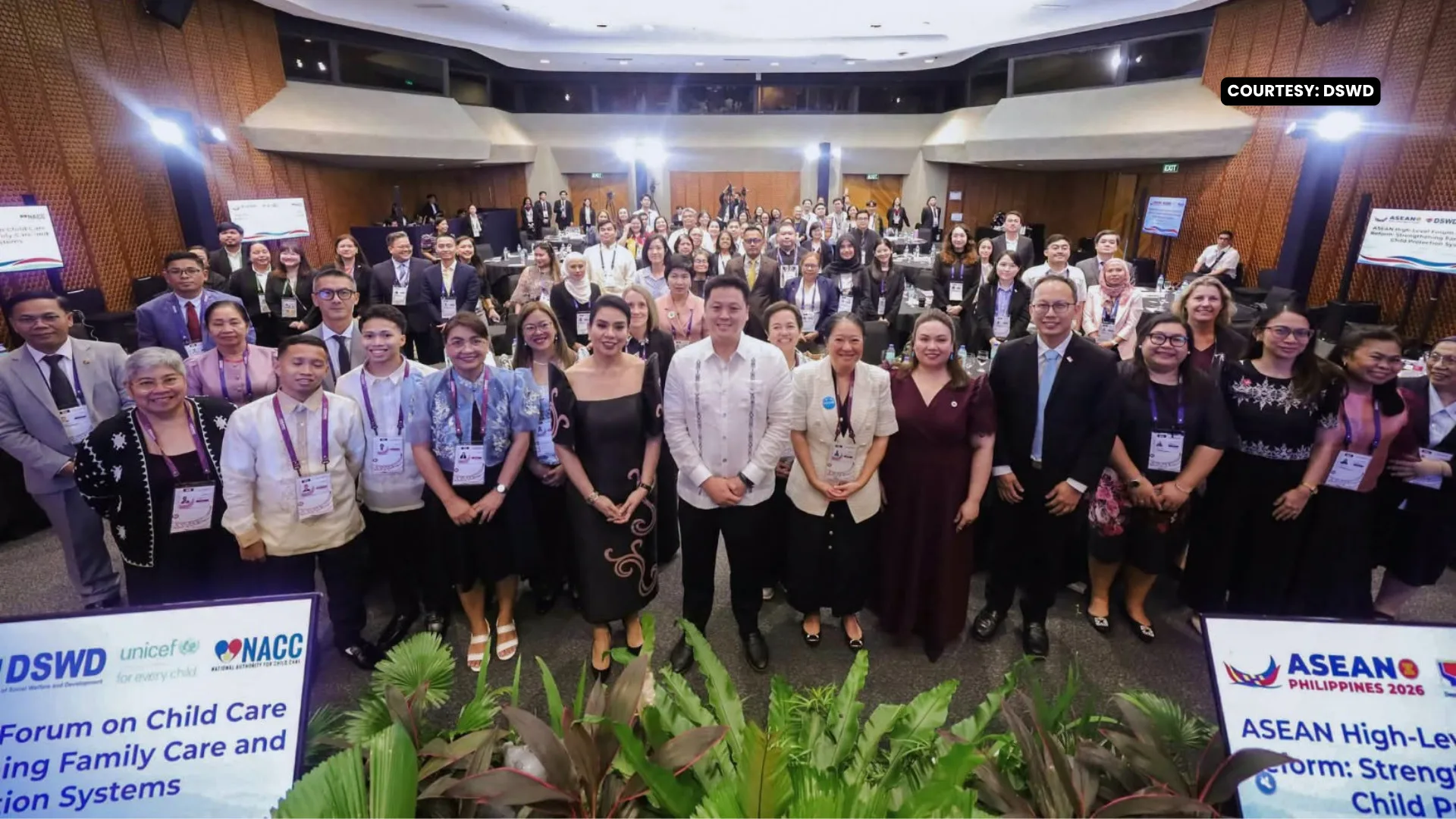
Speaking at the ASEAN High-Level Forum on Child Care Reforms at the Philippine International Convention Center (PICC), Department of Social Welfare and Development (DSWD) Secretary Rex Gatchalian called for a decisive regional pivot away from permanent institutionalization toward family-based care.
“Our goal is no longer simply to provide institutional care. Our goal is to help every child find a permanent loving family whenever it is safe and possible,” said Gatchalian, serving in his capacity as Chair of the ASEAN Socio-Cultural Community (ASCC) Council.
Cutting Red Tape to Build Families
A major cornerstone of the Philippines’ reform effort is Republic Act No. 11642, the Domestic Administrative Adoption and Alternative Child Care Act. The law dismantled decades of bureaucratic delays by taking domestic adoption out of the slow, expensive court system and turning it into a streamlined administrative process managed by the NACC.
Gatchalian highlighted how this shift directly impacts children waiting in temporary care settings:
“By moving adoption from a lengthy judicial process to a more efficient administrative system, we have significantly reduced delays, expanded opportunities for foster care, strengthened permanency planning, and facilitated more domestic adoption orders.”
By cutting away judicial bottlenecks, the government aims to shorten the time vulnerable children spend in transitional facilities, placing them into permanent, loving homes much faster.
The True Cost of Care
Research from UNICEF and the Better Care Network consistently shows that children achieve their best emotional and cognitive development within a supportive family structure. Beyond the vital developmental needs of children, relying heavily on residential centers presents significant long-term financial burdens on social welfare budgets.
The economic reality is stark. In the Philippines, maintaining residential care facilities costs the government between P400 and P450 per child every single day. Over the past five years alone, the DSWD allocated an average of P2.6 billion to operate its government-run centers and residential facilities.
“The cost of care in maintaining such establishments also poses sustainability challenges in the long run,” Gatchalian explained.
While emergency centers remain necessary for immediate child protection, officials emphasized that state strategy must focus on keeping biological families together, strengthening foster networks, and expediting domestic adoptions.
A Unified Regional Call
As ASCC Chair, Secretary Gatchalian urged neighboring ASEAN countries to unite around shared child protection goals, emphasizing that despite differing legal systems across member states, every child shares the same basic right to a family environment.
“While our systems may vary, our shared objectives remain the same. Every child deserves to grow up in a loving family.”
“As senior officials responsible for social welfare and development, we both have the opportunity and the responsibility to build systems that keep families together when possible, support them when they struggle and provide safe, nurturing alternatives when separation becomes necessary.”
Through joint regional policies, ASEAN member states hope to build stronger social safety nets, ensuring fewer children are separated from their parents and more find a permanent place to call home.