
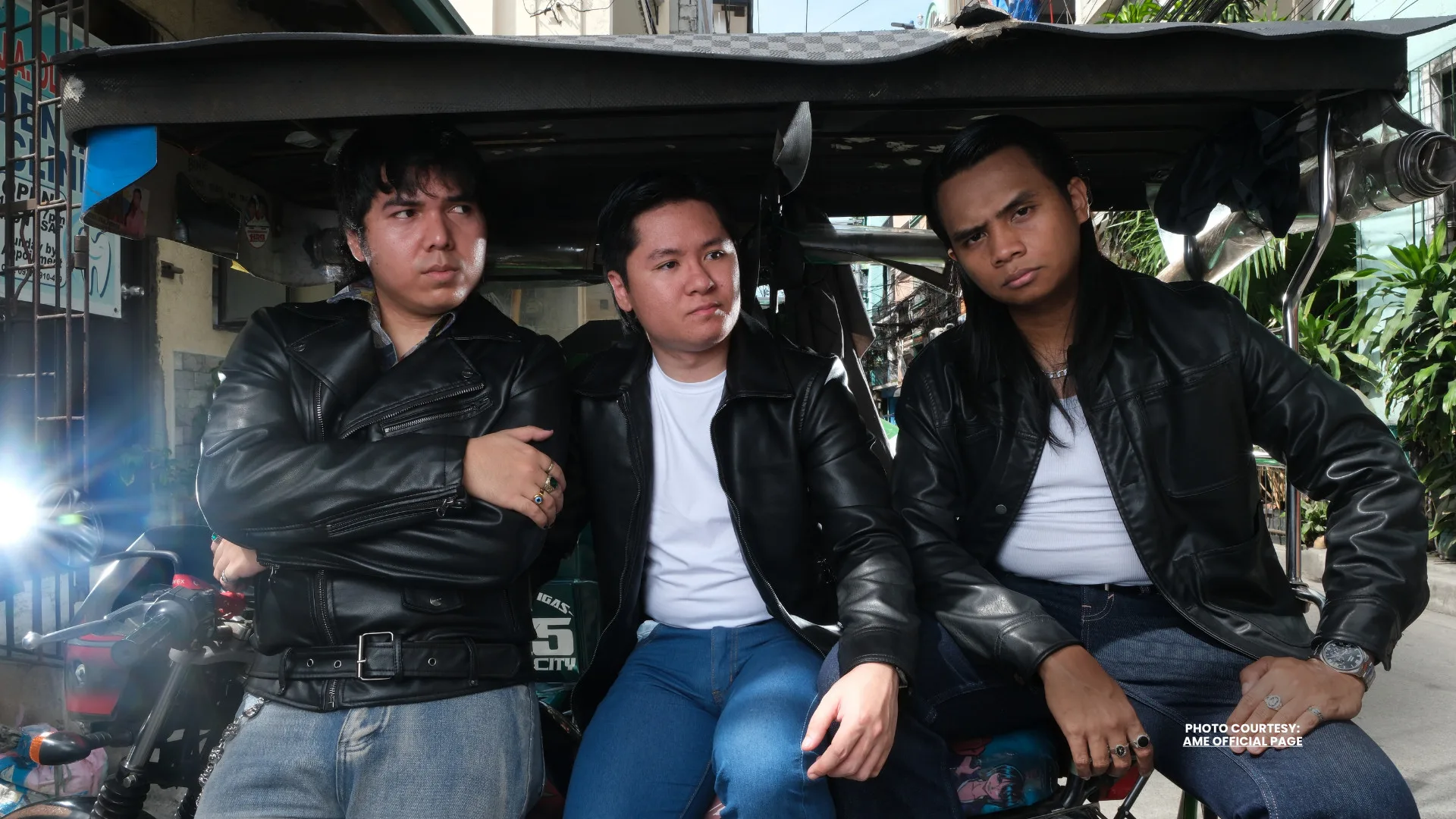
The barbershop has always been a confessional. In the Philippines, it is the room where men sit still long enough to say what they actually think: about work, government, the woman who left, the job in Riyadh that almost happened, and the daily compromises of getting by. The haircut is incidental. What matters is the talk. Filipino blues-rock trio AME understands this at a bone-deep level, and Kwentong Barbero, their seven-track album, is exactly that: a collection of stories told from the chair, raw and unfiltered, set to a sound that feels both old-souled and urgently alive.
Blues rock is a genre with deep bones: Mississippi mud, electric distortion, and the particular ache of wanting something you cannot name. AME drags it to Manila, strips it of borrowed Americana, and rebuilds it from the street up, with ’70s psychedelic sprawl, contemporary punk bite, and the unmistakable cadence of Filipino life. The result sounds like very little else in OPM right now, which makes the record feel less like an experiment than a declaration.
The album opens with previously released singles “Ipagpatawad Mo,” “Hala Bira,” and “Palaboy,” songs that had already announced AME as a band with something to say. But the four new tracks complete the picture and reveal the architecture of what AME is building: an album about identity, labor, love, and the kind of resilience Filipinos carry not as heroism, but as habit.
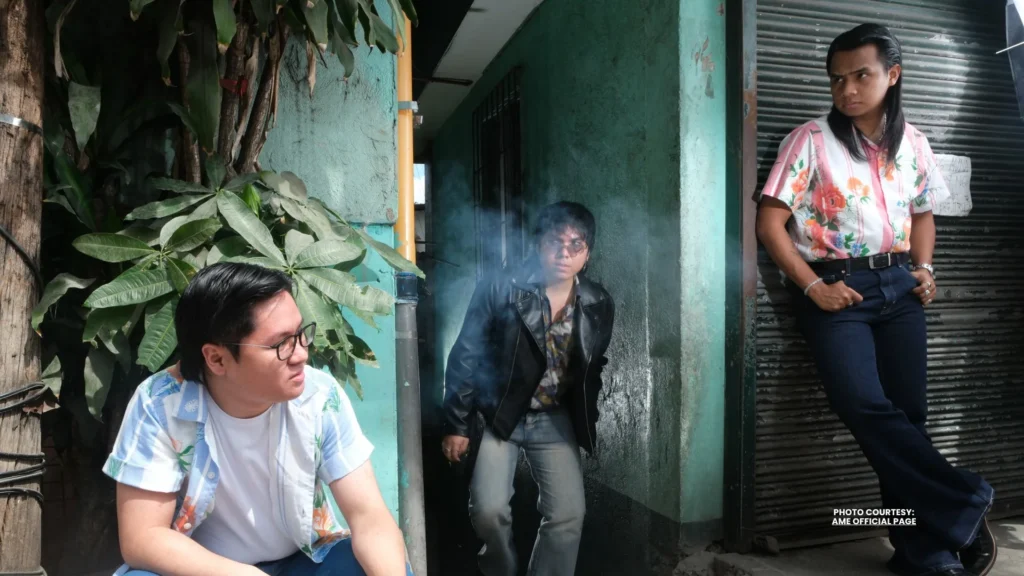
Grit, Glory, and the Philippine Blues
“BluKolar” is the album’s center of gravity and its most socially charged moment. In a country that exports labor the way others export oil, with nurses in the Gulf, domestic workers in Hong Kong, and seafarers on every ocean, a song about the blue-collar body is not an abstraction. It is a document. AME plays it with the weight it deserves: the riff is heavy, the groove is relentless, and the feeling underneath is not self-pity, but something harder and more dignified. It is the sound of someone who knows exactly what their work is worth and exactly how rarely they are paid accordingly.
“Sana Makapili” takes a more reflective route, shaping patriotism into a question rather than a slogan. In a musical landscape where love of country often arrives in sweeping ballads and grand declarations, AME treats it as something more intimate and unresolved: What if we stayed? What if we tried? The psychedelic tinge in the production gives the track the quality of a daydream held just long enough to become a decision.
Then there is “Sandal,” where the record lowers its guard. It moves like a stomper, but its bones are tender, revealing a band capable of matching emotional precision with physical force. As songwriting, it is the album’s quiet peak, the track that earns the raggedness elsewhere by exposing the vulnerability underneath it.
The album closes with “Langit,” and the choice of a farewell as the final word feels deliberate. After seven tracks of grit, noise, and survival, AME ends on something like grace: a poignant valediction that does not resolve so much as release. It is the moment the barber puts the cape aside, turns you toward the mirror, and lets you see yourself clearly.
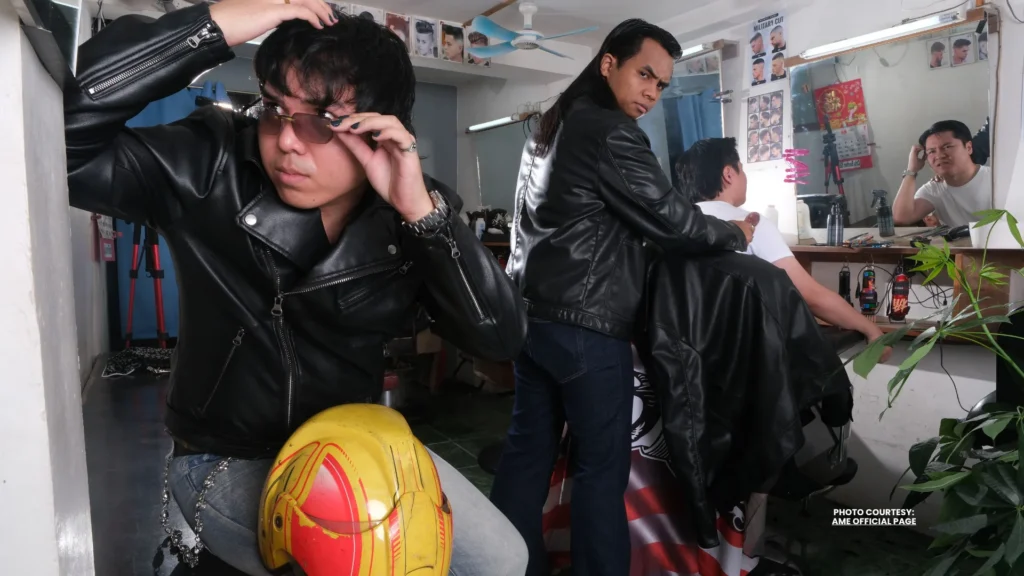
Blues, Psychedelia, Punk, and Something Entirely Filipino
Part of what makes Kwentong Barbero feel genuinely fresh is how AME wears its influences. There is clear reverence for classic blues architecture, including the call-and-response, the bends, and the way a riff can carry an entire emotional argument. But it never feels like archaeology. The ’70s psychedelic rock that runs through the record arrives as texture rather than pastiche, while the punk edge sharpens the whole thing into something contemporary without sounding calculated.
What grounds it all is the Filipino vernacular. The decision to sing in Filipino, not as a political statement but as a natural choice, gives the record its particular emotional register. There are feelings in these songs that simply do not translate, not because they are impossible to express in English, but because Filipino already has the exact temperature for them. “Palaboy,” for instance, carries a specific texture of wandering without destination that the English word “stray” cannot fully hold.
As one of the few active blues bands in the Philippine independent scene, AME occupies a lane that is genuinely uncrowded. The local music landscape has produced extraordinary rock, pop, folk, hip-hop, and R&B in recent years, but the blues tradition, that specific intersection of sonic heaviness and lyrical plainness, has rarely been claimed and reworked this way. Kwentong Barbero does not merely fill that gap. It argues that the gap should never have existed.
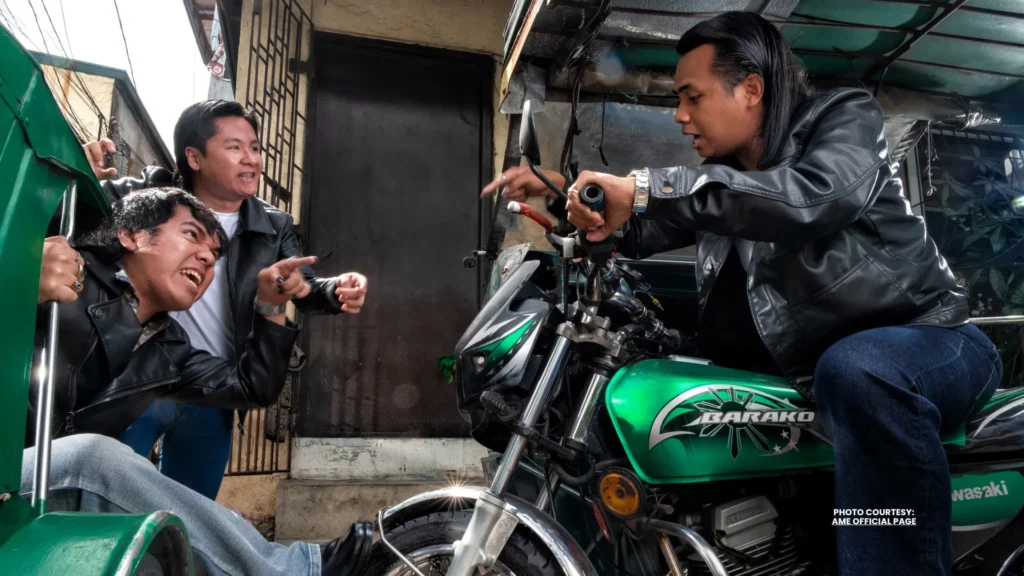
A No-Skips Record That Earns Its Confidence
“No-skips” is an overused phrase in music writing, one dulled by repetition. In the case of Kwentong Barbero, it happens to be accurate. The album is seven tracks, none wasted, each one pulling its weight in a different way: the heavy songs hit hard, the tender ones feel genuinely tender, and the socially conscious moments stay grounded rather than preachy.
What AME has made is an album that knows exactly what it is. It does not hedge, overreach, or try to be all things at once. It is a blues record rooted in Filipino life, made with easygoing confidence and real emotional intelligence. More importantly, it announces a band that sounds as if it has been waiting its whole life to make exactly this. The barbershop is open. Pull up a chair.