
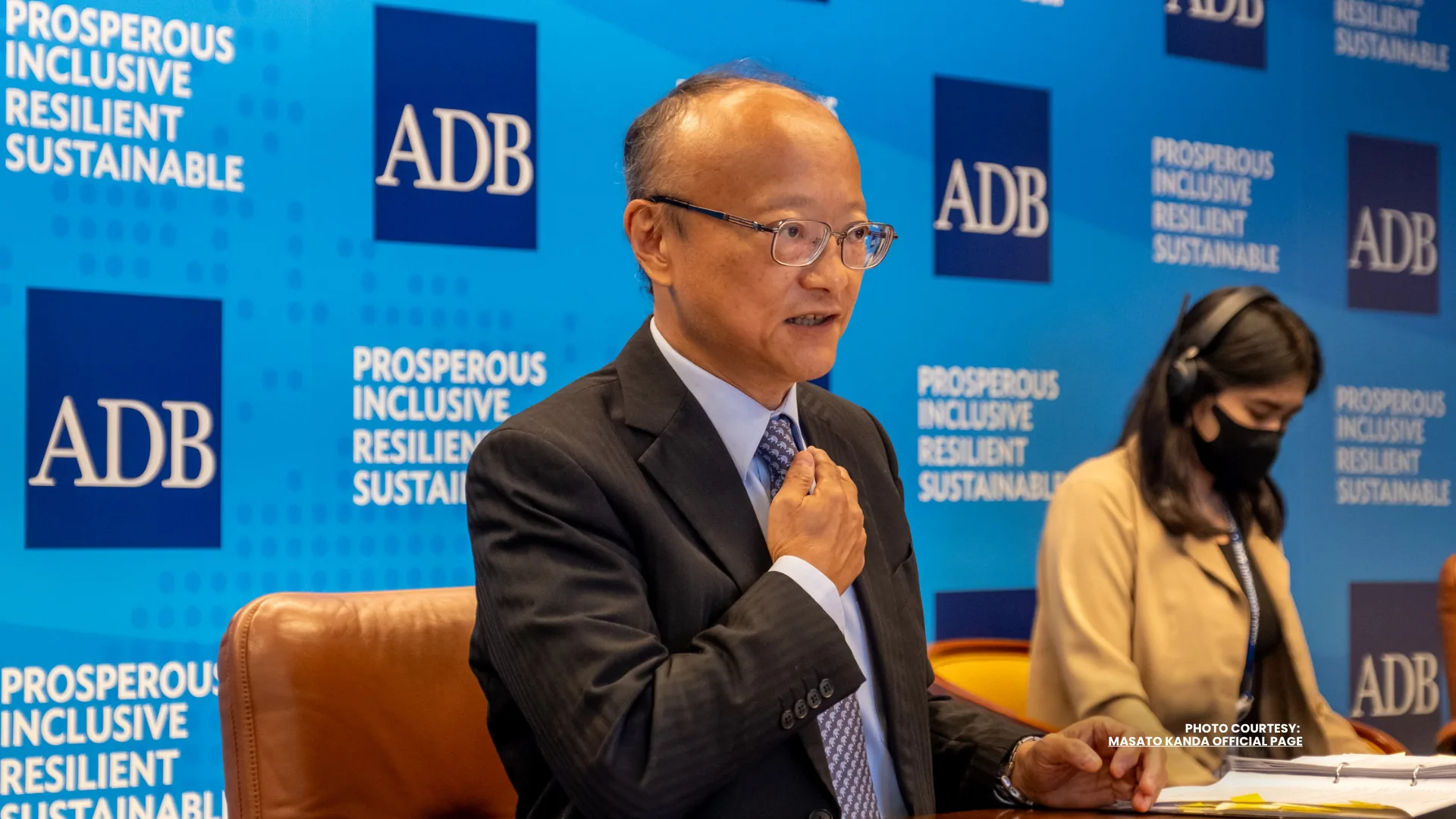
The Asian Development Bank (ADB) said it is prepared to provide up to US$1.75 billion in additional financing to help the Philippines cushion the economic impact of the continuing conflict in the Middle East.
ADB President Masato Kanda said the Manila-based lender is ready to move quickly as the crisis strains Filipino households, workers, and businesses through higher fuel and commodity costs.
“The Philippines is ADB’s home, and we see the strain this crisis is placing on Filipino families, workers, and businesses,” Kanda said.
“ADB will act swiftly to support the government to protect vulnerable communities, manage fiscal pressures, and strengthen the economy’s resilience,” he added.
The Philippines has been heavily exposed to the effects of the Middle East conflict because of its dependence on imported oil, fertilizers, and other global commodities.
The government has declared a national energy emergency and rolled out measures under the Unified Package for Livelihoods, Industry, Food, and Transport (UPLIFT) initiative. These include fuel subsidies, excise tax reductions on selected oil products, and cash assistance for transport workers, farmers, fisherfolk, and repatriated overseas Filipino workers.
ADB said the proposed additional support may come through policy-based and countercyclical lending, as well as trade finance if needed. The funding is intended to help the government manage fiscal pressures while providing further assistance to vulnerable sectors affected by oil supply disruptions and other economic shocks.
The possible US$1.75-billion package would be on top of around US$2 billion in policy-based loans already being prepared for the Philippines this year.
ADB said it is also working with government agencies to protect vulnerable communities and build longer-term economic resilience.
These efforts include advisory support to the Department of Agriculture on domestic fertilizer security, assistance to the Department of Social Welfare and Development on social protection, and support for energy security, clean energy, energy efficiency, and mass transit investments.
The bank said such initiatives are aimed at reducing the country’s exposure to future fuel-price shocks and strengthening its capacity to respond to external crises.