
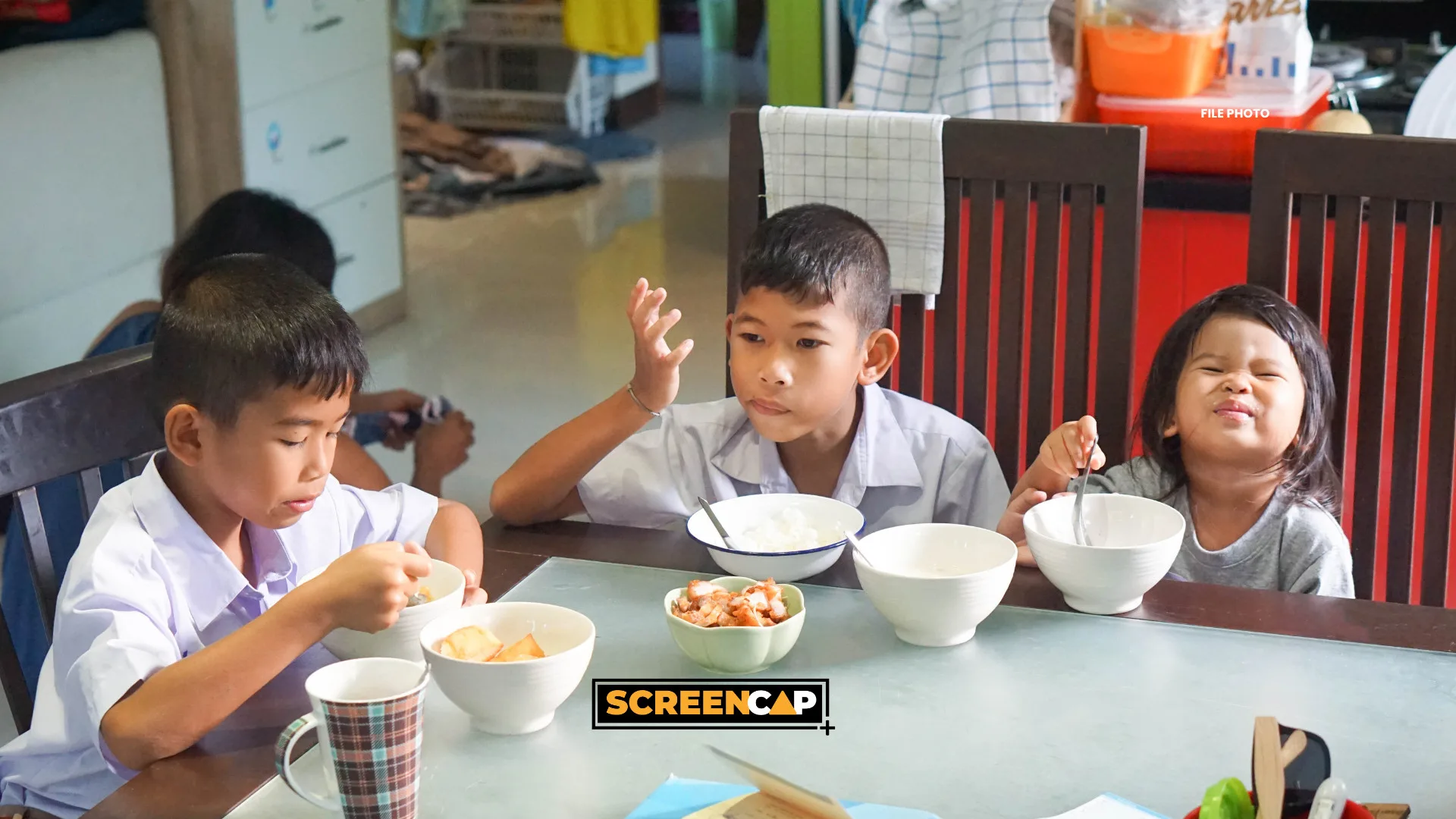
The House of Representatives has approved on second reading a measure seeking to expand the government’s feeding program into a broader national nutrition initiative aimed at addressing hunger, malnutrition, and learning poverty among Filipino children.
House Bill No. 9466 seeks to amend Republic Act No. 11037, or the Masustansyang Pagkain Para sa Batang Pilipino Act, by widening the coverage of school feeding and strengthening related health, nutrition, and agriculture support systems.
The measure was approved through voice voting.
Under the bill, the Department of Education’s (DepEd) school-based feeding program would cover all public school learners from Kindergarten to Grade 3, as well as undernourished students from Grades 4 to 12.
Feeding days would also be increased from 120 to 200 days each year, giving learners more consistent access to nutritious meals throughout the school calendar.
The proposal also includes nutritionally at-risk pregnant learners, children with disabilities, indigenous learners, and other vulnerable sectors among the beneficiaries.
During plenary deliberations, Pasig City Rep. Roman Romulo, chair of the House Committee on Basic Education and Culture, said hunger and undernutrition remain major barriers to learning, growth, and productivity.
“For many of our learners, especially those in vulnerable communities, the classroom is difficult to navigate on an empty stomach. A child who is hungry cannot concentrate. A child who is undernourished struggles to grow, to learn, and to thrive,” Romulo said.
The bill seeks to go beyond meal distribution by adopting a more integrated nutrition framework. This includes efforts to address micronutrient deficiencies, improve food quality, promote child development, support maternal nutrition, strengthen sanitation, and expand health education.
The measure also institutionalizes a stronger milk feeding program to be led by the Department of Agriculture through the National Dairy Authority. It prioritizes locally produced fresh milk and milk products sourced from Filipino dairy farmers and cooperatives.
To link child nutrition with local livelihood, the bill requires that at least 30 percent of agricultural and fishery products used in the program be sourced directly from local farmers and fisherfolk, especially small-scale producers.
The proposal also provides for micronutrient supplementation, iron and folic acid interventions, health examinations, deworming, sanitation and hygiene programs, and nutrition education.
It likewise supports the establishment of central kitchens in school divisions to improve food safety, meal preparation, and distribution.
Supporters said the measure would help ensure that children are better nourished, more prepared to learn, and supported by a system that also benefits local food producers.