
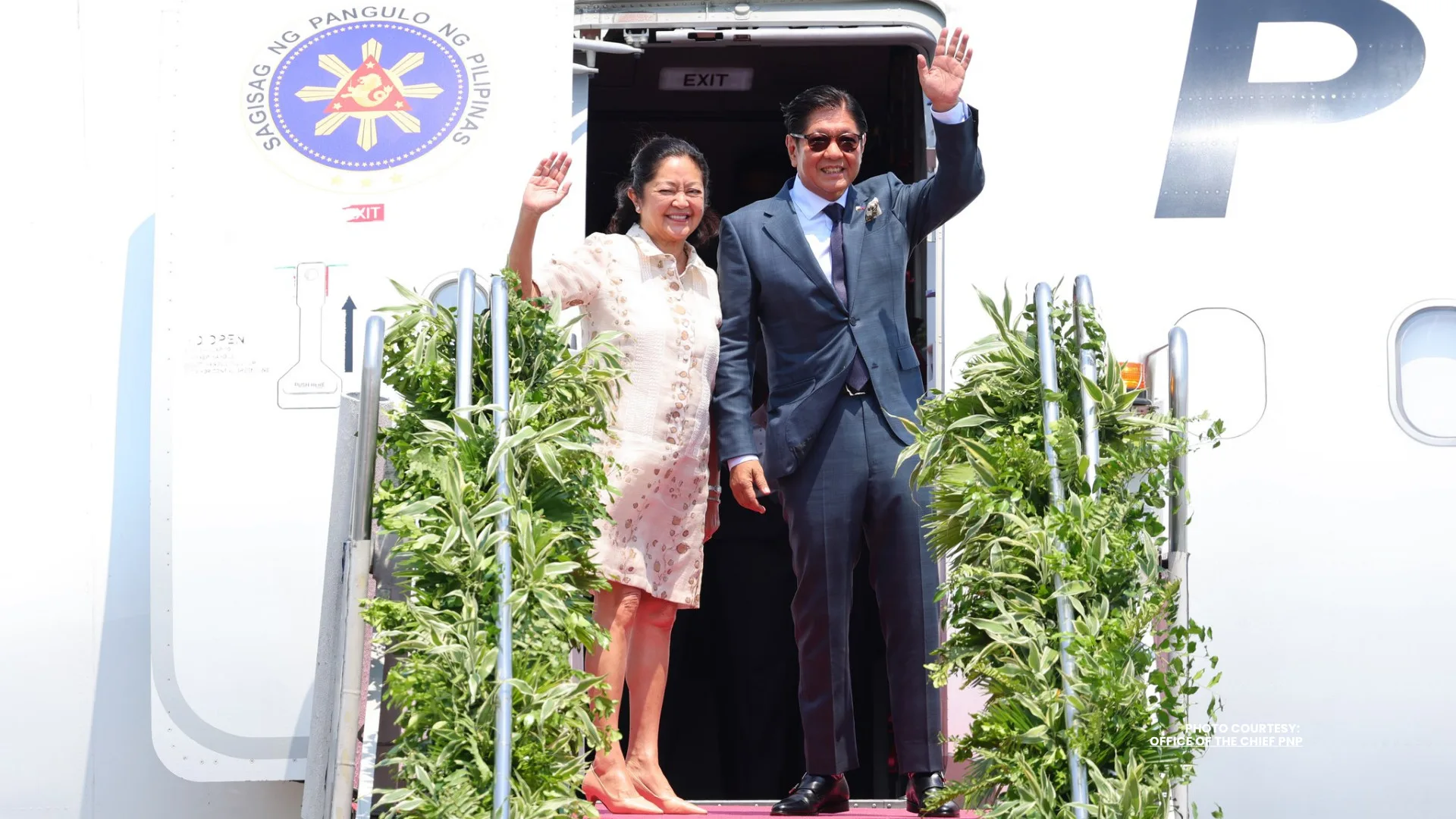
President Ferdinand Marcos Jr. is seeking to advance a broad agenda with Japan covering trade, defense, maritime security, energy, agriculture, infrastructure, and regional stability as Manila and Tokyo move to deepen their strategic partnership.
Marcos said his four-day state visit to Japan would focus on “new collaborations” in key areas, including agriculture, energy and decarbonization, maritime cooperation, trade and investment, infrastructure, defense and security, space technology, and Mindanao development.
The President said the visit comes at a time of growing global uncertainty, making it necessary for the Philippines to strengthen ties with like-minded partners in the region.
“This State Visit to Japan is essential amid an increasingly challenging and evolving global environment,” Marcos said.
He said the trip forms part of the country’s broader foreign policy agenda to build closer political ties, stronger defense and security cooperation, and more durable economic partnerships with major regional players.
Marcos is expected to meet Japanese Prime Minister Sanae Takaichi for talks on economic and security coordination, with both leaders set to witness the signing and exchange of agreements on trade and investment.
The visit is also expected to produce new initiatives in security and maritime cooperation, particularly as the Philippines and Japan continue to align their positions on regional peace and stability.
Among the issues Marcos said he intends to discuss are the West Philippine Sea, the conflict in the Middle East, cooperation within the Association of Southeast Asian Nations, trilateral cooperation among the Philippines, Japan, and the United States, and Manila’s candidature for a seat on the United Nations Security Council.
“I believe we can further expand our security, economic, and development cooperation in order to enhance our national defense posture and to uplift the standard of living of Filipinos in different parts of the country,” Marcos said.
The President said defense cooperation would be a major point of discussion, including the implementation of the Reciprocal Access Agreement signed in 2024 and the Acquisition and Cross-Servicing Agreement signed this year.
He also cited Japan’s Official Security Assistance grants from 2023 to 2025, which support the modernization program of the Armed Forces of the Philippines.
On the economic and development front, Marcos said Japan remains a key partner in major Philippine infrastructure projects under the Build Better More Program, including rail, highway, and transportation modernization initiatives.
Marcos described Japan as a “close neighbor,” a “like-minded” country, and one of the Philippines’ most reliable partners in both stable and uncertain times, including during the ongoing oil crisis.
The state visit also coincides with the commemoration of the normalization of diplomatic relations between the Philippines and Japan, formally established on July 23, 1956.
Marcos left Manila on Tuesday afternoon with First Lady Louise “Liza” Araneta-Marcos aboard Philippine Airlines flight PR001 and was expected to arrive in Tokyo later in the day.
While the President is abroad, Executive Secretary Ralph Recto, Education Secretary Sonny Angara, and Agrarian Reform Secretary Conrado Estrella III will serve as members of the executive department’s caretaker committee.
Marcos and the First Lady are also scheduled to have an Imperial Audience with the Emperor and Empress of Japan.
The President will receive the Grand Cordon of the Supreme Order of the Chrysanthemum, while the First Lady will be conferred the Grand Cordon of the Order of the Precious Crown.
In return, Marcos will confer on the Emperor the Order of Lakandula with the rank of Supremo and on the Empress the Order of Gabriela Silang.
Marcos said the exchange of honors reflects the enduring friendship between the two countries as they mark another milestone in bilateral relations.