
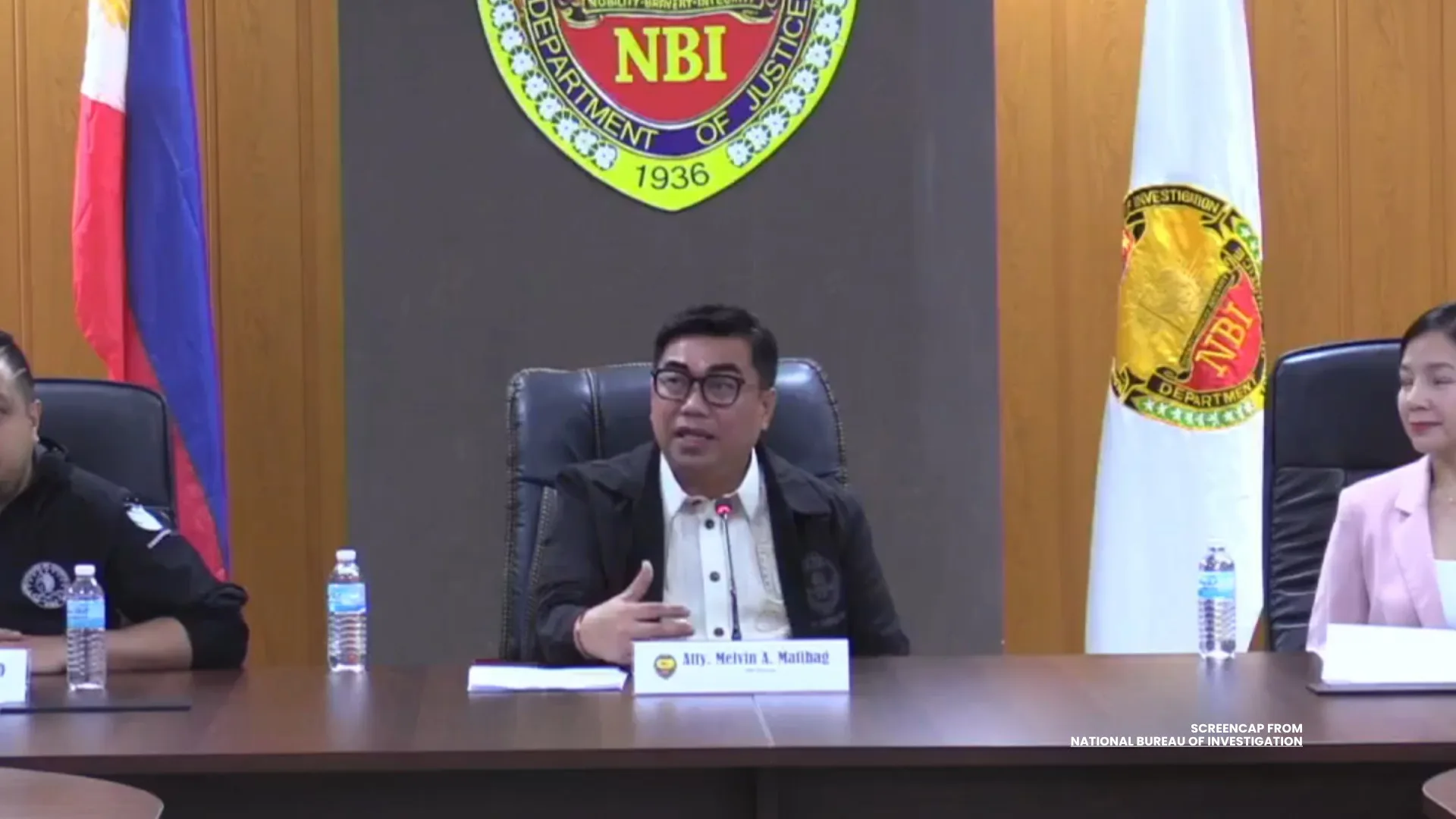
The National Bureau of Investigation (NBI) is urging Congress to pass a law that would give authorities clearer powers to monitor and act against troll farms, fake social media accounts and AI-generated content being used to deceive the public.
NBI Director Melvin Matibag said existing laws allow the bureau to pursue cybercrimes such as online scams, but there is still no specific legal framework covering organized troll farm operations and coordinated online deception.
“We are probably proposing a bill na gawing batas yung tungkol po dun sa pag-monitor nito eh. Kasi wala tayong specific na batas,” Matibag said during the Saturday News Forum at Dapo Restaurant in Quezon City.
“We’re always hearing yung troll farms, may troll farms. Pero wala kaming legal basis or legal cover to go after troll farms,” he added.
Matibag made the statement amid growing concern over the use of fake accounts, coordinated social media activity and artificial intelligence to spread false or misleading content, particularly during politically sensitive controversies.
He said the NBI already coordinates with Meta in taking down fake accounts, but a more specific law would help authorities address networks that operate beyond individual bogus profiles.
“So dapat it somehow should also be regulated. Actually, marami na po kaming na-takedown na mga fake accounts,” Matibag said.
“We just stopped reporting it but we’re doing it on a day-to-day basis. We have coordination already with META and they’re very supportive,” he added.
Matibag said the bureau has taken down more than 2,000 fake accounts since he assumed office, with some individuals behind them already facing charges while others remain under investigation.
“And from the time na dumating po ako sa bureau, I think we already takedown about more than 2,000 accounts na po eh na wala talagang identity, personality. And some of them are now facing charges and some of them are under investigation ano po,” he said.
The NBI chief said enforcement is more straightforward when fake accounts are linked to offenses already covered by the Cybercrime Prevention Act of 2012, such as financial scams and love scams.
“Ang mga nahuhuli namin in relation to Cyber Crime Law of 2012, yung halimbawa mga financial scam, love scam, mga ganyan. Those are mga POGO operators before na nag-collapse into different scam hubs no,” Matibag said.
He said troll operations pose a different challenge because they involve coordinated behavior meant to make a single source or narrative appear organic, credible and widely accepted.
“Iyun naman sa troll ito yung tinatawag nating in-authenticate coordinate behavior. Parang feeling nila, may isang source sila, palalabasin parang totoo yun,” he said.
Matibag said the problem becomes harder to contain once coordinated falsehoods are picked up by real users and spread through legitimate accounts.
“Then makikita mo mag-spread na totoo sa social media, marami ng mag-pick up, hanggang umabot na run sa organic sa mga totoong accounts, yun na yung nagiging problema and we’re addressing it,” he said.
He added that the NBI is acquiring tools to strengthen its capacity to detect and counter coordinated online manipulation.
“We are in the process of procuring tools to combat this para po malabanan natin itong ganitong sistema,” Matibag said.
Asked about AI-generated videos and images that use a real person’s likeness or make it appear that someone said or did something, Matibag said the issue would also be part of the NBI’s proposed discussions with Congress.
“That’s the one that part of our proposal to Congress, that should be regulated, kasi it’s somehow violates also your privacy from my point of view. Maganda man o pangit yung portrayal sa iyo sa AI na ginagawa,” he said.
Matibag said AI-generated content involving a person’s image or likeness raises privacy concerns, regardless of whether the portrayal is flattering or damaging.
“I’ve seen that also. Nakikita ko yan,” he added.
The NBI chief said the bureau intends to engage lawmakers on possible legislation that would address the misuse of AI, fake accounts and organized online deception while giving enforcement agencies a clearer legal basis to act.
“Pero somehow you have your own privacy na dapat should be protected. So we will have dialogues with our legislative body para paano natin tuma-address,” Matibag said.