
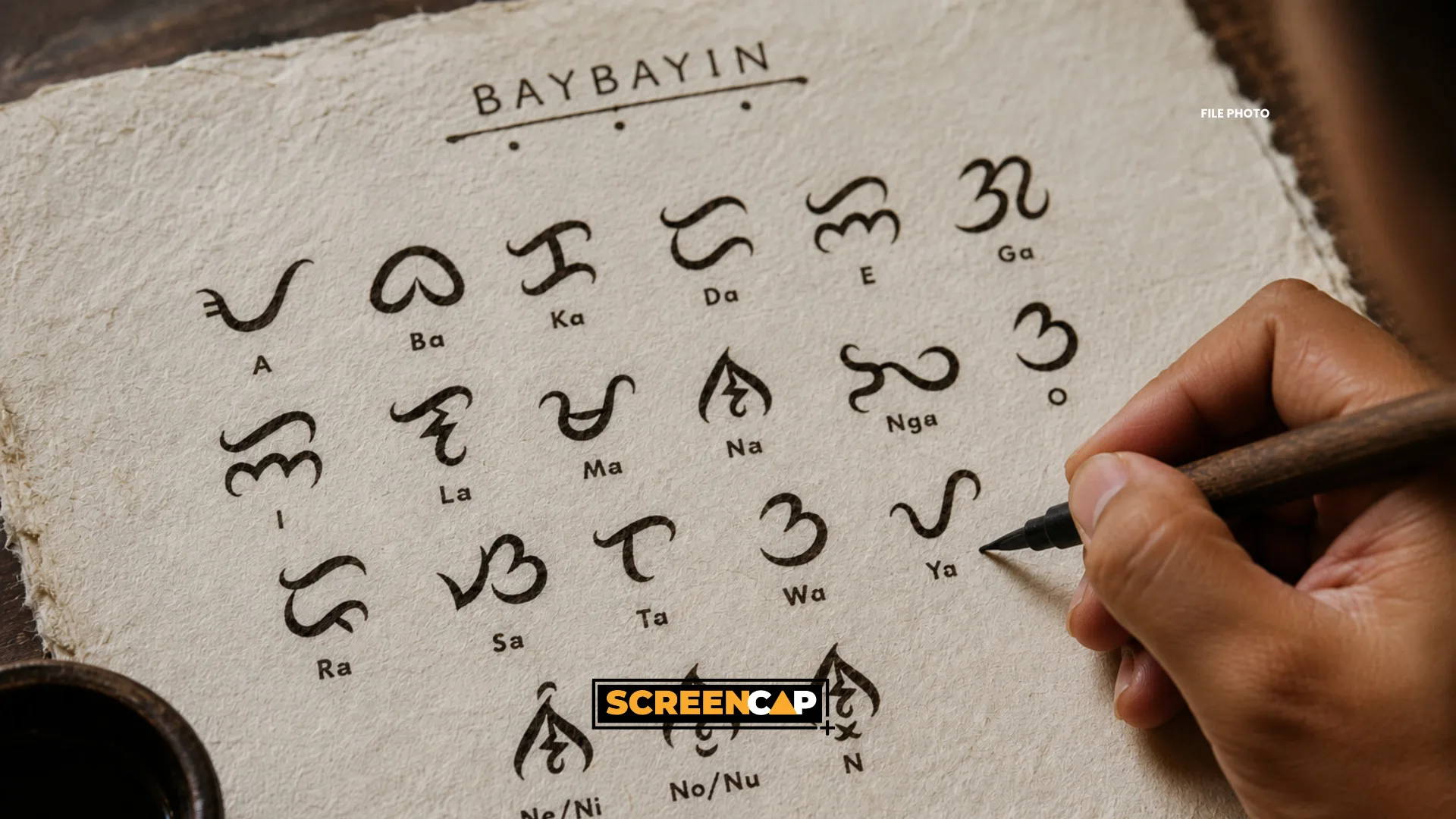
The House of Representatives has approved on third and final reading a bill seeking to preserve and promote the country’s indigenous and traditional writing systems as part of the nation’s cultural heritage.
Voting 266-0, with one abstention, lawmakers passed House Bill No. 8699, or the proposed Philippine Indigenous and Traditional Writing Systems Act.
The bill’s proponents reflect the commitment of President Ferdinand “Bongbong” Marcos Jr. and Speaker Faustino “Bojie” Dy III, one of the bill’s principal authors, to protect the foundations of Filipino identity by bringing indigenous and traditional scripts into schools, communities, and digital platforms where they can be studied and appreciated by younger generations.
“Our indigenous and traditional writing systems are not museum pieces. They are living marks of who we are as Filipinos, and under the leadership of President Ferdinand ‘Bongbong’ Marcos Jr. and Speaker Bojie Dy, we want our young people to see them not as relics of the past, but as part of the story they inherit and carry forward,” House Majority Leader Ferdinand Alexander “Sandro” Marcos III, another principal author of the bill, said.
The measure recognizes Philippine indigenous and traditional scripts as cultural treasures and expressions of national identity. It requires their promotion through education, research, documentation, and cultural programs.
Under the bill, indigenous and traditional writing systems will be integrated into relevant subjects in basic and higher education, including elective or specialized courses in colleges and universities.
The proposal also mandates the development and publication of reference materials, including dictionaries, grammar guides, textbooks, and scholarly works, to support the study and preservation of Philippine scripts.
To expand public access, the bill calls for the creation of digital learning resources, online courses, mobile applications, digital archives, and databases that will help document and preserve the writing systems for future generations.
Principal authors of the measure said the bill turns heritage preservation into a broader public education effort that will benefit students, teachers, cultural workers, local communities, and indigenous peoples.
“This is heritage made accessible to the people. Under this measure, we are saying that every Filipino child should have the chance to know the scripts, symbols and traditions that shaped our islands long before us,” Marcos said.
The bill directs the Department of Education, Commission on Higher Education (CHED), and local governments to hold awareness activities on Philippine writing systems, particularly during Buwan ng Wika and similar cultural observances.
It also encourages seminars, conferences, conventions, symposia, and other activities that highlight writing systems indigenous to specific regions.
The National Commission for Culture and the Arts (NCCA) will serve as the lead agency in crafting policy guidelines for the protection, preservation, promotion, and conservation of these writing systems as national cultural treasures.
The NCCA will coordinate with the Komisyon sa Wikang Filipino for technical assistance on Philippine languages and writing, and with DepEd, CHED, the National Commission on Indigenous Peoples, and other relevant agencies for implementation.