
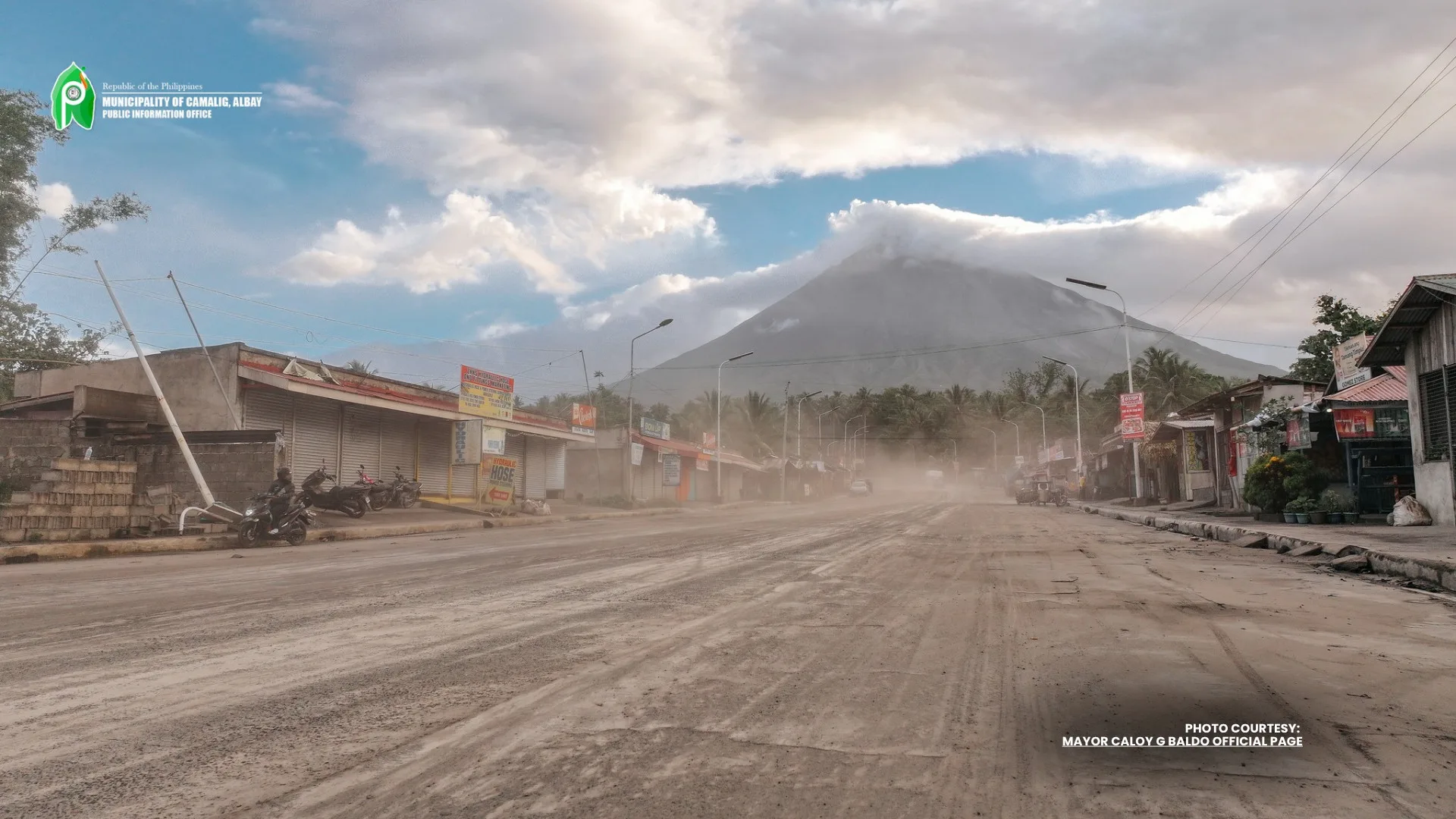
Government assistance for families affected by the continuing unrest of Mayon Volcano has nearly reached P350 million, with the Department of Social Welfare and Development (DSWD) ramping up food, cash, and emergency support across affected communities in the Bicol Region.
DSWD Assistant Secretary and spokesperson Irene Dumlao said Wednesday that the agency has already released more than P73 million in Emergency Cash Transfers and over P45 million under its cash-for-work program for displaced residents.
The financial assistance comes on top of thousands of relief supplies being distributed to evacuation centers and affected barangays as volcanic activity continues around Mayon.
Dumlao said the DSWD has so far provided around 133,000 family food packs to families forced to leave their homes due to the volcano’s prolonged unrest.
Aside from food packs, the agency also distributed more than 1,400 ready-to-eat food boxes and over 8,600 non-food relief items, including hygiene kits, sleeping kits, and family tents.
“Bukod sa mga family food packs, tuloy-tuloy din ang pamamahagi natin ng ready-to-eat food at iba pang non-food items para matugunan ang pangangailangan ng mga evacuees,” Dumlao said.
She explained that humanitarian assistance is being delivered every 15 days by the DSWD, while local government units provide support during the remaining days of the month.
Based on data from the DSWD’s Disaster Response Operations Monitoring, Information, and Communication Division, the total humanitarian assistance extended to affected families has already reached more than P229.98 million in food and non-food aid alone.
Authorities reported that 70,150 families, or nearly 287,000 individuals, have been affected across 159 barangays in the Bicol Region.
Of the total, 1,089 families composed of 3,984 individuals remain inside 12 evacuation centers, while 40 families are temporarily staying with relatives or friends.
Mayon Volcano remains under Alert Level 3 as it continues to produce lava flows, rockfalls, and collapse-fed pyroclastic density currents, locally known as “uson,” prompting authorities to maintain strict monitoring and evacuation measures in high-risk areas.