
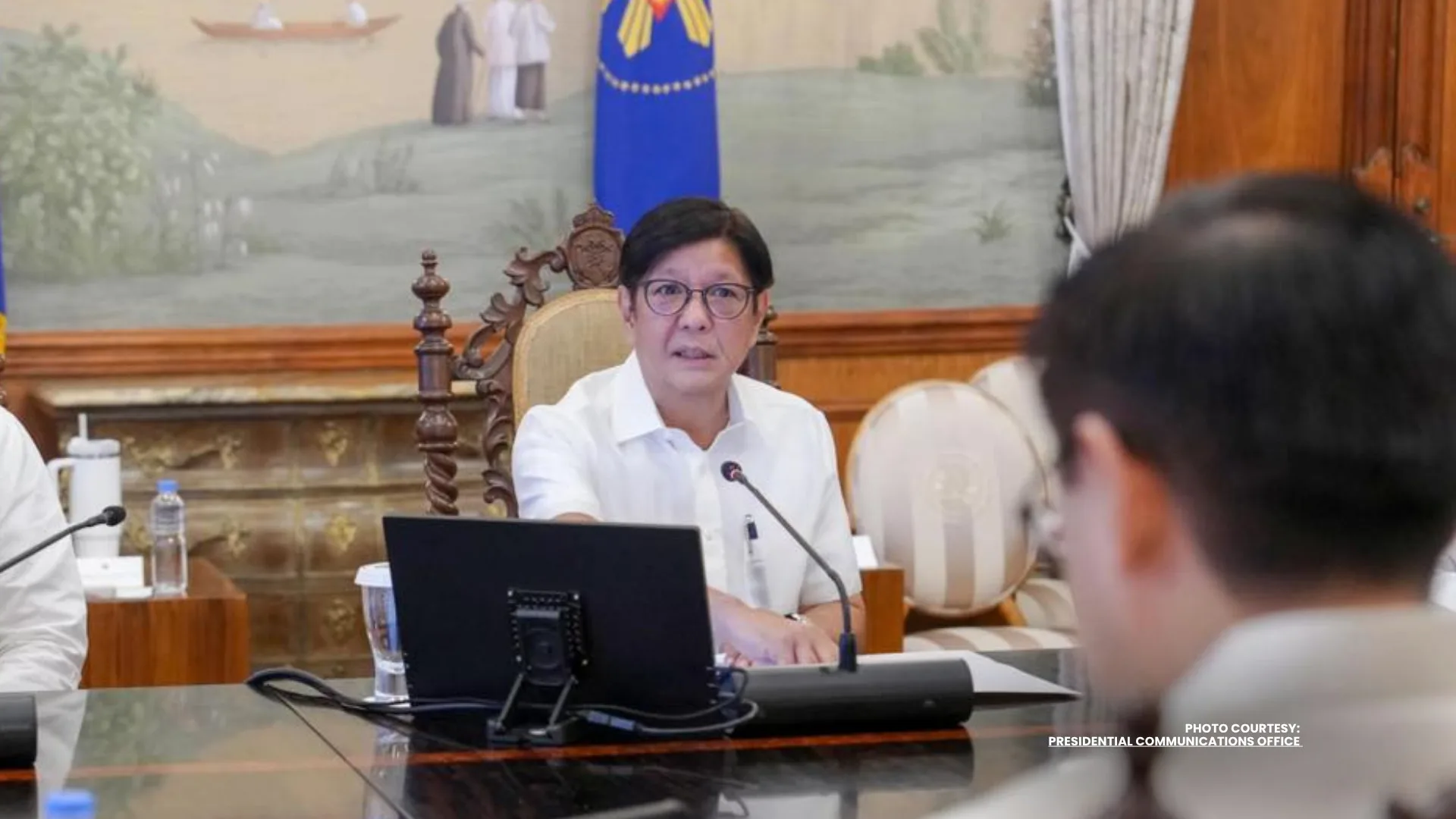
President Ferdinand Marcos Jr. will travel to Japan from May 26 to 29 for a state visit that is expected to center on expanding defense ties, maritime security cooperation, and energy resilience between Manila and Tokyo.
Speaking to Japanese media in Malacañang on Monday, Marcos said discussions with Japanese Prime Minister Sanae Takaichi would focus heavily on regional security concerns and energy cooperation amid rising geopolitical tensions in Asia and the Middle East.
Among the issues expected to be discussed are the so-called “gray zone” activities in the South China Sea and East China Sea, as well as the continued importance of upholding international law, particularly the United Nations Convention on the Law of the Sea.
“As Japan and the Philippines have experienced the same difficulties in terms of coercive acts and gray zone tactics, that is something we will certainly be discussing,” Marcos said.
The President also said he intends to push for the full implementation of the Reciprocal Access Agreement signed by Manila and Tokyo in July 2024, along with the Acquisition and Cross-Servicing Agreement signed earlier this year.
Marcos noted that Japan’s participation in this year’s Balikatan exercises marked a significant step in strengthening interoperability and defense cooperation between the two countries.
He added that the Philippines also expects to benefit from Japan’s easing of restrictions on defense exports, particularly in areas involving radar systems, military aircraft, vessels, information sharing, and personnel training.
Beyond defense, Marcos said energy security would also be a major agenda item during the visit as the Philippines seeks additional support to cushion the effects of supply disruptions caused by the ongoing Middle East crisis.
“We will again try to engage Japan and see how we can work together, as Japan has now taken a more active role when it comes to the subject of energy and energy supply,” he said.
The President acknowledged Japan’s proposed assistance package under the Partnership on Wide Energy and Resources Resilience (POWERR Asia), which could provide up to US$10 billion in support for Asian countries dealing with fuel supply risks and energy security concerns.
According to Marcos, the Philippines hopes to clarify how the funding may be used, including possible support for fuel procurement, crude oil stockpiling, and supply chain stability.
As this year’s chair of the Association of Southeast Asian Nations (ASEAN), Marcos said he also plans to discuss how Japan can further assist ASEAN in addressing regional security and energy challenges.