
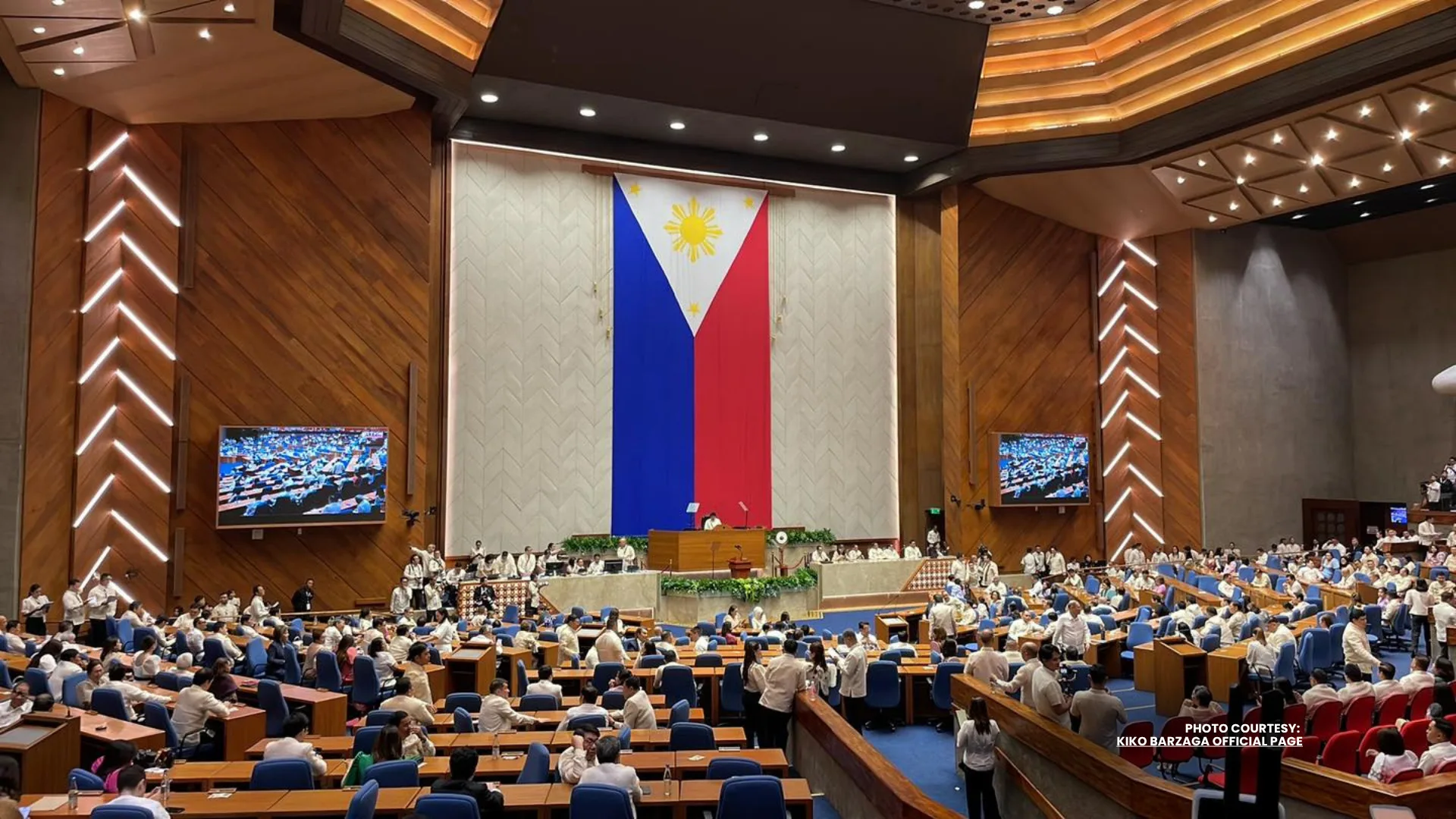
A party-list lawmaker has urged Congress to approve a set of electoral reform measures aimed at curbing money politics, strengthening political parties, and restoring genuine representation in the country’s democratic system.
1Tahanan Party-list Rep. Nathaniel “Atty. Nat” M. Oducado said the proposed reforms seek to address long-standing weaknesses in election laws that allow wealthy interests, political clans, and undisclosed campaign financiers to dominate the political process.
“Democracy cannot survive if elections favor only the rich, political clans, and powerful interests while ordinary Filipinos are pushed aside,” Oducado said. “But our problem goes beyond dynasties, it is also the influence of dark, dirty money exploiting cracks in our electoral system.”
One of the measures, House Bill No. 8789 or the proposed “Campaign Finance Transparency and Modernization Act,” seeks to update campaign spending limits, impose contribution caps on donors, require real-time disclosure of campaign funds, regulate online political advertisements, and penalize fake accounts, bot networks, and disinformation campaigns during elections.
“The current election finance system is badly outdated and it allows wealthy donors to dominate campaigns while ordinary candidates struggle to compete fairly,” Oducado said. “What is worse is that big money can fund campaigns anonymously and without limits.”
The bill responds to concerns earlier cited by the Philippine News Agency in 2023, which reported that current campaign spending limits, set as low as ₱3 to ₱10 per voter, have lost around 80 percent of their value due to inflation. Modern campaign costs, including digital advertising, have also risen sharply.
HB 8789 would also require the Commission on Elections to maintain a publicly accessible online database of campaign contributions and expenditures, searchable by candidate, donor, amount, and date.
“Filipinos deserve to know who funds politicians because hidden money destroys public trust and weakens accountability,” Oducado said.
Another measure, House Bill No. 8782 or the proposed “Political Party Development and Critical Funding Act,” seeks to establish a regulated public funding system for political parties. The funding would support policy research, political education, grassroots organizing, and internal party development, reducing dependence on private financiers.
“Political parties should stand for principles and programs instead of serving as temporary vehicles for wealthy personalities during elections,” Oducado said.
The bill cites findings from Perludem’s 2021 Southeast Asian political finance study, which showed that a small group of wealthy donors accounted for more than half of declared political contributions in the Philippines. The measure said this reinforces elite dominance and weakens institutional political parties.
HB 8782 would also impose transparency, auditing, and accountability rules on political parties receiving public support, while discouraging opportunistic party switching linked to public funding eligibility.
“We need stronger political parties that can develop competent leaders and long-term programs instead of recycling patronage politics every election cycle,” Oducado said.
A third measure, House Bill No. 8790 or the proposed “Genuine Party-List Representation and Nomination Act,” seeks to tighten rules on party-list registration, require public hearings before accreditation, strengthen nominee qualifications, and limit substitutions to cases of death or incapacity.
“The party-list system was created for marginalized sectors and not as a backdoor for political dynasties, contractors, and entrenched elites,” Oducado said.
The bill addresses concerns that the party-list system has been abused by groups and nominees linked to political dynasties, vested economic interests, and conflicts of interest, allowing them to win seats despite not genuinely representing marginalized sectors.
HB 8790 would also disqualify party-list nominees related within the third degree to incumbent elected officials and prohibit government contractors from becoming nominees.
“These reforms will help restore fairness, credibility, and genuine representation in our elections because democracy should belong to the people and not just to those with money and influence,” Oducado said.