
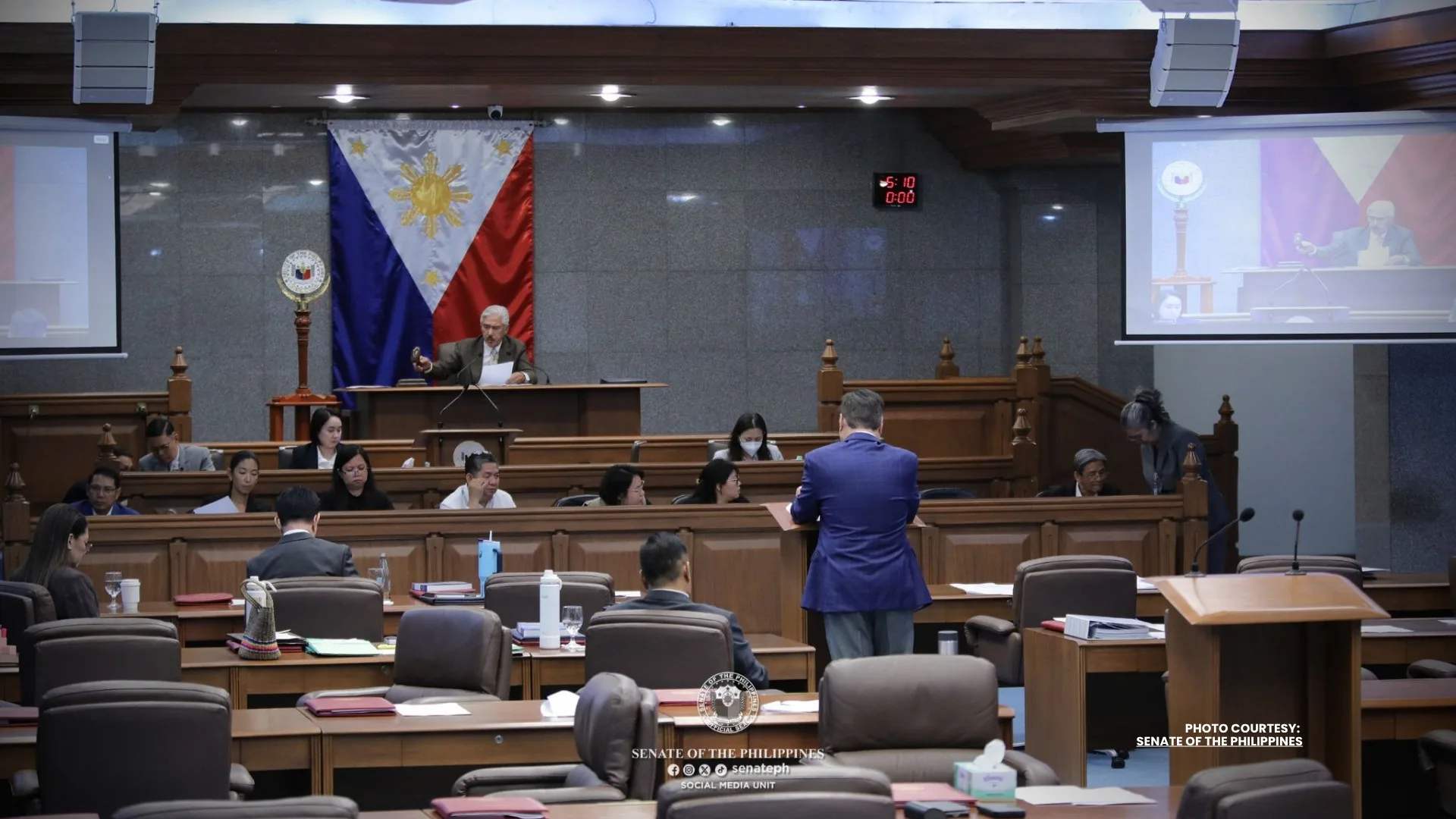
The Senate approved on third and final reading a bill that seeks to institutionalize the Department of Social Welfare and Development’s (DSWD) Assistance to Individuals in Crisis Situations (AICS) program and impose penalties for fraud, political interference, and abuse in the distribution of government aid.
Senate Bill No. 1966, or the proposed AICS Act, aims to create a permanent, transparent, and accountable system for providing emergency assistance to indigent, vulnerable, and disadvantaged Filipinos.
The AICS program covers financial aid for medical, burial, transportation, educational, food, and other urgent expenses of individuals and families facing crisis situations.
A major provision of the bill bars elected officials, political candidates, political parties, and their representatives from participating in or being present during the actual distribution of aid.
The measure allows only officials with direct administrative and executive authority over the DSWD to take part in the distribution process.
“No public officials holding elective positions, electoral candidates, politicians, political parties, or any of their representatives, except for officials having direct administrative and executive authority over the DSWD, shall influence, be present during, participate in, or otherwise take part in the actual distribution of cash assistance and other forms of assistance under this Act,” the bill stated.
The proposed law also lists prohibited acts intended to prevent patronage politics, favoritism, and fraudulent claims in the implementation of the AICS program.
Government officials, employees, their representatives, and relatives within the prohibited degree of consanguinity or affinity may face penalties if they interfere in aid distribution, favor relatives or preferred beneficiaries, release assistance to unqualified recipients, or exclude qualified individuals from the program.
The measure also penalizes individuals or groups who use falsified documents, fraudulent schemes, or coercion to obtain assistance or force beneficiaries to surrender part of the aid they received.
It likewise prohibits people from falsely claiming ties with the DSWD to solicit money, collect payments, or promise priority access to government assistance.
Under the bill, penalties vary depending on the offense.
Those found guilty of interfering in the implementation of the law or the distribution of assistance may face imprisonment of up to six months.
Public officials or employees convicted of giving aid to unqualified recipients, extending preferential treatment, or excluding qualified beneficiaries may face imprisonment of one to six years, along with suspension from government service for up to one year.
Private individuals involved in similar violations may also face imprisonment of one to six years.
First-time offenders who use fraudulent means to obtain assistance may be barred from receiving DSWD aid for one year, while repeat offenders may face imprisonment of one to six years.
If the offender is an organization, its responsible officers may face imprisonment of six to 10 years, without prejudice to separate administrative or civil actions.
Following its Senate approval, the bill will move to the bicameral conference committee deliberations to reconcile it with the House version before it is transmitted to the Office of the President for signing into law.