
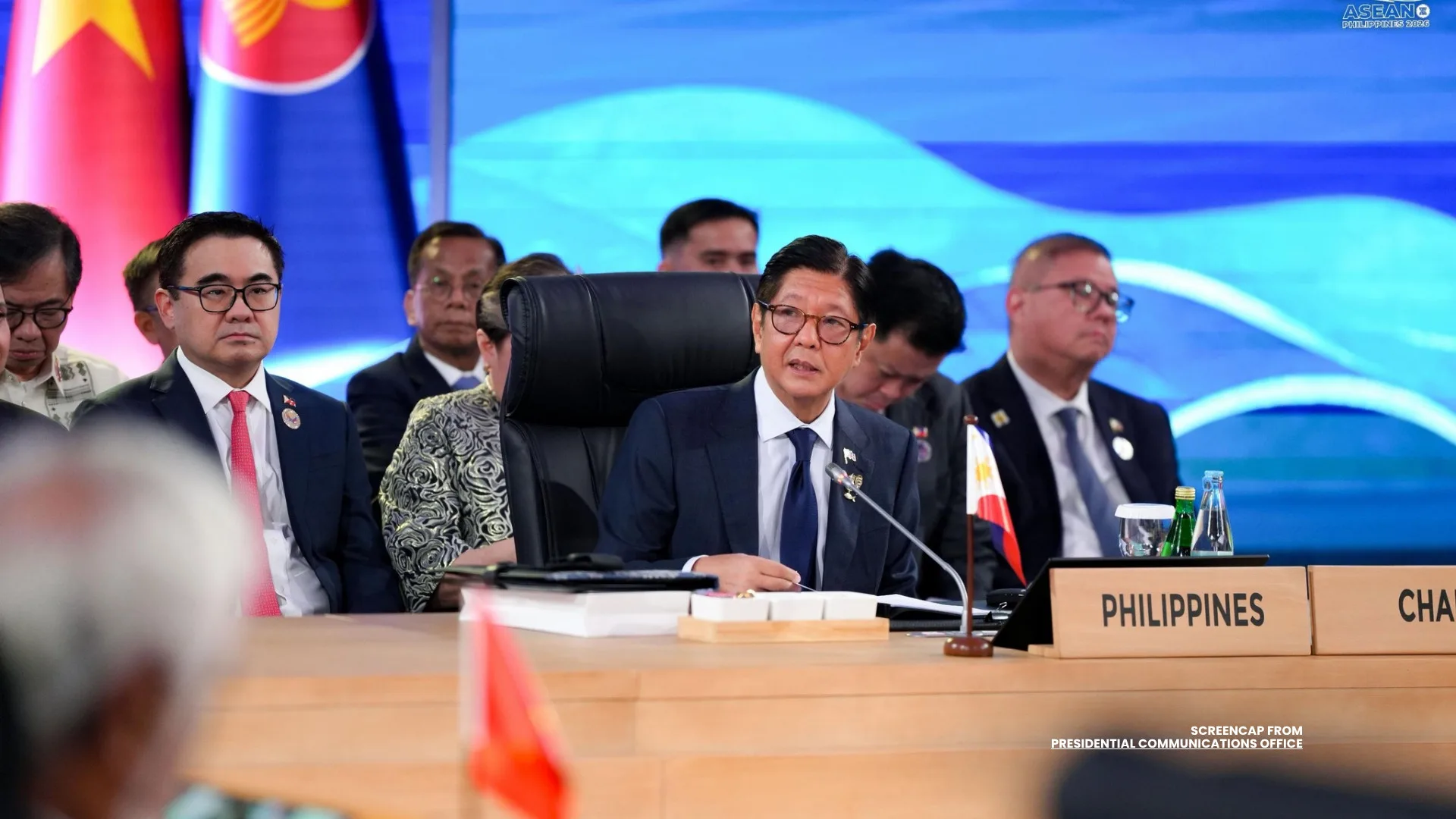
President Ferdinand Marcos Jr. called for stronger unity and closer regional cooperation among ASEAN member-states as leaders confronted the growing impact of the ongoing Middle East crisis during the 48th ASEAN Summit in Cebu.
Speaking before regional leaders at the summit plenary in Lapu-Lapu City on Friday, Marcos said the worsening geopolitical tensions in the Middle East continue to threaten global stability, trade, and economic security across Southeast Asia.
The President said ASEAN remains deeply concerned over the escalating conflict involving Israel, the United States, and Iran, warning that the situation has already disrupted key transport routes and global supply chains.
“ASEAN has expressed serious concern over the escalation of conflict due to the preemptive attacks initiated by Israel and the United States against the Islamic Republic of Iran on February 28, 2026, and the subsequent retaliatory attacks by Iran against several countries in the region,” Marcos said.
According to the President, the conflict has affected maritime and air transportation, endangered merchant vessels and civilian aircraft, and disrupted the movement of energy supplies and essential goods.
He said the economic effects are now being felt by ASEAN citizens through rising living costs, supply shortages, threats to livelihoods, and mounting financial pressures both within the region and among ASEAN nationals working in the Middle East.
“It is a stark reminder that, in an increasingly uncertain world, collective action has never been more urgent,” Marcos said.
The President urged ASEAN nations to uphold regional solidarity and pursue practical cooperation in addressing shared challenges, particularly in the areas of energy security, food stability, and the protection of citizens abroad.
Marcos also reiterated support for the peaceful settlement of disputes, the protection of civilians, and the restoration of safe passage through the Strait of Hormuz, a key global shipping route.
During the summit, Marcos encouraged ASEAN to maximize technological innovation, including artificial intelligence, to strengthen energy forecasting, improve grid management, and support the region’s transition to cleaner energy sources.
He added that digital technologies could also help improve agricultural productivity and mitigate the effects of supply disruptions.
The President likewise emphasized the need to strengthen early warning systems and enhance coordination among ASEAN governments to ensure the safety and timely assistance for ASEAN nationals affected by regional and global crises.
“As we push forward the first year of the implementation of the ASEAN Community Vision 2045, we are reminded that our region is strongest when we turn shared challenges, however daunting they may be, into shared purpose,” Marcos said.
Before concluding his remarks, Marcos highlighted the importance of maritime cooperation and expressed support for the proposed ASEAN Leaders’ Declaration on Maritime Cooperation.
He also promoted the Philippines’ proposal to establish an ASEAN Maritime Center, which would serve as a regional platform for maritime collaboration and coordination among ASEAN member-states.