
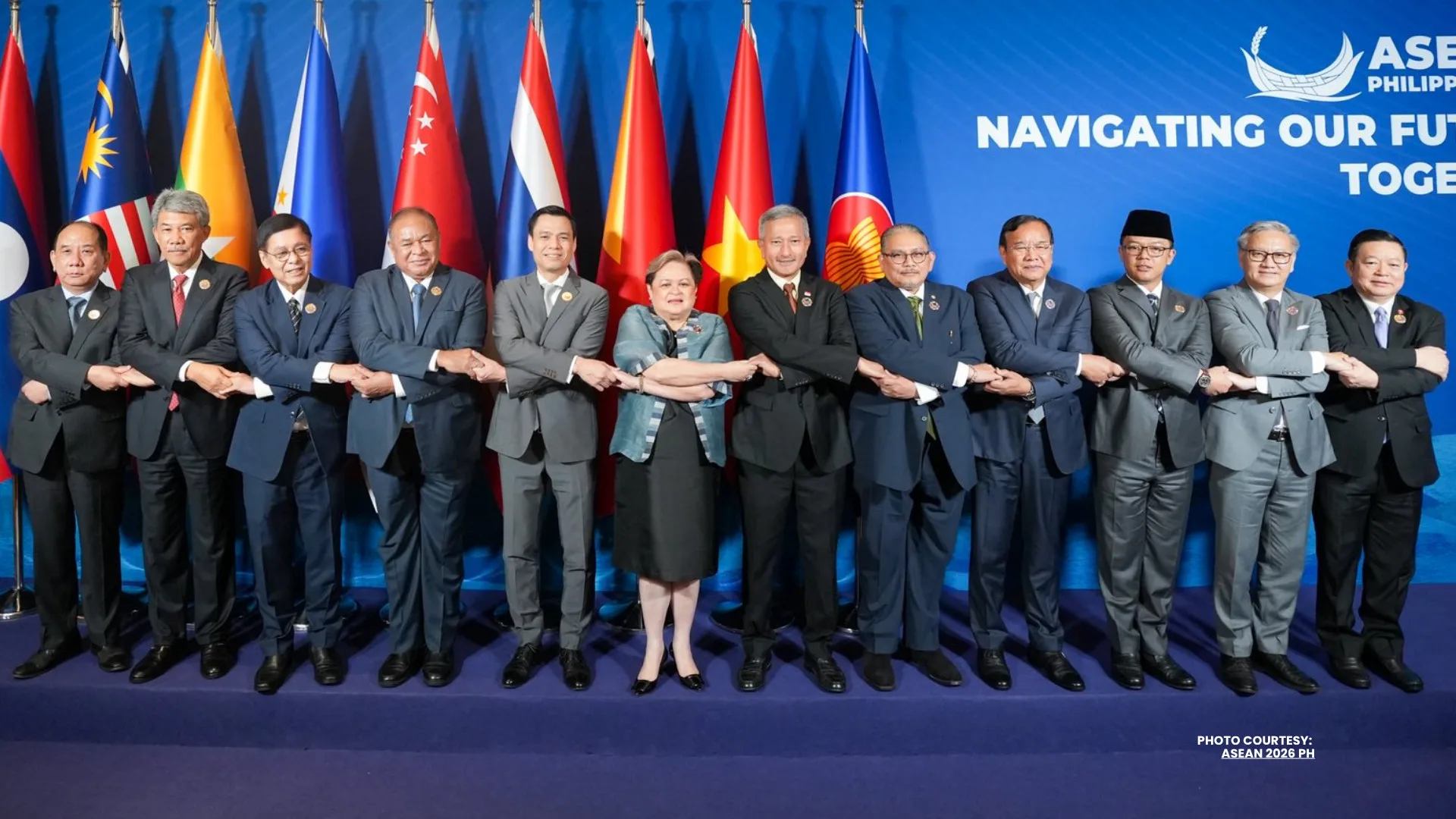
ASEAN foreign and economic ministers on Thursday warned that the escalating conflict in the Middle East could drive up fuel and food prices across Southeast Asia, as regional leaders pushed for stronger coordination to cushion the economic impact on millions of people.
During the Joint ASEAN Foreign and Economic Ministers’ Meeting, Philippine officials said the prolonged crisis is already disrupting global energy supply chains and increasing economic pressure on businesses and consumers throughout the region.
Department of Foreign Affairs Secretary Ma. Theresa Lazaro said uncertainty continues to surround the Middle East despite ongoing diplomatic efforts following military strikes involving the United States, Israel, and Iran.
She noted that restrictions in the Strait of Hormuz have intensified concerns over possible fuel supply disruptions, rising oil prices, and inflationary pressures that could spill over into Southeast Asian economies.
“The impacts of this prolonged conflict are now gradually affecting the lives of millions across ASEAN,” Lazaro said, emphasizing that energy security, food security, and the welfare of ASEAN nationals abroad have become urgent regional concerns.
Lazaro urged parties involved in the conflict to pursue negotiations that could lead to a peaceful resolution and prevent further instability from affecting the global economy.
She also disclosed that the Philippines had declared a state of national energy emergency, prompting the government to recalibrate some ASEAN chairmanship activities while implementing austerity measures amid rising fuel prices and supply concerns.
According to Lazaro, ASEAN leaders are expected to issue a joint statement during the summit outlining the bloc’s collective response to the crisis and proposing long-term measures to strengthen regional crisis preparedness.
Department of Trade and Industry Secretary Cristina Roque echoed the call for closer coordination, warning that the economic effects of the conflict are already being felt across the region.
Roque said higher fuel prices, rising food costs, and supply chain disruptions are placing additional strain on businesses, particularly micro, small, and medium enterprises (MSMEs), which remain vulnerable to sudden spikes in operating expenses.
“What began as a distant crisis is now affecting energy prices, supply chains, and economic conditions across ASEAN,” Roque said. “These are not isolated effects. They are reminders that our economies and vulnerabilities are closely linked.”
She stressed that trade, energy security, and supply chain issues can no longer be addressed separately, saying ASEAN member-states must coordinate more closely to respond effectively to global shocks.
Roque also highlighted the need to stabilize energy supplies, protect food security, and support businesses struggling with inflation and economic uncertainty.
Both officials emphasized that ASEAN’s strength lies in regional cooperation, pointing to how the bloc previously responded to financial crises, natural disasters, and the COVID-19 pandemic through collective action and coordination.