
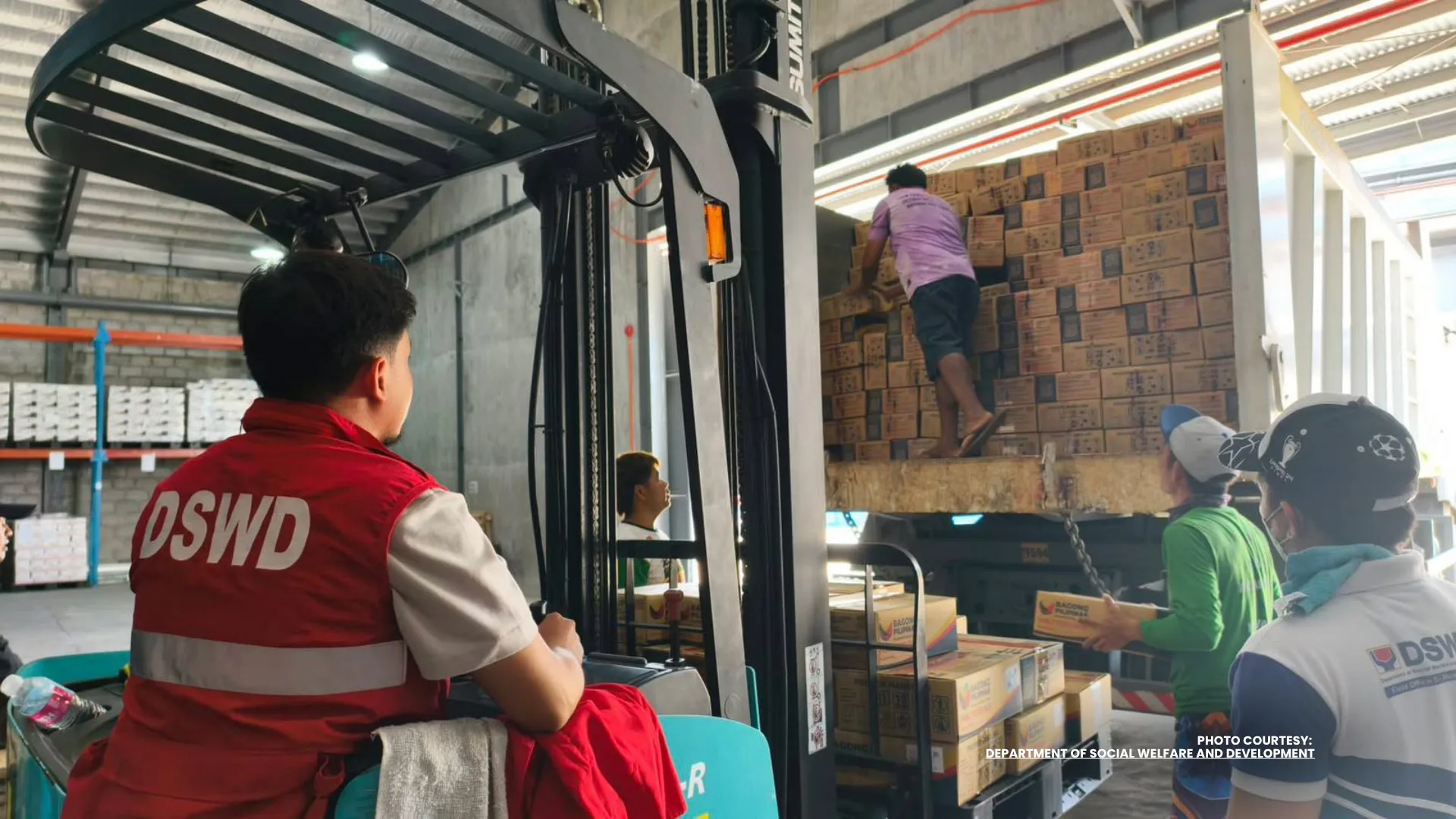
The Department of Social Welfare and Development (DSWD) has released nearly P148 million worth of assistance to families affected by the continuing unrest of Mayon Volcano in the Bicol Region.
DSWD Bicol Regional Director Norman Laurio said the agency has so far provided food packs, non-food items, and emergency cash assistance to thousands of affected residents.
In an interview on Bagong Pilipinas Ngayon, Laurio said almost 70,000 affected families have already received assistance, including emergency cash transfers distributed before volcanic activity intensified.
According to Laurio, the DSWD has also allocated P65 million in additional emergency cash aid intended for farmers affected by the ongoing volcanic unrest. Distribution of the financial assistance is scheduled from Monday to Wednesday next week.
The assistance follows an earlier round of emergency cash transfers given to affected farmers in April.
Data from the DSWD’s Disaster Response Operations Management, Information, and Communication (DROMIC) Division showed that as of May 7, around 70,150 families or 286,939 individuals from 160 barangays across Region V have been affected by Mayon’s activity.
Of the total number, 1,158 families or 4,191 individuals have been displaced. Around 4,106 individuals are currently staying in 12 evacuation centers, while others have temporarily sought shelter with relatives or friends.
Alert Level 3 remains in effect over Mayon Volcano, with authorities continuing to prohibit entry into the six-kilometer Permanent Danger Zone.
Meanwhile, DSWD Assistant Secretary and spokesperson Irene Dumlao said the agency is improving conditions inside evacuation centers as extreme heat continues to affect displaced families.
Dumlao said measures include retrofitting evacuation facilities and increasing ventilation to help address high temperatures linked to the El Niño phenomenon.
The DSWD is also considering the establishment of dedicated “cooling areas” inside evacuation centers equipped with air-conditioning units and cooling equipment to help evacuees cope with the heat.
In addition, mobile kitchens have been deployed to provide hot and nutritious meals to displaced families and prevent what the agency described as “food pack fatigue.”
The agency has also expanded its humanitarian efforts through cash-for-work and emergency cash transfer programs, releasing over P56 million to support vulnerable households.
Under the cash-for-work program, beneficiaries are tasked with activities such as planting crops, caring for livestock, and maintaining cleanliness in evacuation areas.