
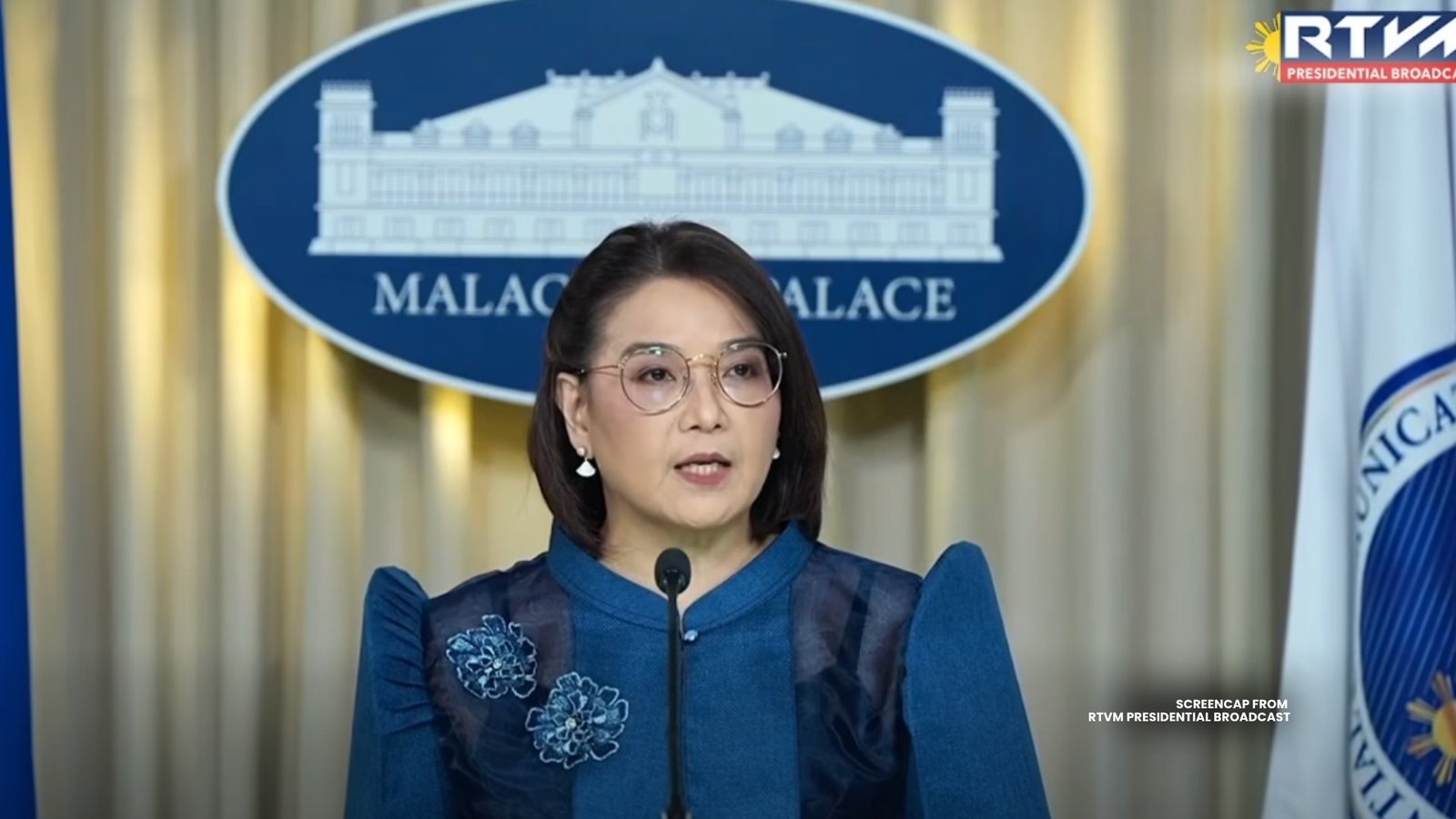
Malacañang pushed back against claims that the government lacks resources to support vulnerable Filipinos amid rising economic pressures, saying multiple assistance programs remain in place to cushion the impact of high fuel prices, inflation, and a weakening peso.
Palace Press Officer Claire Castro dismissed remarks by Vice President Sara Duterte warning that worsening economic conditions could push the poorest sectors toward crime, emphasizing that aid has been flowing since the onset of the Middle East crisis.
Speaking at a briefing in Cebu, Castro said the government continues to roll out targeted interventions, including cash assistance, fuel subsidies, and livelihood support, to help affected sectors cope with rising costs.
She also rejected assertions that government funds are running low, stressing that agencies have sufficient resources to sustain ongoing programs.
Castro added that the Vice President may not be fully aware of the government’s efforts, citing her frequent absences from official duties.
Since tensions escalated in the Gulf region earlier this year, the government has extended P5,000 cash assistance through the Department of Social Welfare and Development (DSWD), along with fuel subsidies for public transport workers under the Department of Transportation (DOTr). Additional support includes fuel discounts through the Department of Energy (DOE) and emergency employment through the Department of Labor and Employment’s TUPAD program.
Authorities have also facilitated the repatriation of overseas Filipino workers (OFWs) affected by the crisis.
To coordinate the response, President Ferdinand Marcos Jr. created the Unified Package for Livelihoods, Industry, Food and Transport (UPLIFT) committee, tasked with overseeing measures aimed at mitigating the economic fallout.
The DSWD, for its part, reported that more than 4,000 OFWs impacted by the Middle East situation have received over P5.2 million in assistance as of May 5. Aid provided includes financial support, medical assistance, psychosocial services, and livelihood programs to help returning workers rebuild their lives.
Data from the agency showed that over 4,100 OFWs were given psychological first aid, while 921 individuals received financial assistance totaling more than P4.8 million. A smaller number also received livelihood grants and medical support.
Meanwhile, President Marcos led the rollout of the “Bawat Bayan Makikinabang” initiative in several southern Metro Manila cities, distributing 10 kilos of rice to thousands of low-income families and providing cash assistance to barangays.
In Muntinlupa City alone, around 31,000 families benefited from the rice distribution, which is scheduled every two months. Each participating barangay also received P200,000, with funds earmarked for scholarships and community projects.
The President said the program is part of a broader effort to ensure food security and deliver government assistance more efficiently through local governments, especially as economic challenges continue to affect households nationwide.