
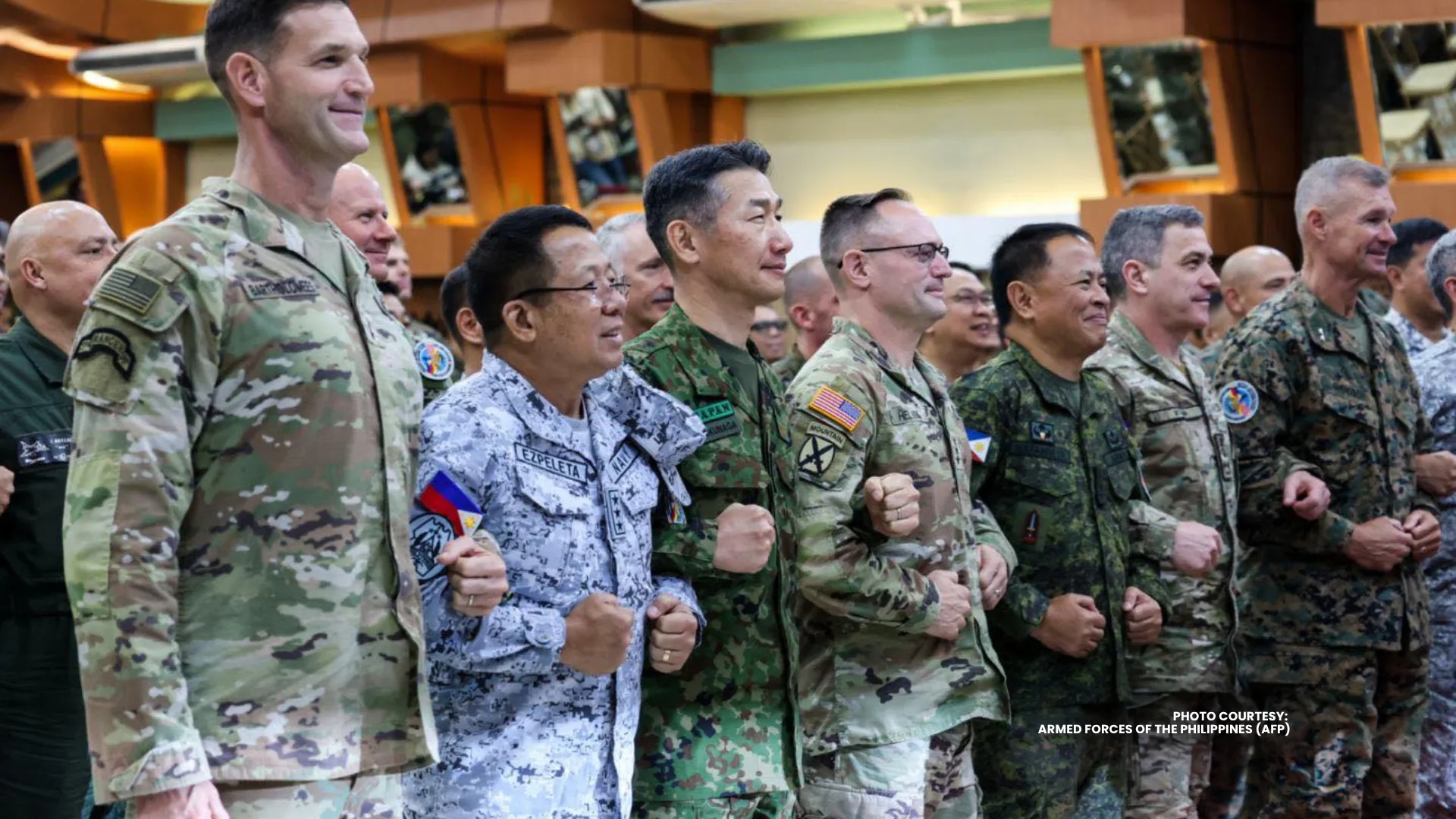
More than 500 troops from the United States, the Philippines, Australia, and New Zealand took part in a high-intensity counter-landing live-fire drill under Exercise Balikatan 2026, demonstrating their ability to repel a simulated amphibious assault.
The exercise showcased how allied forces can integrate land and air capabilities to respond to evolving threats. Participants carried out coordinated strikes using missile systems, fighter aircraft, mortars, and machine guns, supported by real-time intelligence, surveillance, and reconnaissance.
A multi-domain command and control system served as the operation’s nerve center, allowing forces from different countries to synchronize decisions and battlefield actions.
According to U.S. Marine Corps official G.J. Flynn III, the exercise highlighted that effectiveness depends not only on individual capabilities but on how well they are integrated on the ground. He added that operating side by side in defensive scenarios strengthened trust among partner forces.
This year’s drill marked the first time the four nations conducted a counter-landing live-fire scenario together during Balikatan. Participants included U.S. Marines from Marine Rotational Force–Darwin and soldiers from the 7th Infantry Division and Multi-Domain Command–Pacific; Filipino troops from the 3rd Marine Brigade, Philippine Air Force, and Philippine Army; Australian troops from the 5th/7th Battalion of the Royal Australian Regiment; and, for the first time, New Zealand personnel from the 2nd/1st Battalion of the Royal New Zealand Infantry Regiment.
Armed Forces of the Philippines spokesperson Col. Dennis Hernandez said the drill underscored the importance of joint operations in coastal defense, noting that protecting shorelines requires seamless coordination among services and allied nations.
The scenario began with surveillance assets detecting a simulated enemy vessel approaching the coastline. Intelligence was relayed to command units, which directed High Mobility Artillery Rocket Systems to engage targets near the beachhead.
As the mock enemy advanced using amphibious vehicles and fast boats, allied troops responded with layered firepower, including mortars, Stinger missiles, and anti-armor systems such as Javelin and tube-launched, optically tracked, wire-guided missiles.
The exercise concluded with a final defensive stand, with combined forces delivering direct fire to neutralize remaining targets and secure the shoreline.
New Zealand Army officer Will Hutchinson said the training improved interoperability and strengthened ties with partner nations, particularly Australia and the Philippines.
Australian Army officer Benjamin Woolmer highlighted the significance of “shoulder-to-shoulder” cooperation, reflecting the spirit of Balikatan as both a strategic and human partnership.
Military officials said the exercise is part of broader efforts under Balikatan 2026 to enhance tactical readiness, improve system compatibility, and deepen coordination among allied forces in addressing regional security challenges.