
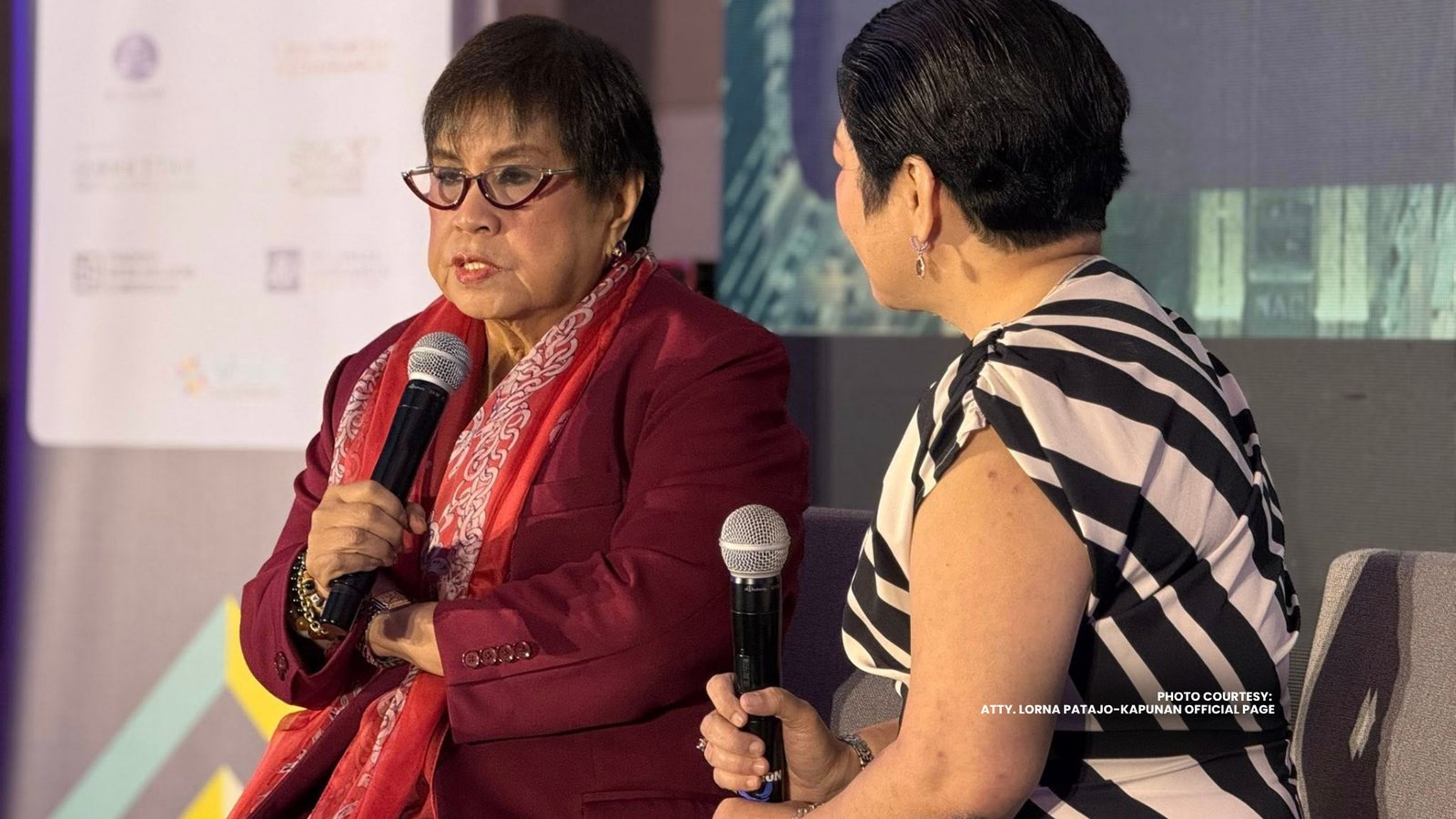
A veteran trial lawyer said the House Committee on Justice may already have sufficient basis to establish probable cause in the impeachment case against Vice President Sara Duterte, citing discrepancies in her declared wealth and billions of pesos in flagged financial transactions.
In an interview, Lorna Kapunan said the threshold for probable cause, which is distinct from proving guilt beyond reasonable doubt, appears to have been met based on evidence presented during congressional hearings. She pointed to official records and sworn testimonies that, in her view, raise serious legal questions about possible violations of law.
Kapunan urged the public to rely on documented figures rather than statements or commentary outside the proceedings. She emphasized that the data under review came from government institutions, including the Office of the Ombudsman for Statements of Assets, Liabilities and Net Worth (SALNs), and the Anti-Money Laundering Council (AMLC) for transaction reports.
During the April 22 hearing, lawmakers examined Duterte’s SALN history, which showed her declared net worth rising from P7.2 million in 2007 to P88.4 million in 2024. The panel also flagged her alleged failure to disclose cash on hand and bank deposits under personal assets from 2019 to 2024.
At the same hearing, the AMLC reported more than 600 transactions amounting to P6.7 billion linked to Duterte and her husband between 2006 and 2025. These were classified as covered or suspicious transactions. The agency also confirmed that several transactions earlier presented by Antonio Trillanes IV matched its records in terms of dates and amounts.
Kapunan said the documentation should not be dismissed as speculation, stressing that these are official records forming part of the evidentiary basis for determining accountability. She added that the committee has already presented “hard evidence” that warrants careful examination.
The lawyer also questioned Duterte’s continued absence from the hearings, noting that the House panel had provided opportunities for her camp to respond. She said the defense has yet to directly address the issues during proceedings.
She underscored that the Constitution grants the House of Representatives the authority to initiate impeachment cases, while the Senate serves as the impeachment court. She said the hearings aim to clarify allegations and allow the respondent to be heard before lawmakers vote on probable cause.
The House Committee on Justice is set to hold its final hearing on April 29, where the National Bureau of Investigation will present findings on a separate issue involving alleged threats against top government officials, including President Ferdinand Marcos Jr.
Lawmakers will then decide whether to elevate the impeachment complaints to the Senate. Several members of the panel have indicated that the evidence presented so far may already be sufficient to support charges, including alleged unexplained wealth.