
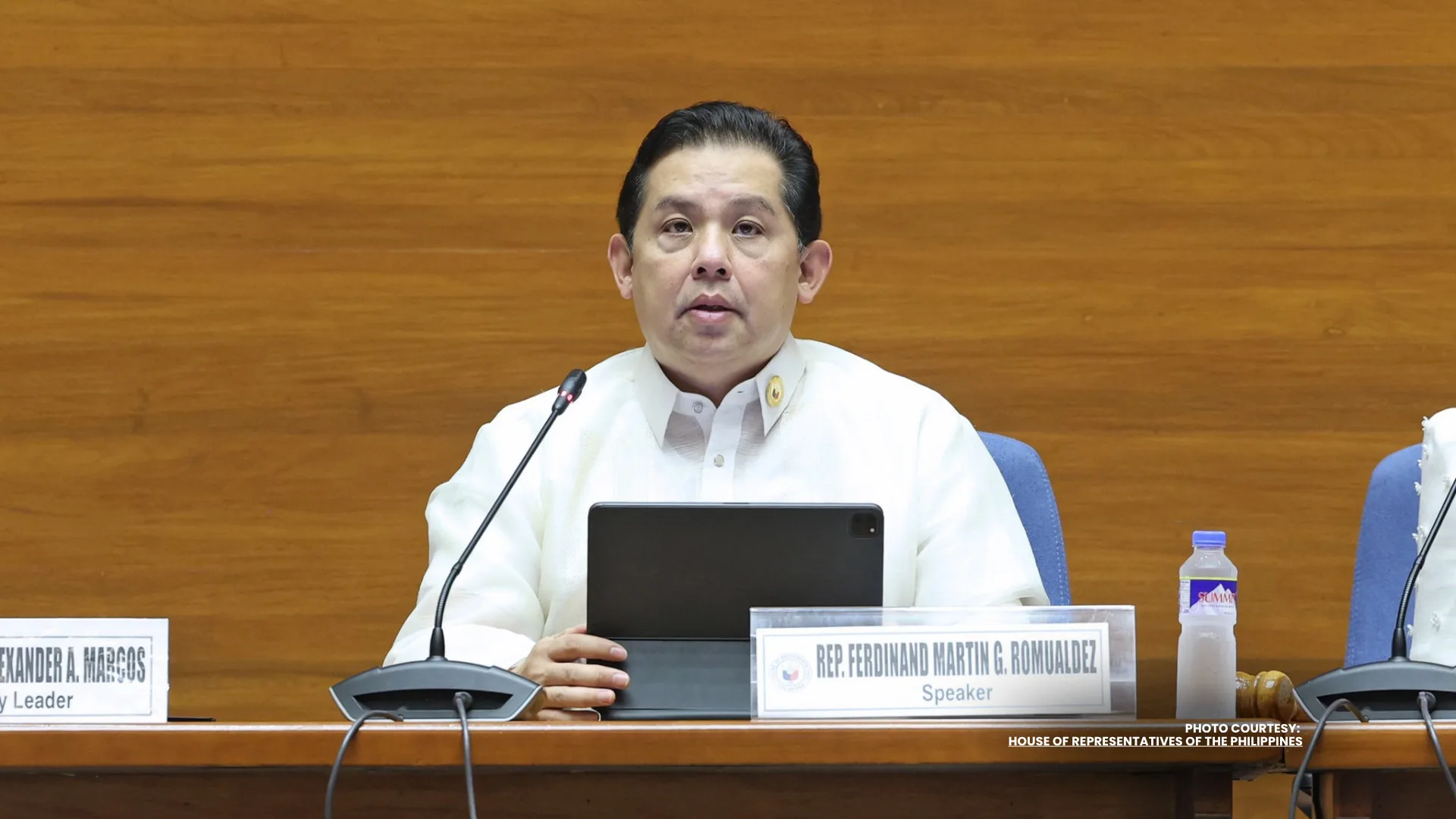
Former House Speaker and Leyte 1st District Rep. Ferdinand Martin Romualdez has asked the Office of the Ombudsman to inhibit itself from investigating him over alleged irregularities linked to a flood control project, citing what he described as a “pattern of prejudgment” that undermines due process.
In a four-page letter dated April 22, 2026, Romualdez, through his legal counsel, argued that public remarks by Ombudsman officials created the impression that a plunder case had already been decided even before a formal complaint was filed or a preliminary investigation completed.
The letter said there is a “reasonable impression” that the Ombudsman has already formed a conclusion to pursue charges, citing a series of public statements made in recent months.
His lawyers pointed to remarks in November 2025, when Ombudsman Jesus Crispin Remulla reportedly said the office had been reviewing the matter for weeks and was already considering possible plunder charges.
By April 2026, the defense said the language had shifted to public assertions that a plunder case was being actively prepared, allegedly involving conspiracy and multiple individuals.
For Romualdez’s legal team, these statements suggest that what should be a neutral fact-finding process may have already been framed as a prosecution narrative.
The defense also raised concerns over remarks attributed to Assistant Ombudsman Mico Clavano, who allegedly referred to Romualdez as a “master plunderer” during a press briefing. The lawyers said such comments reinforce the perception of bias.
They added that even as Remulla acknowledged legal challenges in establishing plunder under existing jurisprudence, he continued to publicly discuss the possibility of filing charges, which they argued reflects a predetermined direction of the case.
Taken together, the statements, according to the defense, create the impression that any ongoing probe would merely validate a pre-formed conclusion rather than independently assess the evidence. They also warned that such public statements could pressure investigators to align with a fixed position.
Citing Supreme Court rulings on the importance of impartiality and the appearance of fairness in judicial and quasi-judicial proceedings, Romualdez’s camp formally requested that the Ombudsman inhibit itself from handling the case and that any complaint be transferred to an independent body.
“This is not about questioning integrity,” the letter stated, “but about ensuring due process and maintaining public confidence in the justice system.”
Romualdez’s camp said the request goes beyond the allegations, focusing on whether the country’s anti-graft body can conduct investigations that are not only fair in substance but also perceived to be fair by the public.