
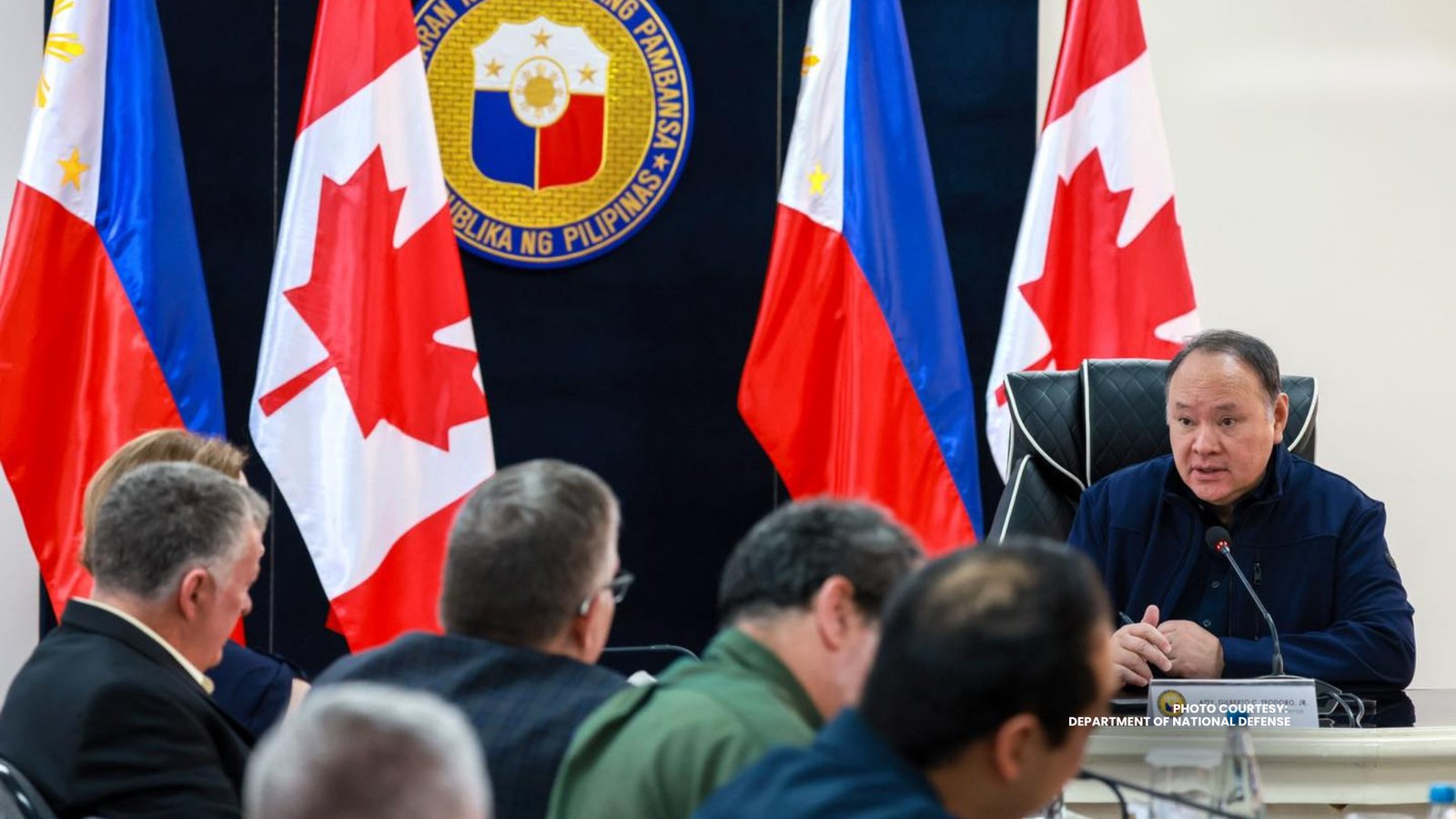
The Philippines and Canada have agreed to deepen cooperation in cybersecurity and digital defense following high-level talks aimed at expanding military and technological collaboration.
The commitment was reached during the visit of Lieutenant General Steven J.M.S. Boivin, Commander of the Canadian Joint Special Operations Command (CJOC), to Camp Aguinaldo, the Department of National Defense (DND) said.
Boivin met with DND Undersecretary for Information Systems and Cybersecurity Fabian Pedregosa in discussions described as part of the “deepening defense partnership between the Philippines and Canada,” according to DND spokesperson Arsenio Andolong.
The talks build on the Status of Visiting Forces Agreement (SOVFA), signed in November last year and recently ratified by President Ferdinand Marcos Jr., which provides the legal framework for joint military exercises and engagements.
Both sides explored expanded cooperation in Command, Control, Communications, Computers, Intelligence, Surveillance, and Reconnaissance (C4ISR) systems, as well as broader cyber defense initiatives.
“Cyber defense and cybersecurity cooperation emerged as a priority area, with both countries recognizing the importance of enhancing information sharing, training, and coordination to address evolving cyber threats,” Andolong said.
The Canadian delegation presented an overview of its Joint Special Operations Command, while Philippine officials outlined national cybersecurity priorities and defense strategies.
Officials also discussed collaboration in cyber governance, capacity building, and strengthening digital infrastructure resilience.
Canada’s growing role in regional military activities was likewise noted, including its transition from observer to participant in Exercise Balikatan alongside the Philippines, United States, Japan, Australia, New Zealand, and France.
Both countries reaffirmed their commitment to sustained cooperation through joint exercises and training programs, aimed at supporting a “secure and resilient digital environment and a free and open Indo-Pacific,” Andolong added.