
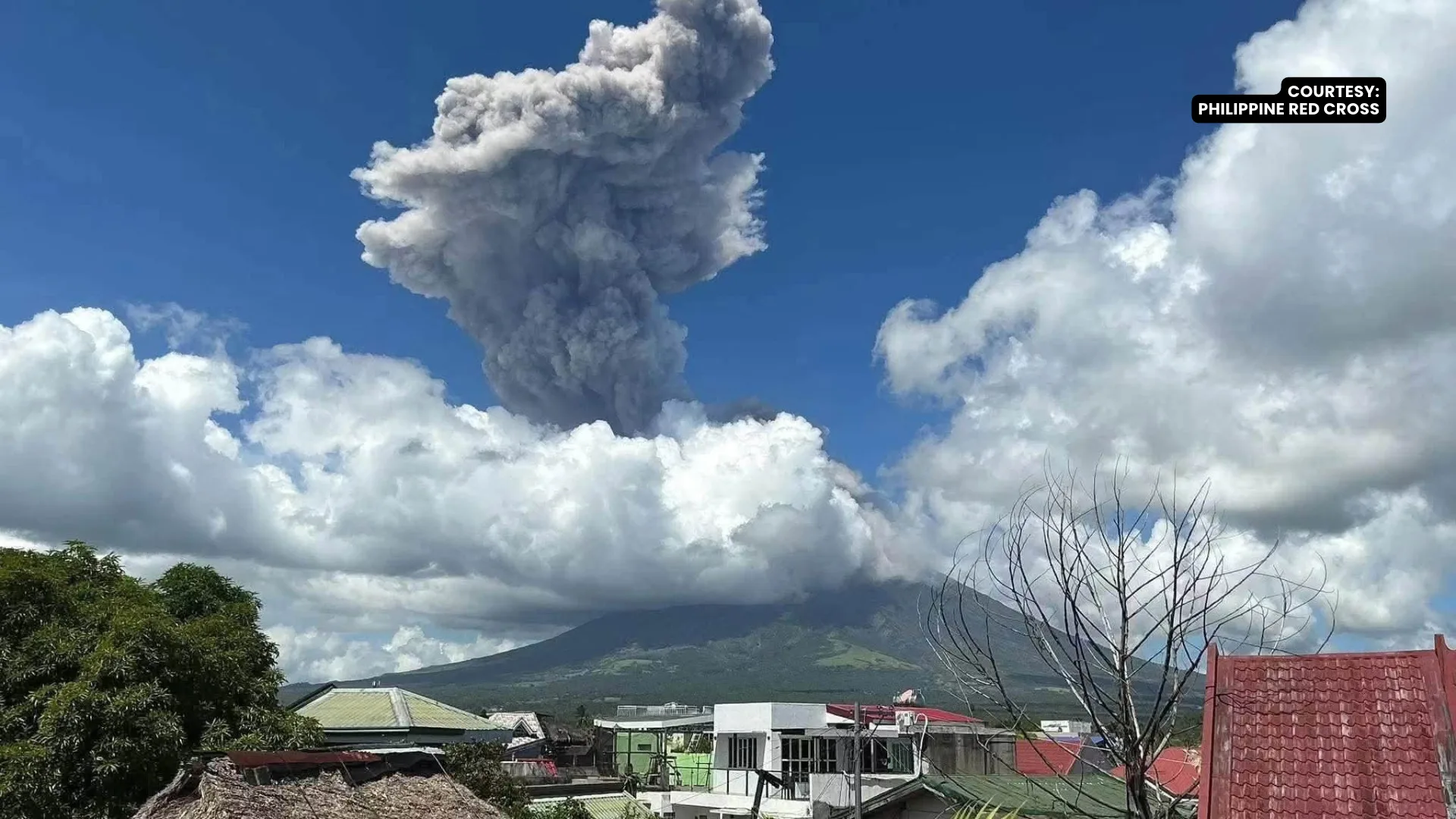
Emergency health resources were distributed across vulnerable communities as local authorities managed the evacuation of hundreds of households affected by volcanic activity from Mayon Volcano.
To protect residents against airborne volcanic hazards, the Provincial Health Office dispatched 22,000 surgical masks to local health facilities for distribution following gray ash columns generated by the volcano.
The public health measure coincided with emergency displacement efforts monitored by the Albay Public Safety and Emergency Management Office (APSEMO), which logged 746 families, equivalent to 2,041 individuals, evacuated across several municipalities as of 5 p.m. Friday.
Official records indicate that 531 families were evacuated in Tabaco City, 205 in Camalig, and 10 in Barangay Baligang in Ligao City, while local government units in Malilipot, Legazpi City, Santo Domingo, Daraga, and Guinobatan maintained close monitoring of their respective sectors.
To ensure seamless coordination among local response forces, APSEMO placed its Provincial Disaster Operation Center under red alert status.
Volcanologists noted that Mayon experienced a moderately explosive eruption at approximately 11:53 a.m. Friday, lasting six minutes and generating a gray ash plume that reached 3,000 meters above the summit before drifting west-southwest.
Following the initial event, the alert status was escalated to Alert Level 3, signaling a heightened probability of a hazardous eruption. The Philippine Institute of Volcanology and Seismology (PHIVOLCS) subsequently logged another ash emission from the crater at around 5:17 a.m. Saturday.
Disaster response officials reiterated that strict enforcement of safety perimeters remains critical to preventing casualties near the volcano.
“Alert Level 3 prevails over Mayon and entry into the 6-km Permanent Danger Zone should be prohibited,” PHIVOLCS said.