
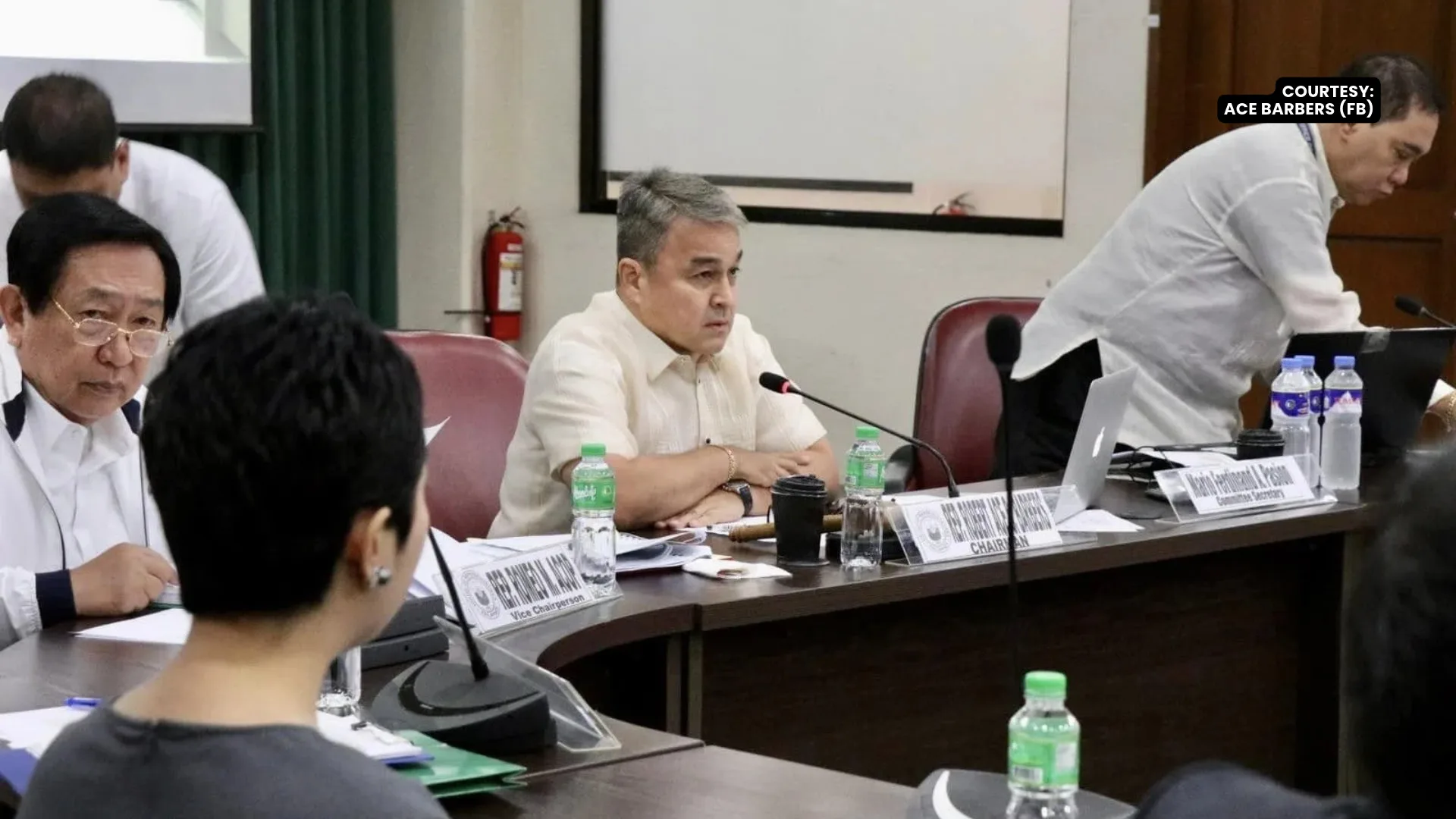
House impeachment team adviser and spokesperson Robert Ace Barbers insisted that an overwhelming electoral mandate does not place public officials above the law or shield them from constitutional accountability.
Barbers stressed that electoral popularity cannot override constitutional accountability mechanisms, particularly when elected officials face allegations involving public funds, unexplained wealth, and possible legal violations.
“Hindi ibig sabihin na kung ikaw ay nakakuha ng pinakamataas na boto ay exempted ka na lumabag sa mga batas,” Barbers said during the News Forum.
Barbers made the statement in response to a question about the political implications if the Senate impeachment court decides to exclude bank and tax records that were already presented publicly during trial proceedings.
Vice President Sara Z. Duterte received over 32 million votes in the 2022 vice presidential election, representing the highest vote total for any candidate in that election.
Barbers maintained that such an electoral mandate does not diminish an official’s responsibility to address allegations of misconduct.
“Ngayon sa side naman ng politika, dapat na intindihan ng ating mga kababayan na ang pinag-uusapang mahalaga rito ay ’yung transparency at accountability. Pananagutan,” Barbers also said.
Barbers emphasized that impeachment remains a constitutional mechanism created to hold high-ranking officials accountable for serious offenses, regardless of their vote tallies.
“Malinaw na nakasaad sa ating Saligang Batas na meron tayong accountability mechanism na pwedeng gamitin nang sa ganoon ay mapanagot natin ang ating mga leader, ang ating elected leaders, sa mga pagkakasala nila sa bayan,” Barbers added.
Under the Constitution, the vice president is among the high-ranking officials who may be removed from office through impeachment and conviction for culpable violation of the Constitution, betrayal of public trust, graft and corruption, and other impeachable offenses.
To substantiate its unexplained wealth charge against Duterte, the House prosecution panel called witnesses from commercial banks, insurance providers, the Bureau of Internal Revenue (BIR), and financial forensic expert Atty. Alexander Cabrera.
Cabrera testified Friday that his forensic analysis identified roughly P817.87 million in allegedly unlisted assets and income involving Duterte and her husband, lawyer Manases “Mans” Carpio, covering 2022 to 2025.
Prosecutors also submitted official records detailing insurance policies, bank deposits, corporate holdings, and financial movements that they argue were omitted from Duterte’s Statements of Assets, Liabilities and Net Worth.
Barbers defended introducing these financial documents into evidence, asserting that the Senate impeachment court had resolved statutory questions regarding bank secrecy laws.
“Kapag may impeachment proceedings, ito ay exempted from the bank secrecy. So ito ’yung na-rule out. May desisyon ang ating impeachment court tungkol dito,” Barbers said.
Defense counsel has challenged the admissibility, confidentiality, and evidentiary weight of various financial exhibits.
While prosecutors contend that the financial records are legally permissible in impeachment proceedings, their final weight and admissibility rest on future rulings by the impeachment court.
Barbers noted that public accountability remains paramount when allegations involve government resources and taxpayer money.
The House prosecution panel expects to wrap up its evidence presentation after Cabrera undergoes cross-examination by Duterte’s defense team, set for Monday, Oct. 12.
The Senate impeachment court will ultimately rule whether the prosecution panel established sufficient legal grounds to convict Duterte on the articles of impeachment.