
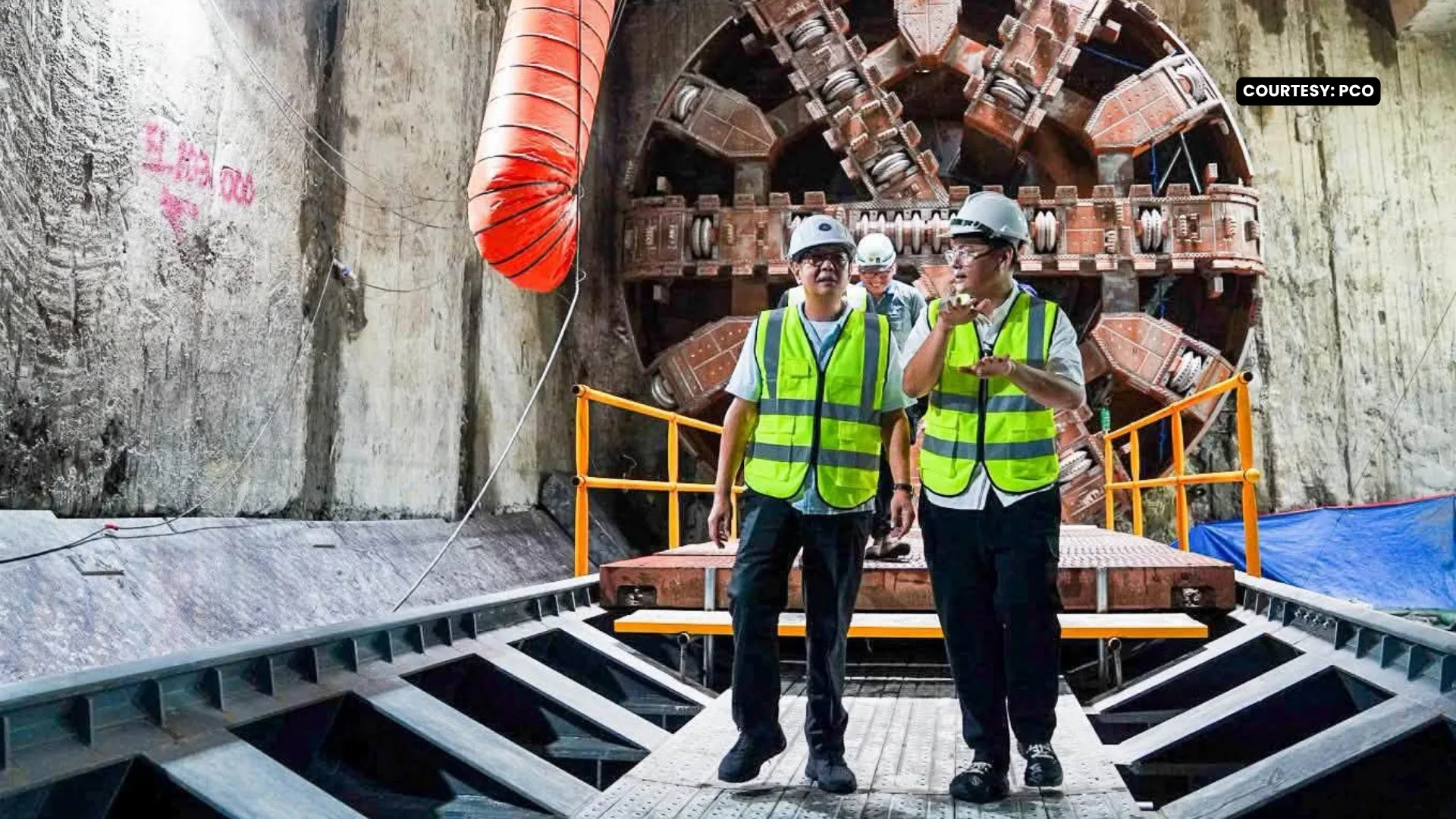
President Ferdinand Marcos Jr. led the inspection on Wednesday of ongoing construction works at the Quezon Avenue Station of the Metro Manila Subway Project (MMSP) in Quezon City, highlighting a major tunneling milestone in the nation’s premier underground mass transit development.
The President’s site visit commemorated the completion of 1.13 kilometers of underground excavation connecting the North Avenue and Quezon Avenue stations in Quezon City using massive tunnel boring machines. Meanwhile, active boring operations continue to press forward along the section linking the Quezon Avenue and East Avenue stations.
Highlighting the long-term impact of the infrastructure investment on urban transit, President Marcos emphasized the significance of the latest milestone:
“This is going to be a very important part of the city. And this is a very important day today because we are commemorating the breakthrough of the tunnel boring machine here in Quezon Avenue,” the President said.
The underground civil works and station construction at Quezon Avenue fall under Contract Package (CP) 102, which was awarded to a joint venture partnership comprising Nishimatsu Construction Company Limited and D.M. Consunji Inc.
The inspection follows momentum across other contract segments of the underground line. Just last week, President Marcos presided over the official groundbreaking ceremony for the Ninoy Aquino International Airport (NAIA) station in Pasay City, which is covered under Contract Package 109.
Designed as a high-capacity subterranean transit spine for the capital, the Metro Manila Subway Project will span 33 kilometers and feature 17 strategically located stations stretching from Valenzuela City all the way to NAIA Terminal 3.
Once fully completed and operational by the fourth quarter of 2031, the subway line is projected to drastically slash travel time between Valenzuela and Pasay from over 90 minutes down to just 41 minutes.