
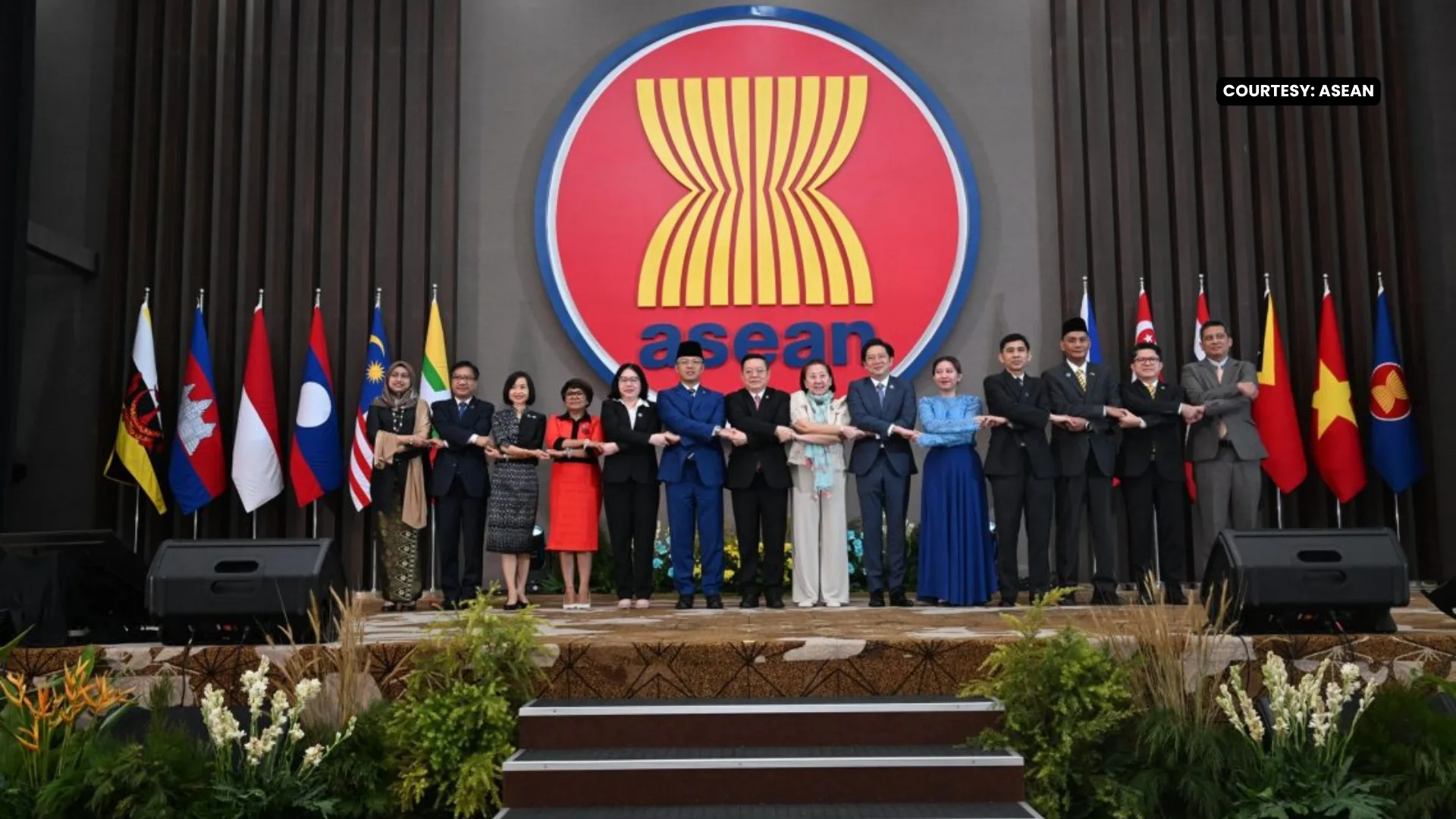
President Ferdinand Marcos Jr. called for stronger diplomatic dialogue, cooperation, and solidarity among nations as he marked the 59th ASEAN Day as chairman of the regional bloc, emphasizing that unity must prevail over geopolitical conflict to ensure regional stability.
“We celebrate not only the founding of our association, we celebrate a promise that has endured for nearly six decades, that in our shared region, dialogue must prevail over division, cooperation over conflict and solidarity over uncertainty,” Marcos said.
“ASEAN was built on a simple but powerful truth. Our peoples are safer, stronger, and more prosperous when our nations face the future together. Today, we can say with pride that ASEAN has honored that promise,” he added.
Established on August 8, 1967, through the Bangkok Declaration, the Association of Southeast Asian Nations has expanded from its five original founding members, Indonesia, Malaysia, the Philippines, Singapore, and Thailand, into an 11-member regional bloc representing nearly 700 million people and standing as the world’s fifth-largest economy.
Marcos noted that ASEAN’s strength stems from its patience, consensus-building, and trust, which have preserved regional peace and expanded economic opportunities. However, he warned that the region must navigate mounting global disruptions.
“Conflicts beyond our shores, including the situation in the Middle East, remind us that crises affect stability, economies, and communities far beyond where they begin. And even after crises pass, societies must be built, economies must recover and peoples must regain confidence in the future,” he said.
“At the same time, our region is confronting deeper forces of disruption, climate change, economic uncertainty, geopolitical tension and the rapid rise of artificial intelligence,” Marcos added.
Highlighting the bloc’s response to the Middle East crisis, Marcos praised ASEAN for acting “swiftly, and with resolve” by prioritizing energy security, food security and the protection of Southeast Asian nationals abroad.
“These priorities reflect ASEAN’s commitment to cooperation that protects lives, improves livelihoods and upholds peace, prosperity, and people empowerment,” Marcos said, stressing that ASEAN centrality remains essential for maintaining international order.
“This is why ASEAN centrality matters. It is how we chart our present and our future. Through ASEAN-led mechanisms, we provide vital spaces for dialogue, confidence building, and peaceful engagement. Through consultation, mutual respect and adherence to international law, we advance cooperation and common purpose,” he noted.
Calling on member states to build a more connected, inclusive, and future-ready region, the Chief Executive concluded: “On this ASEAN Day, let us honor how far we have come. More importantly, let us renew our responsibility for what comes next. Let us continue to navigate our future together.”