
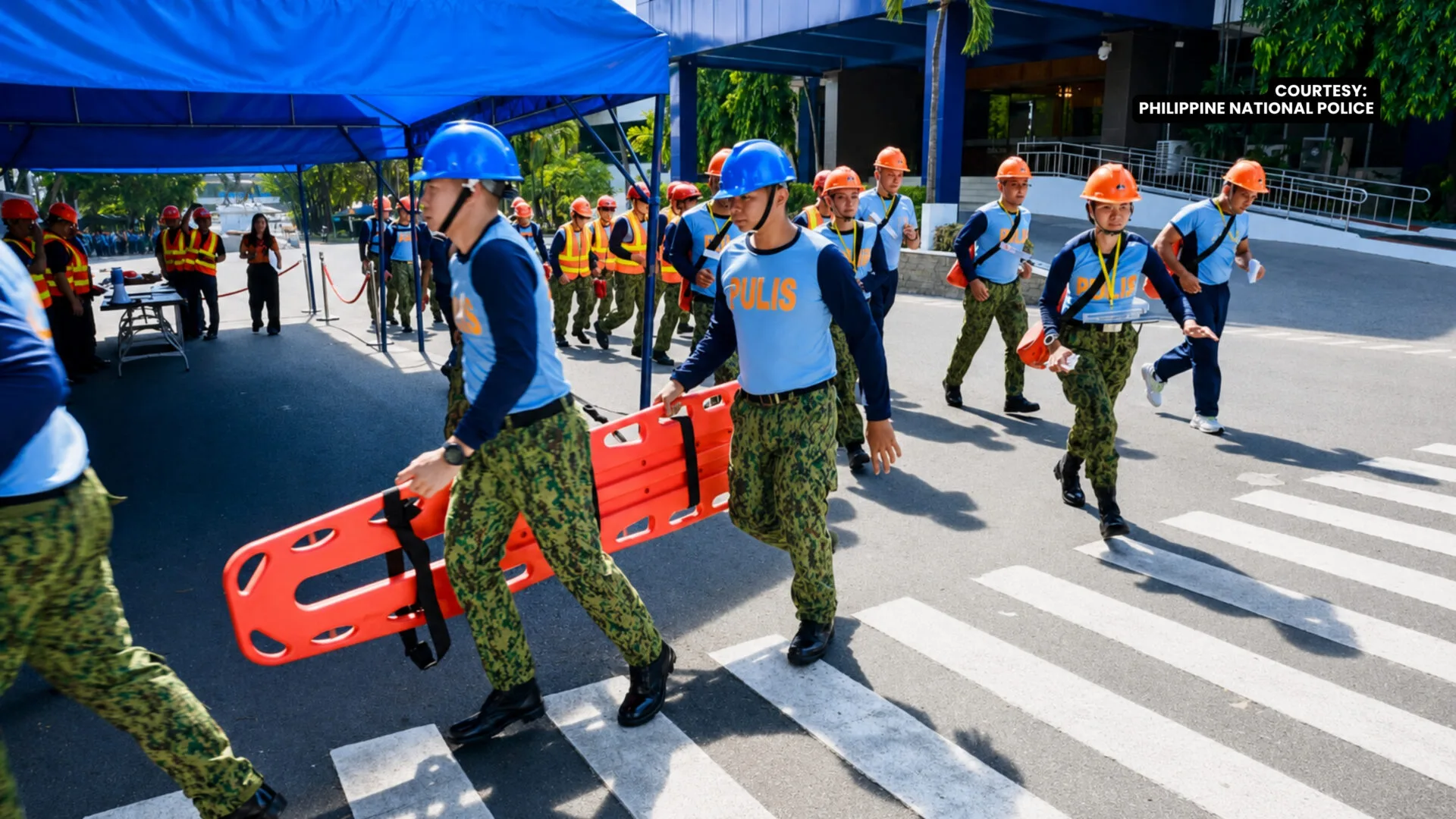
The Philippine National Police is coordinating with the Office of Civil Defense as part of government preparations for the possible impact of Super Typhoon Bavi, which may enhance the southwest monsoon as it approaches the country.
PNP Chief Police General Jose Melencio C. Nartatez Jr. said the police organization is working closely with the OCD and the Philippine Atmospheric, Geophysical and Astronomical Services Administration to identify areas likely to be affected by the super typhoon.
While the weather disturbance remains outside the Philippine Area of Responsibility, PAGASA said it may intensify the southwest monsoon, with its effects possibly being felt by Wednesday.
Nartatez said the coordination aims to help local police forces support local government units in implementing safety measures for residents in areas that may be affected.
“The goal will always be zero casualty. Our disaster response protocol will immediately be in place to ensure the safety and welfare of everybody, especially those living in coastal and low-lying areas,” said PGEN Nartatez.
The preparations are in line with the directive of President Ferdinand “Bongbong” R. Marcos Jr., through the guidance of DILG Secretary Jonvic Remulla, to ensure the readiness of concerned government agencies and strengthen disaster preparedness measures before the typhoon affects the country.
The PNP said part of its protocol is the pre-positioning of emergency response teams and police assets in areas that may be hit by the weather disturbance.
Coordination with LGUs also includes identifying areas prone to flash floods and landslides, as well as coastal communities at risk of storm surge.
“Our personnel are keeping an open communication line with the LGUs, especially on the matter of preemptive evacuation, search and rescue, and other necessary response,” said PGEN Nartatez.
He said the PNP is also coordinating with local officials to identify safe evacuation centers and ensure their security.
Nartatez said the police force will continue to closely monitor the typhoon’s movement and adjust deployments when needed to support local disaster response operations.