
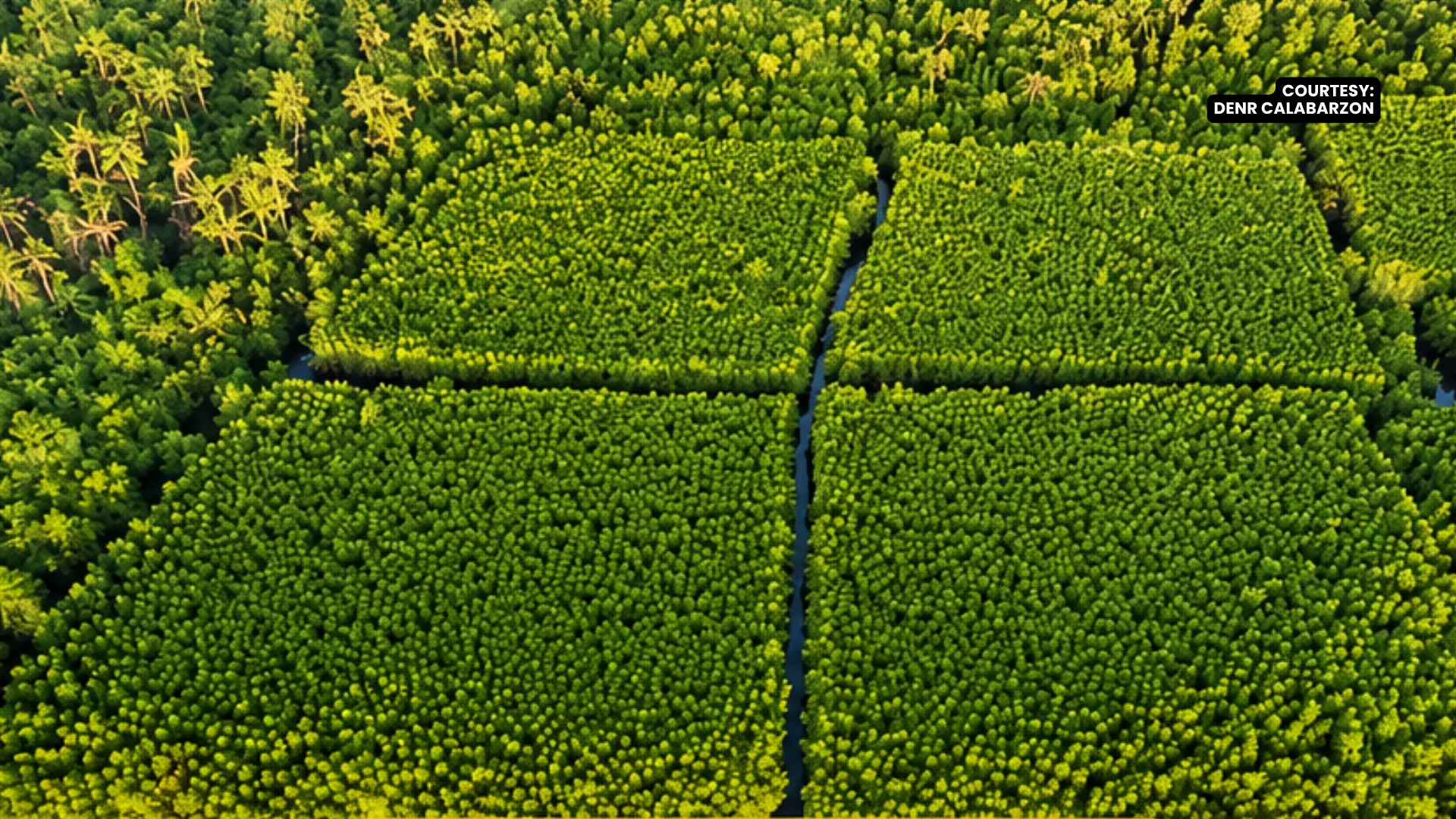
The Department of Environment and Natural Resources has completed the rehabilitation of nearly 98 hectares of typhoon-damaged mangrove forests in Jomalig, Quezon, boosting the island town’s natural defenses against storm surges and helping restore coastal biodiversity.
In a report released Saturday, July 4, the DENR said the rehabilitation covered mangrove areas in Barangay Talisoy that had been damaged by successive typhoons.
The project was implemented under the National Greening Program, the Yolanda Rehabilitation and Reconstruction Program, and the Mangrove and Beach Forest Development Project.
“These initiatives helped restore vital coastal ecosystems, strengthen natural defenses against storm surges, and support biodiversity conservation in the municipality,” the DENR said.
The agency said rehabilitated mangrove forests serve as natural barriers against strong waves and storm surges while providing breeding and nursery grounds for fish, crabs, and other marine species.
The DENR added that healthy mangrove ecosystems help improve fishery resources and support sustainable livelihood opportunities for coastal communities.
Jomalig, the smallest and easternmost island municipality of Quezon, sits on the eastern edge of the Polillo Island Group facing the Pacific Ocean, making it highly exposed to typhoons, rough seas, and coastal hazards.
Mangrove forests, often called the “rainforests of the sea,” are considered critical coastal ecosystems because their root systems shelter marine life and help stabilize shorelines. Their fallen leaves also serve as a natural food source for aquatic organisms.
The DENR reminded the public that cutting mangrove trees is prohibited under Presidential Decree No. 705, or the Revised Forestry Code of the Philippines, and Republic Act No. 8550, or the Philippine Fisheries Code.
The agency said stricter enforcement by the DENR and local government units has significantly reduced illegal mangrove cutting for charcoal production and fishpond expansion in many parts of Quezon province.