
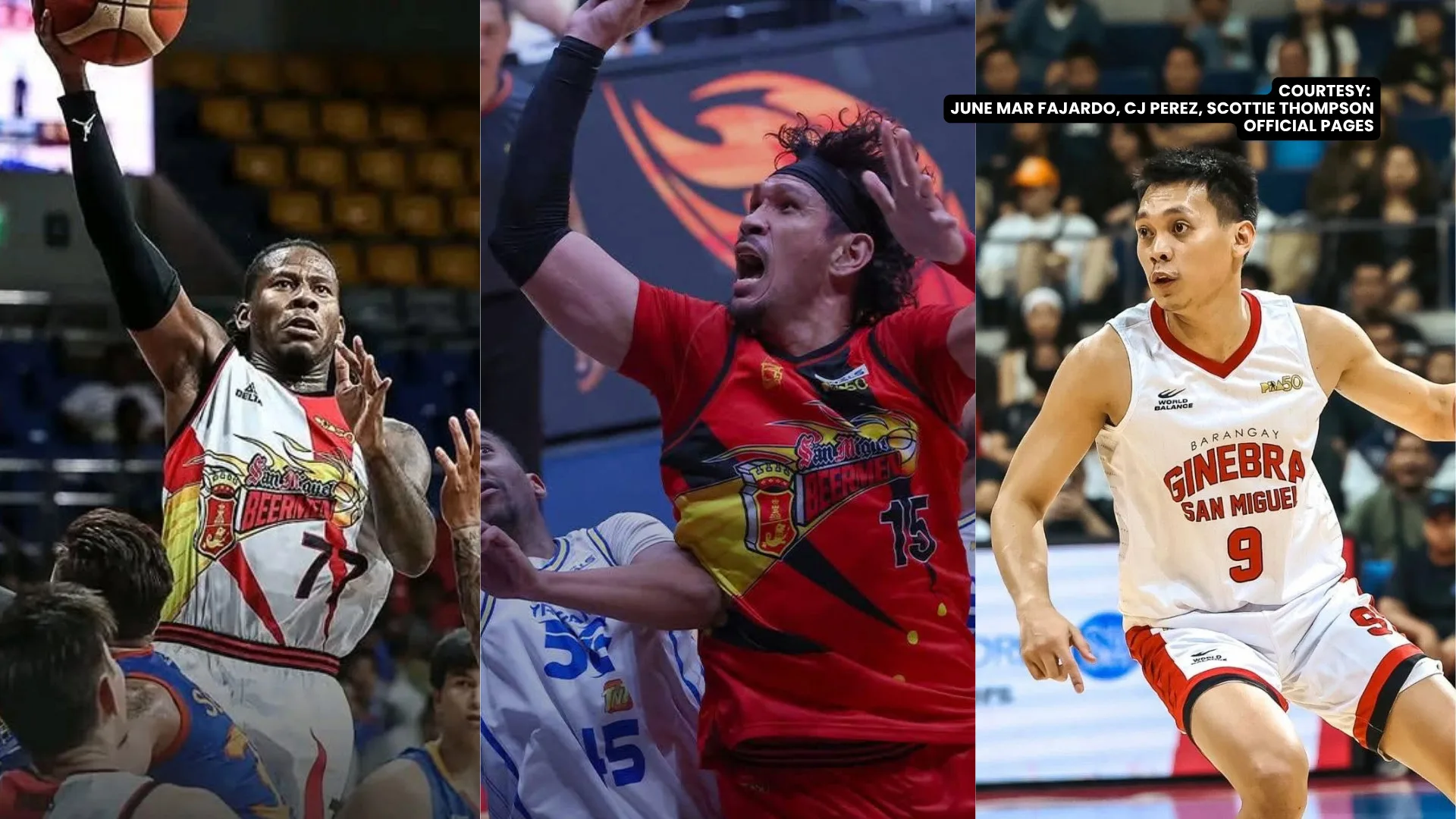
The Philippine Basketball Association (PBA) is set to gradually align its game rules with FIBA (Fédération Internationale de Basketball) standards starting in the season-ending, import-laced Governors’ Cup that’s set to start on July 10, 2026, in a strategic move aimed at strengthening the preparation of Gilas Pilipinas for international competition.
Commissioner Willie Marcial confirmed the adjustment following a meeting with coaches and the PBA Board, noting that the changes will primarily affect officiating and how physical play is regulated inside the league.
“Magbabago tayo next conference ng tawagan… much closer to FIBA officiating,” Marcial said.
The shift is expected to significantly reshape game flow, especially in areas such as defensive contact, screen setting, and foul interpretation, long seen as key differences between local and international basketball.
For Gilas Pilipinas, the adjustment is seen as a major advantage. Players regularly transitioning between the PBA and international tournaments have often struggled with the stark contrast in officiating styles, forcing in-game adaptations when representing the national team.
Gilas program director and team manager Alfrancis Chua acknowledged this long-standing issue, pointing out how inconsistent foul standards have affected international performance.
“Every time we play internationally, iba yung fouls dito at iba yung fouls doon,” Chua said. “We’re just adjusting in the middle of the game.”
He added that international games can swing between overly physical and overly strict interpretations, making familiarity with FIBA rules crucial for national team success.
Under the new framework, the PBA will also adopt FIBA-style possession arrows instead of jump balls in specific situations. However, core league elements will remain unchanged, including the four 12-minute quarters, six personal fouls per player, timeout structures, and the four-point line.
While the reforms are designed to benefit Gilas, they are also expected to reshape how PBA teams play domestically. Coaches will likely need to recalibrate defensive schemes and physicality thresholds, while players may have to adjust to stricter whistle standards and less contact-heavy play.
Marcial emphasized that the league’s direction remains aligned with national team priorities.
“Like we said before, the PBA will and always support the program of Gilas under the Samahang Basketbol ng Pilipinas,” he said.
As Asia’s first professional basketball league continues its evolution, the rule shift marks one of its most significant steps toward closing the gap between domestic competition and the international game, potentially redefining not only how the PBA is played, but how its players are prepared for the global stage.