
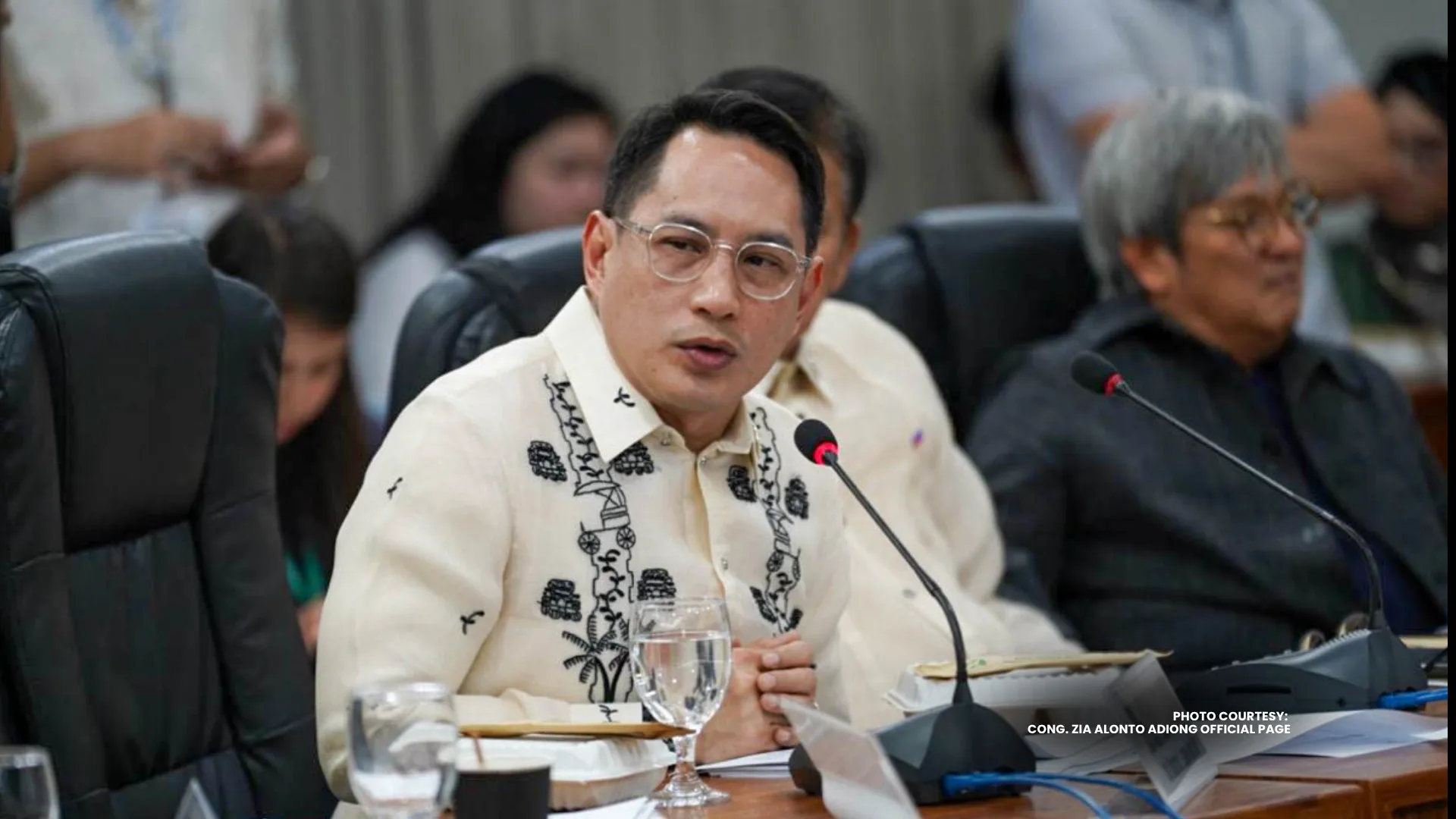
Vice President Sara Z. Duterte cannot invoke freedom of expression to justify the impeachment article accusing her of making alleged threats against President Ferdinand “Bongbong” R. Marcos Jr., according to House trial spokesperson and Lanao del Sur Rep. Zia Alonto Adiong.
Adiong said the defense cannot treat an alleged threat as though it were merely an opinion or a form of political expression.
“Well, you know, the legal community is unanimous in saying that the freedom of expression is not absolute. It has certain limitations,” Adiong said.
Aside from President Marcos, Duterte was also accused of threatening to assassinate First Lady Liza Araneta-Marcos and former Speaker Martin G. Romualdez.
Alonto Adiong said ordinary political opinion and alleged grave threats cannot be placed on the same legal and constitutional footing.
“And one of the limitations actually is not to use this as a way to threaten, make threats or grave threats against anyone, right? It’s not an opinion, it’s a threat,” Adiong explained.
The Vice President has invoked freedom of expression in relation to the threats article, which is expected to be among the first issues to be taken up when the Senate impeachment court opens trial on July 6.
“So I don’t see if this is still covered under the freedom of expression because opinion, as a way of expressing your sentiments, as covered by the freedom of expression, is actually acceptable. But when did grave threats become acceptable, right?” he asked.
The prosecution has maintained that the issue is not Duterte’s criticism of the government, but whether her public statement crossed the line into a serious threat involving the sitting President, the First Lady, and the former Speaker.
“It’s two separate issues. It’s not of the same type, and it should not also be taken on the same footing,” Adiong pointed out.
Adiong said the Senate impeachment court should assess the allegation based on what was allegedly said and the context in which the statement was made.
“Grave threat is a grave threat. It is not an expression of opinion,” Adiong stressed.
He said the allegation is serious because Duterte herself allegedly referred to a person who would carry out an instruction if something happened to her.
“Just to be specific about the allegation of grave threats, in fact, the vice president herself said that she had contacted or at the very least, reached out to a possible assassin, where she enumerated these names, if something happens to her. This is now over words,” Adiong said.
Alonto Adiong said it will be up to Duterte’s defense team to convince the Senate impeachment court that the statement should be interpreted differently.
“So I don’t know how the defense would present their case to convince the court. But that would be up to the court to appreciate,” Adiong said.
He added that the prosecution’s position is that the statement and its meaning are clear enough to be tested during trial.
“As long as we are concerned, it’s very clear what the (Vice) President has said during the Zoom with the media. And she had already made some understanding arrangement with the person that would be, that will carry out,” Adiong said.