
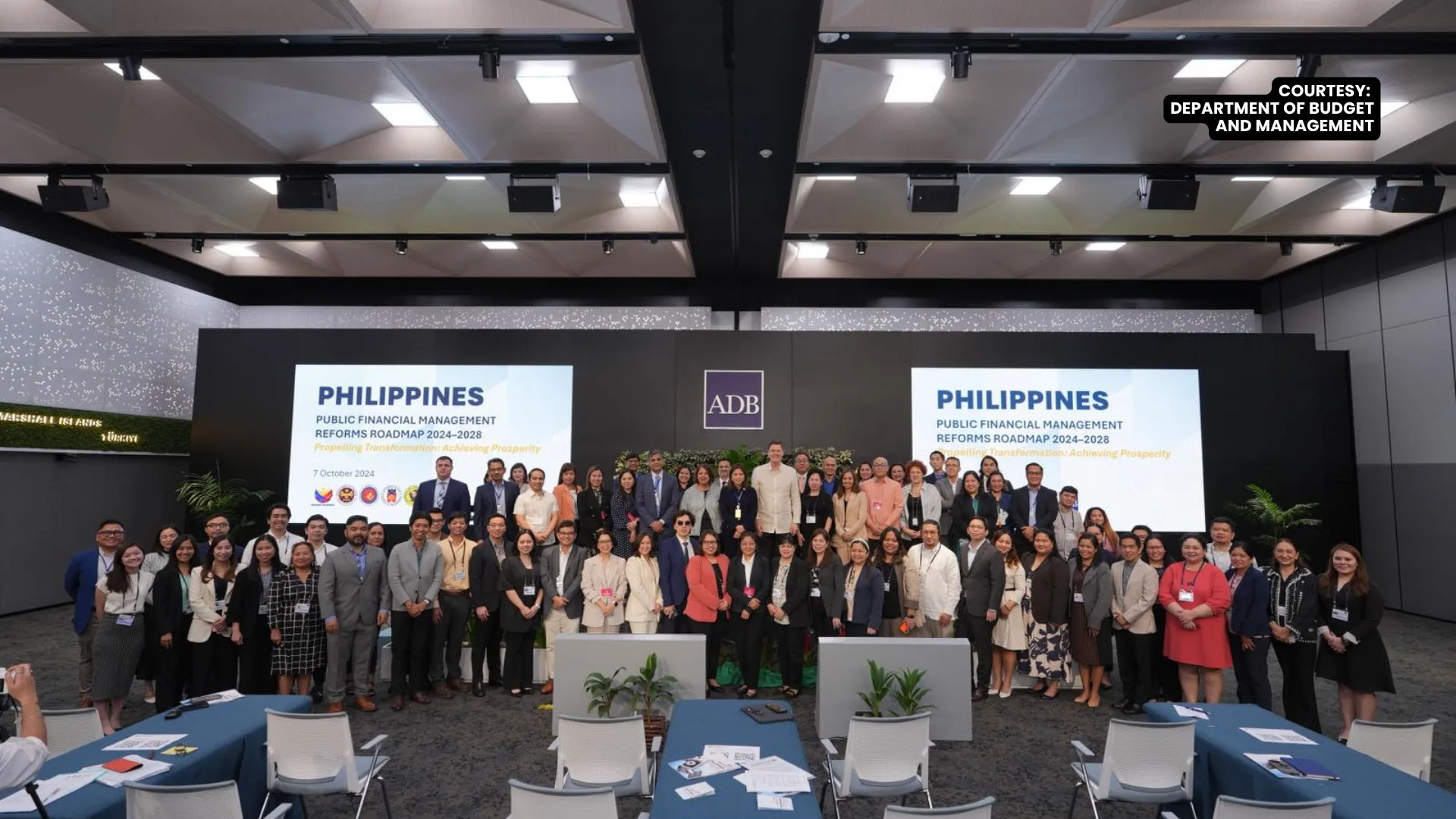
The Department of Budget and Management (DBM) has unveiled the Midterm Update of the Philippines’ Public Financial Management (PFM) Roadmap 2024–2028, aimed at accelerating fiscal reforms and improving transparency, accountability, and efficiency in the use of public funds.
The updated roadmap was launched during the Philippine Public Financial Management Forum held at the Asian Development Bank headquarters in Mandaluyong City on June 25, which gathered government officials, development partners, civil society groups, and public finance experts.
DBM Acting Secretary Kim Robert De Leon, who also chairs the Public Financial Management Committee, said the revised framework is intended to strengthen discipline and performance in government spending while ensuring that reforms translate into better public services.
“PFM is not about managing money. PFM is about improving lives,” De Leon said, stressing that reforms should result in faster services and improved outcomes for citizens.
He added that the updated roadmap seeks to enhance how the national budget is planned, released, monitored, and implemented to ensure more responsive delivery of government programs.
Executive Secretary Ralph Recto, in remarks delivered through Senior Deputy Executive Secretary Atty. Maria Luwalhati Dorotan-Tiuseco, described the initiative as a governance reform designed to translate policies into timely and effective public services.
Citing recent emergencies such as the Sarangani earthquake, he said government performance is ultimately measured by the speed and efficiency of response rather than public perception.
He also emphasized that improvements in public financial systems directly affect disaster response and the delivery of assistance to affected communities.
The DBM said the updated roadmap simplifies the original 41 reform initiatives into 18 priority measures, consisting of 14 major reforms and four quick-win actions designed to fast-track implementation.
The remaining reform items will continue to be pursued depending on institutional readiness, available resources, and support from development partners.
Officials said sustained coordination among government agencies, oversight bodies, civil society, and international partners will be critical to achieving the roadmap’s goals of more efficient and accountable public financial management.