
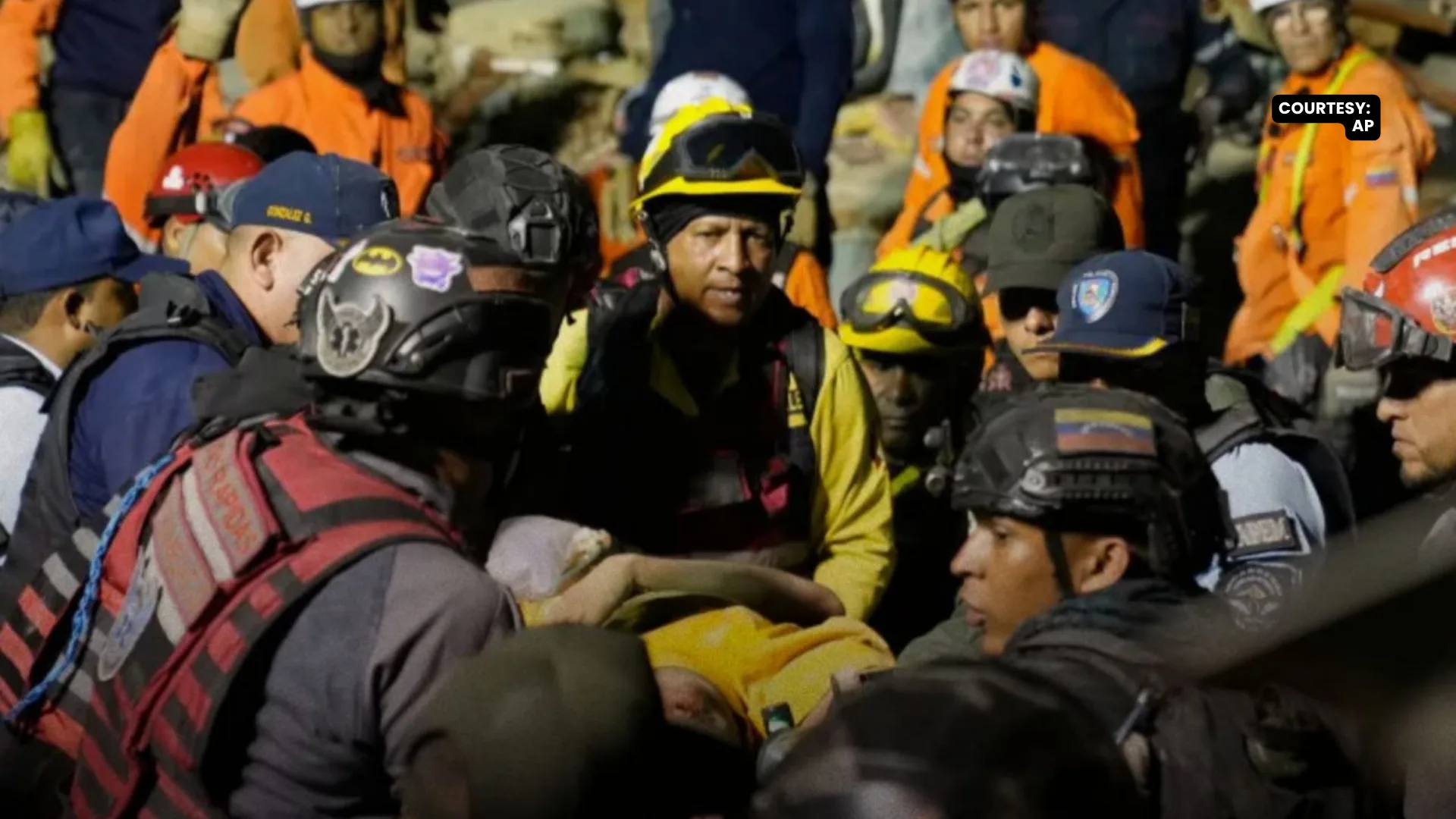
The twin earthquakes that struck Venezuela in rapid succession, killing at least 32 people and collapsing buildings across Caracas and nearby provinces, have drawn renewed attention to similar seismic risks faced by the Philippines, a country also situated along active fault systems in the Pacific Ring of Fire.
Venezuela was placed under a state of emergency after a magnitude 7.5 quake, and a magnitude 7.2 tremor struck just 39 seconds apart, a rare phenomenon seismologists identify as an earthquake “doublet.” The back-to-back shocks caused widespread infrastructure damage, forced the closure of Caracas’ main airport, and disrupted transport systems across affected areas.
Authorities reported hundreds of injuries, with officials warning that the death toll could still rise as rescue operations continue. Buildings collapsed in several districts of the capital, while coastal areas such as La Guaira also sustained severe structural damage.
The US Geological Survey said the earthquakes originated along nearby fault lines west of Morón, warning that “high casualties and extensive damage are probable” due to the shallow depth and intensity of the quakes.
Seismologists described the event as a doublet earthquake—two major tremors of similar magnitude occurring within a short time and distance. Unlike typical aftershock sequences, both quakes in a doublet are strong enough to be considered main shocks, often linked by stress transfer along connected faults.
This type of seismic behavior, while uncommon, has been documented in other major disasters, including the 2023 Türkiye–Syria earthquakes, which also occurred in close succession and resulted in widespread devastation.
For the Philippines, earthquake experts have long warned that similar scenarios are possible due to the country’s location along multiple active fault systems, including the Philippine Fault Zone and the West Valley Fault system that runs through parts of Metro Manila and surrounding provinces.
The Philippine Institute of Volcanology and Seismology (PHIVOLCS) has previously emphasized that strong shallow earthquakes, especially those occurring on segmented faults, could potentially trigger nearby fault segments, raising the possibility of back-to-back or cascading seismic events.
Urban vulnerability also remains a shared concern. Like Caracas, many densely populated Philippine cities feature high-rise developments, aging structures, and informal settlements that may be exposed to severe shaking during major earthquakes.
Disaster risk officials in the Philippines have repeatedly urged preparedness measures such as structural retrofitting, strict building code enforcement, and regular earthquake drills, particularly in high-risk urban centers.
While no direct link exists between the Venezuela quake and Philippine fault systems, seismologists say such international events serve as reminders of the unpredictable nature of seismic hazards and the importance of sustained disaster resilience planning.
Aftershocks are continuously monitored, which are expected to follow major seismic events and could further destabilize already damaged structures.