
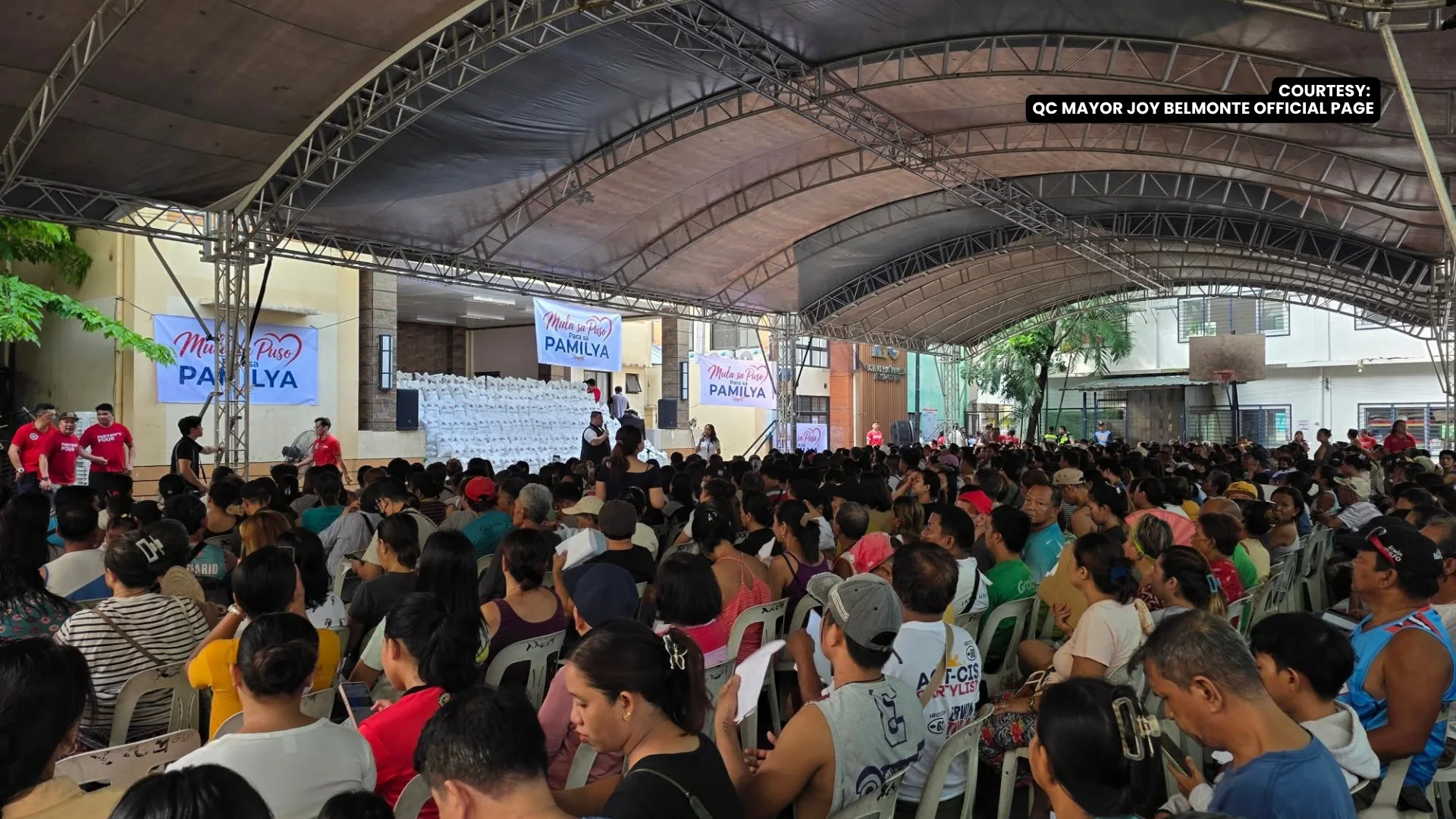
A government-led rice assistance program continued its rollout in Quezon City on Monday, with vulnerable families in Barangay Doña Imelda receiving food aid under a multi-phase distribution initiative.
The program, anchored on the “Mula sa Puso Para sa Pamilya” initiative, aims to provide immediate relief to low-income households across Metro Manila through subsidized rice distribution.
More than 1,200 beneficiaries received 10 kilos of rice each during the latest distribution held at the D4 Amphitheater, led by no less than First Lady Louise Araneta-Marcos herself, emphasizing food security as the core objective of the program.
“Nandito po ako bilang ina kasi alam ko, as a mother, mahalaga na magkaroon ng pagkain sa lamesa natin. Maski na po konting tulong lang ‘to, I hope it goes a long way, few days that we can help you,” the First Lady stressed.
The initiative is funded through the Local Government Support Fund (LGSF), a national mechanism that channels financial assistance to local government units for priority programs and public services. City officials said the funding was released by the Office of the President to support the subsidy rollout.
Quezon City Mayor Joy Belmonte reported that the national government allocated approximately P462.9 million for the city’s rice assistance program, which also supports local farmers through direct procurement arrangements.
City officials said the program adopts provisions of the Sagip Saka Act, allowing local governments to source rice directly from farmer cooperatives, reducing supply chain costs while boosting local agricultural income.
The assistance program is expected to reach more than 210,000 families in Quezon City, covering roughly a quarter of the city’s households. The current distribution marks the second of four planned tranches scheduled over several months.
San Juan City Mayor Francis Zamora, who is the president of the Metro Manila Council, said similar rice aid distributions will continue in other Metro Manila cities in coordination with local government units, with the broader rollout expected to run until November.
The initiative is part of a wider effort to stabilize food access for low-income communities while linking public assistance programs with local agricultural production.